

October 24, 2025



PRESENTED BY

THE TOP
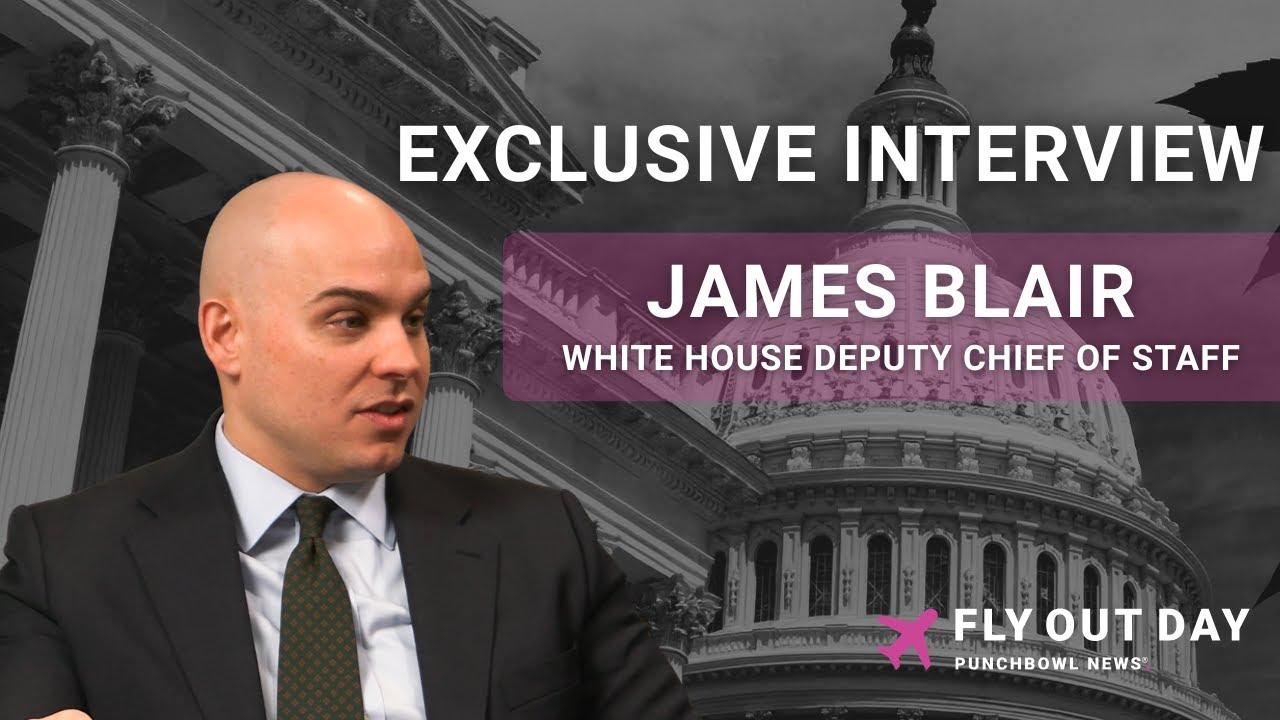
How James Blair sees the shutdown
Happy Friday morning.
It’s Day 24 of the government shutdown. There’s still no resolution in sight to this crisis.
James Blair, the White House deputy chief of staff and one of the top advisers to President Donald Trump, has an extremely broad portfolio in the Trump administration. He oversees legislative, political and public affairs.
Blair was our guest on Fly Out Day Thursday for what may be one of our newsiest interviews so far. There are two topics that we want to focus on:
1) The White House isn’t interested at all in extending the enhanced premium Obamacare tax credits at the center of the shutdown fight. In speaking with Blair, it doesn’t seem as if Trump is anywhere close to folding or beginning negotiations with Democrats (Trump is leaving for an extended Asia trip tonight.) Echoing a line used frequently by Hill Republicans, Blair dismissed the ACA credits as “subsidies to insurance companies.”
The White House is talking about an unspecified plan to broadly overhaul health care policy after the government reopens. This would be a herculean task that Republicans have failed on multiple times during the past 15 years.
2) Blair also said that Trump will dig into his own political coffers to boost Republicans in 2026. Trump controls hundreds of millions of dollars in political cash. In fact, Blair said Trump has secretly been spending money in political races around the country already. We talked to Blair about that, the Texas Senate GOP primary, Sen. Bill Cassidy’s (R-La.) reelection and more.
Health care. Let’s start with this: We’re skeptical by nature and remain so in this case. But the White House and Speaker Mike Johnson say that they want to use the fight over the expiring Obamacare premium credits to launch a push to overhaul health care.
Most of the House and Senate GOP leadership think the idea is absurd. Health care has been a loser issue for Republicans for more than a decade.
But what’s extraordinarily clear is that the Trump administration has no interest in extending the expiring Obamacare subsidies, a decision that will impact millions of Americans.
“These insurance subsidies, and to be clear, these are subsidies to insurance companies,” Blair said. “They don’t actually go to people. They’ve been artificially masking the cost of premiums. OK? They put these in during the Covid era. … [Democrats] voted not once, but twice, to make this program temporary that we’re now discussing and for them to expire.”
Blair added that “Democrats have created a sideshow around” the subsidies “because they don’t want to admit there’s bigger issues that they’re not focused on, and two, that they are the ones that set up this ticking time bomb to begin with.”
The political impact of failing to extend the ACA subsidies could be seismic. Health care premiums will skyrocket, and Republicans could get the blame.
But Blair made the case that Trump wants to spend his time and political capital on putting together a broader health care overhaul.
“We’re not just talking about Obamacare,” Blair said. “We’re not even talking about the repeal of Obamacare. We’re talking about making health care more affordable.”
It seems feasible that Trump will push the GOP-controlled Congress to put together some sort of health-care overhaul package. This could be a big political risk — and time suck.
Every time Republicans get involved in health care policy, it ends up being a mess. Republicans haven’t coalesced around a broad health care policy since Democrats started crafting Obamacare in 2009. That said, there are a number of health care extenders that could be packaged together and branded as an overhaul effort.
In addition, Blair said that there will be a “number” of publicly traded pharmaceutical companies who’ll be “coming to the table” to “get the cost of prescription drugs down in the United States.”
“We’d like to take action [on] that on Capitol Hill, the president’s very focused on the cost of health care,” Blair said.
Some Republicans are already pushing the GOP leadership to use the party-line budget reconciliation process as the vehicle for health care policy, arguing that Democrats aren’t interested in providing the requisite 60 votes for a bipartisan deal.
As we scooped in Thursday’s PM edition, several GOP senators pitched Senate Majority Leader John Thune on this during a closed-door meeting this week. Republican leadership has been cool to the idea of a “Reconciliation 2.0” effort.
Blair on politics. Blair is also the key player within Trump’s orbit on political issues. You should watch the whole episode because Blair gets into a lot of topics, but here’s a brief summary.
– Blair said it’s “very important” for Trump that Republicans keep control of the House and Senate. He made the case that the “macro markers of the political environment” are good for Trump and Republicans: voter registration, polling and the generic ballot.
– Blair said Sen. John Cornyn (R-Texas) “appears to have done a good job of pulling his polling numbers up from where they were a few months ago.” He added that Rep. Wesley Hunt (R-Texas) jumping into the Senate GOP primary was a “wild card.” Trump will spend his own political money in Texas “if it’s absolutely necessary” in order to keep that seat in Republican hands, Blair added.
– Interestingly enough, Blair said that Trump is “spending already” in races across the country.
– Blair doesn’t agree with the Indiana Senate GOP leadership that redistricting can’t pass in the Hoosier State. “I think we’ll see how Indiana continues to evolve, but I don’t think that’s a correct assessment,” Blair said.
— Jake Sherman


THE SENATE
Shutdown latest as the midterms enter the chat
The Senate is gone until Monday, meaning the government shutdown is all but guaranteed to go into its fourth week. The impact of the spending impasse is growing more severe every day.
Senate Majority Leader John Thune could tee up votes as soon as next week on separate bills to pay members of the military and air traffic controllers as he looks to increase pressure on Senate Democrats. Speaker Mike Johnson refuses to bring the House back until Democrats agree to reopen the government. Members have been gone from Capitol Hill for 35 days now.
On Thursday, Democratic senators filibustered Sen. Ron Johnson’s (R-Wis.) bill to pay federal employees who’ve been forced to work without pay during the shutdown, arguing the measure gives Trump too much discretion.
A Democratic counter-proposal from Sen. Chris Van Hollen (D-Md.) was also rejected. Johnson and Van Hollen are discussing potentially merging their bills, which Thune said he was open to.
But Thune slammed Democrats for rejecting the Johnson bill and reiterated his view that the best way to pay federal workers is to vote to reopen the government immediately.
“I can’t explain the level of dysfunction on their side right now,” Thune lamented. “But they’re consistently shifting their messaging which, to me, suggests they really don’t know … how to get out of this right now.”
Sen. Johnson’s spokesperson, Grace Carnathan, said the Wisconsin Republican “will work diligently and in good faith to find agreement between the two sides in order to pay federal workers during the shutdown.”
An eye on 2026. Interestingly, Sens. Jon Ossoff (D-Ga.) and Raphael Warnock (D-Ga.) joined Sen. John Fetterman (D-Pa.) in backing Johnson’s bill. They were the only Democrats to do so.
Ossoff is the most endangered Senate Democrat in 2026, and it’s notable that he felt pressure to vote for the measure even while continuing to reject the House-passed stopgap funding bill.
“Jon Ossoff could’ve easily voted to reopen the government and pay Georgia workers any of the 12 times he voted to keep it closed,” NRSC spokesperson Nick Puglia said in a statement.
Georgia has the world’s busiest airport — Hartsfield-Jackson Atlanta International Airport — as well as the CDC headquarters and numerous military bases. All of these were undoubtedly factors that played into Ossoff and Warnock’s calculus.
But Georgia is far from the only state with busy airports and a robust federal government presence. The rest of the Senate Democratic Caucus still felt comfortable enough to block Johnson’s bill.
While these votes can be politically uncomfortable for many Democrats, they can also give vulnerable Democrats like Ossoff an opportunity to show some independence from the party.
As for Warnock, it’s not uncommon for a senator who’s not in-cycle to back up their home-state counterpart in these circumstances. But Warnock didn’t deviate from the Democratic argument about the broader shutdown dynamics.
“[Republicans are] holding federal workers hostage, and just because they’ve decided to shut down the government doesn’t mean that these workers ought to be punished,” Warnock said. “So some of these folks they’re holding hostage had a path to get some relief. I’m happy to offer that to them.”
Some shutdown polling news: Senate Majority PAC, the pro-Democratic super PAC, is circulating Hart Research polling showing that 52% of voters say President Donald Trump and Republicans are to blame for the shutdown versus just 41% who say Democrats are more to blame. The findings underscore how Democrats are feeling little pressure to cave.
— Andrew Desiderio and Max Cohen

WASHINGTON X THE WORLD
Challenges abound for Graham’s ‘Russia week’ push
Sen. Lindsey Graham (R-S.C.) is pushing for “Russia week” on the Senate floor, where senators would take up a trio of bills targeting Moscow, including a long-stalled sanctions effort.
The other bills would designate Russia as a state sponsor of terrorism over its kidnapping of Ukrainian children. The measure would set a schedule to send frozen Russian assets to Kyiv. Both of those bills cleared the Senate Foreign Relations Committee earlier this week.
While there’s some optimism about the effort, President Donald Trump’s constantly shifting positions on the Ukraine war have made it nearly impossible for Senate GOP leaders to execute on the bipartisan sanctions package. GOP defense hawks have been especially eager to pass that measure.
The whiplash was on full display over the past week when Senate Majority Leader John Thune said it was “time to move” on the sanctions bill within the next 30 days. Thune then said he was pressing “pause” after Trump teased a Budapest summit with Russian President Vladimir Putin. A day later, the White House said the Trump-Putin meeting was on ice.
Graham’s push. Graham told reporters Thursday he wants to see movement on “multiple fronts” in the coming weeks. Lawmakers are eager to turn up the heat on Moscow to accept Trump’s proposed ceasefire in Ukraine along the current frontline.
“I think President Trump’s proposal of a ceasefire at the line of contact is the right answer,” Graham said. “And until Putin agrees to that, I think we should continue the pressure.”
Graham’s call comes a day after the Trump administration imposed sanctions on Russia’s two largest oil companies in an effort to push Moscow to the negotiating table.
Thune said Thursday he’s open to Graham’s idea and again praised the bipartisan Russia sanctions bill, which has nearly 90 co-sponsors.
Here’s more from Thune:
The White House wants technical changes to the bill, which would impose a 500% tariff on countries buying Russian oil and uranium.
Sen. Richard Blumenthal (D-Conn.), who co-authored the sanctions bill with Graham, said “there’s no excuse for postponing” the legislation now that Trump called off the Putin summit.
Senate Foreign Relations Committee Chair Jim Risch (R-Idaho) told us he’d like to see every Russia-related bill “that we have kicking around” included in a potential week of action. But Risch cautioned that finding floor time amid the shutdown will be tough.
“But look, it’s a priority for me, it’s a priority for the committee,” Risch added. “We’ll see what happens.”
— Briana Reilly and Andrew Desiderio
PRESENTED BY NRECA

Electric cooperatives are powering the future of energy. From strengthening our nation’s grid to pioneering electric innovation, co-ops are shaping a better tomorrow.
REDISTRICTING WARS
Virginia Dems move forward on redistricting
Democratic legislative leaders have called their rank-and-file back to Richmond on Monday for a special session meeting on redistricting.
This is the next step in Democrats’ surprise push to redraw Virginia’s congressional map before the 2026 midterms. The process is complicated, but it could yield up to three more seats for Democrats.
Democrats would need to amend the state constitution to undo Virginia’s redistricting commission. To do that, the General Assembly would need to pass an amendment in two separate legislative sessions with one general election in between them. Then voters would need to approve the amendment.
That means both chambers of the legislature need to first pass an amendment next week before Virginia’s Nov. 4 elections and then again in January; when the new legislature convenes.
Expect Republicans to sue. One possible argument: early voting began in September, meaning a court could decide they’re already too late to pass an amendment before the general election.
The map. A new map would likely target three Republicans: Rep. Rob Wittman in eastern Virginia, Rep. Jen Kiggans in Virginia Beach and Rep. John McGuire in central Virginia.
Wittman’s seat could be extended up toward Northern Virginia, while Kiggans’s district could absorb Norfolk. McGuire’s seat could take on the city of Roanoke, although it would likely still be fairly competitive.
Democrats would also want to shore up Democratic Rep. Eugene Vindman.
Illinois News. Democrats in the Illinois congressional delegation are in talks to issue a joint statement today urging the state legislature to take on redistricting, according to multiple sources close to the process.
This is big because Democrats in Springfield seem wary of redistricting and likely need a nudge. And the delegation itself has been concerned with how a redraw would affect Frontliners and historically Black districts.
Redistricting adjacent news. The Proposition 50 ballot initiative and California’s extremely transparent financial disclosure laws have given us a brief peek at super PAC fundraising.
The GOP-aligned Congressional Leadership Fund and the Democratic-aligned House Majority PAC both had to file reports with the California Secretary of State because they are spending on Prop 50.
HMP reported $45.9 million in contributions between Jan. 1 and Oct. 18. It ended this period with $29.7 million in the bank.
CLF reported $43.6 million in contributions the same period and $27.7 million in cash on hand.
This is just a brief snapshot in time. Both groups are constantly raising and spending. But the super PACs only file twice in 2025, so our most recent FEC data for them runs only through June 30. California is giving us an early look.
– Ally Mutnick and John Bresnahan
PUNCHBOWL NEWS EVENTS
ICYMI: Griffith, DeGette on shutdown, cancer prevention legislation
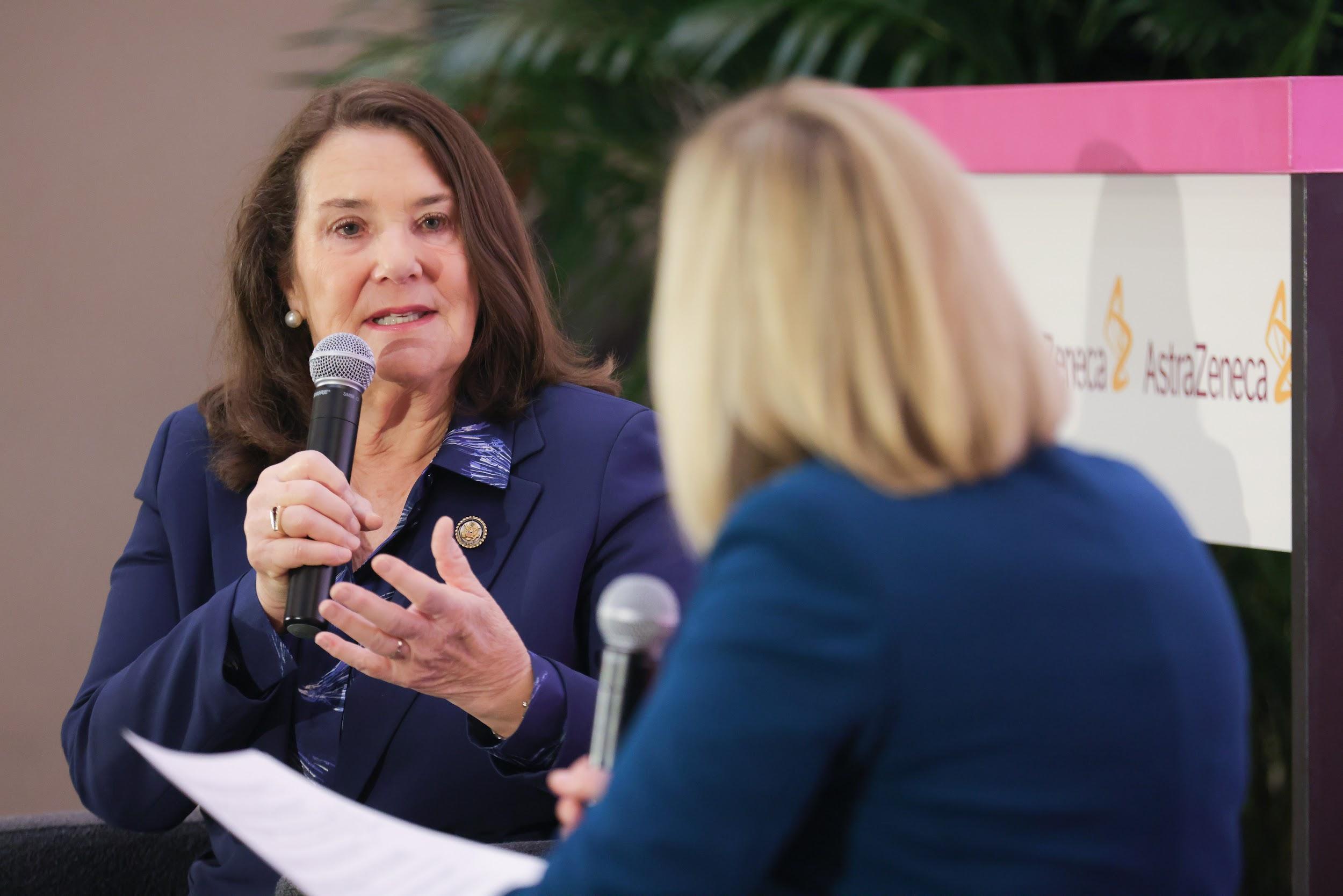
Reps. Morgan Griffith (R-Va.) and Diana DeGette (D-Colo.) urged Congress to pass legislation to boost cancer prevention and weighed in on the government funding lapse during a Punchbowl News event Thursday.
Griffith said he’s “getting angry at this point” as his constituents will soon lose SNAP benefits as the shutdown continues. The Virginia Republican suggested getting rid of the Senate filibuster as one way to end the impasse.
Griffith and DeGette both called for Congress to move bipartisan legislation to boost cancer research, treatments and prevention.
DeGette said she worries most about people delaying early cancer detection if they lose their Medicaid or have no health insurance.
You can watch the full recording here.
– Shania Shelton


Presented by Apollo Global Management

America’s economic growth requires bold investment. Apollo is investing in American companies to help them hire, grow and build for the road ahead. Learn more.

Crucial Capitol Hill news AM, Midday, and PM—5 times a week
Join a community of some of the most powerful people in Washington and beyond. Exclusive newsmaker events, parties, in-person and virtual briefings and more.
Subscribe to Premium
The Canvass Year-End Report
And what senior aides and downtown figures believe will happen in 2023.
Check it outEvery single issue of Punchbowl News published, all in one place
Visit the archive
Presented by Apollo Global Management
America’s economic growth requires bold investment. Apollo is investing in American companies to help them hire, grow and build for the road ahead. Learn more.