


March 2, 2026



PRESENTED BY

THE TOP
Congress’ war over the war
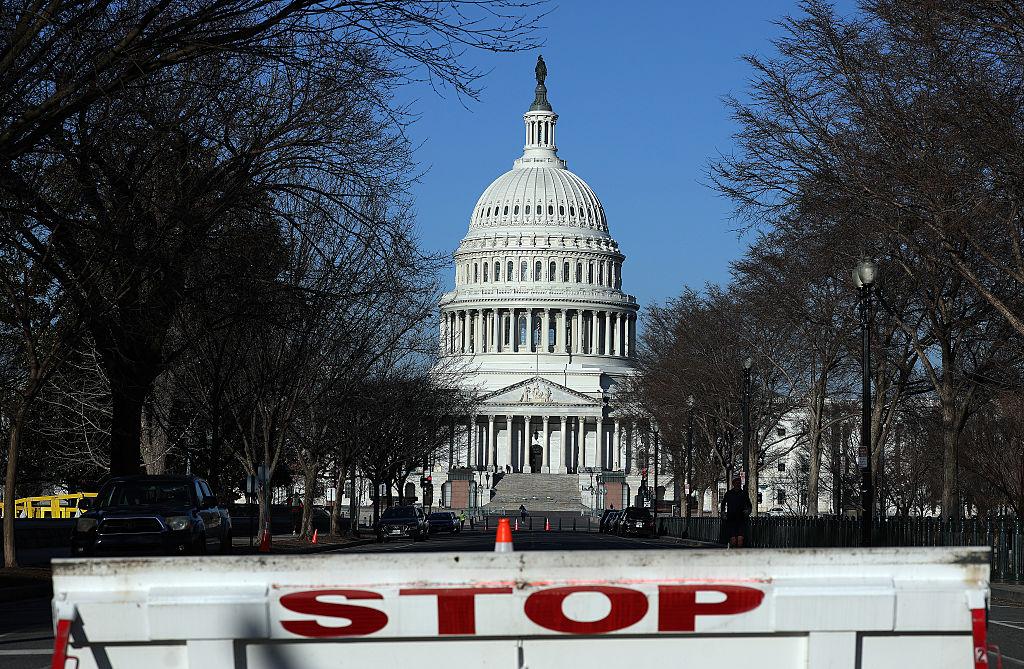
Happy Monday morning.
Congress now faces the war over the war.
With President Donald Trump plunging the United States into its riskiest military gamble in two decades — overthrowing the Iranian regime — Republicans and Democrats on Capitol Hill are locked in a struggle over every facet of the conflict: military, political and even moral.
The stakes here are extraordinarily high. Nearly every public opinion poll shows Americans are firmly opposed to a war against Iran. Yet Hill Republicans are lining up behind Trump, who began the war early on Saturday morning while huddled with aides at his Mar-a-Lago club in Palm Beach, Fla. Oil prices have spiked and global financial markets have slumped.
There are also significant factions of the MAGA movement outraged by Trump’s move. But they’re not in Congress, and the president seems to be ignoring them for now. Trump has been calling seemingly every White House reporter possible to give them quotes about the campaign.
The opening salvo of U.S. and Israeli attacks took out the Iranian supreme leader, Ayatollah Ali Khamenei, and numerous other military officers. Trump boosters hailed this as a huge achievement, and Iranians paraded in the streets from Tehran to Los Angeles.
However, Trump immediately undercut his own message by saying there could be significant American casualties during the operation. Trump declared that the U.S. bombing campaign could last a month or longer, shifting the grounds for the debate between Congress and the White House.
Although caught off guard by the size and scale of the initial attacks, Iran has been able to strike targets in Israel, Kuwait, Saudi Arabia, the United Arab Emirates, Oman, Qatar, Cyprus and Bahrain. Three U.S. service members were killed in the Kuwait attack, and nine more were injured. Several U.S. warplanes have crashed. Fighting between Hezbollah and Israel has resumed as well. There have been some civilian casualties during the attacks on Iran.
Democratic fury. So far, Democrats are making dueling arguments.
The first — and most poignant — is that Trump’s war against Iran is illegal because he didn’t seek congressional authorization before initiating hostilities. While Democratic leaders are calling for war powers votes in both chambers, we also expect much more forceful calls from rank-and-file Democrats to impeach Trump.
The political case Democrats are making should be more alarming to Republicans: a re-elected Trump was supposed to focus on bringing down costs for average Americans and boosting the U.S. economy. A military campaign seeking regime change in Iran does nothing to help Americans on either front.
Additionally, there was a serious act of domestic violence Sunday morning in Austin, Texas — a mass shooting allegedly carried out by a naturalized American citizen from Senegal wearing a t-shirt with the slogan “Property of Allah.” The Department of Homeland Security is shut down amid an impasse between the White House and Democrats over ICE reform, and this deadly incident will play into that debate.
House Republicans will force another vote on the already passed DHS funding bill this week (minus a key provision), a move designed to pressure Democrats. Some hardline Republicans are urging party leaders to attach the SAVE America Act to the bill, which is a fight the GOP leadership wants to avoid.
With the House not returning to vote until Wednesday and the Senate coming back tonight, Congress faces a slew of difficult questions.
The power. What leverage does Congress truly have to rein in Trump? Not much, given the lack of GOP support for doing so.
Lawmakers have ceded a tremendous amount of leverage on foreign policy and the use of military force to the executive branch over the last few decades. This didn’t start with Trump, but it’s certainly ramped up during his tenure. Republicans are simply unwilling to challenge him, even as Trump’s military adventurism over the past 13 months contradicts his “America First” doctrine.
But if the Trump administration needs more money to carry out its campaign against the Iranian regime, Congress will have to approve it. That will be incredibly difficult given the razor-thin margins of GOP control in the House and Senate. Trump could be forced to turn to Democrats for help.
The briefings. The Gang of Eight will get another briefing at 4 p.m. today from Secretary of State Marco Rubio and CIA Director John Ratcliffe. Chairs and ranking members of committees of jurisdiction — Senate Armed Services and Senate Foreign Relations — have been invited, too.
Rubio, Ratcliffe, Defense Secretary Pete Hegseth and Joint Chiefs of Staff Chair Gen. Dan Caine will be on the Hill Tuesday for a pair of briefings. The Senate will get briefed at 3:30 p.m., followed by the House at 5 p.m.
The votes. Both the House and Senate will have votes this week on war powers resolutions that serve as proxies for supporting Trump’s efforts.
The House’s measure, authored by Reps. Ro Khanna (D-Calif.) and Tom Massie (R-Ky.), will be up on the floor Thursday. It could pass. Democratic leaders came out strongly in support of this resolution during a Sunday night caucus call, although they may lose some of their own members during the vote.
Sen. Tim Kaine (D-Va.) said his bipartisan war powers resolution targeting Iran will likely be voted on Tuesday or Wednesday. With Sen. John Fetterman (D-Pa.) already a “no,” getting 51 votes would require at least five Republicans to defect. That’s difficult to see at this point.
Congress faces other questions on Iran. What is the legal justification for an extended operation? How much will it cost? How quickly — and which — administration officials will it demand to hear from? What is Iran’s future, and who will run the country? And most importantly, will the United States have a say?
— Jake Sherman, John Bresnahan, Andrew Desiderio, Briana Reilly, Max Cohen and Ally Mutnick


DEFENSE
Colby to sell Hill on defense strategy amid Iran war
Pentagon policy chief Elbridge Colby’s effort to sell wary lawmakers this week on the Trump administration’s vision for American defense abroad just got even more daunting.
We sat down with Colby last week before the Iran attack to talk about President Donald Trump’s National Defense Strategy.
At the Pentagon, Colby vowed to push back against “misconceptions” lawmakers may hold about that strategy. Colby will appear before the Senate and House Armed Services committees this week, what he called “an opportunity” to set the record straight.
Huge questions about the Iran conflict hang over the hearings. But Colby’s appearances will also serve as a venue to discuss the administration’s broader military strategy around the globe.
A preview of pushback. Colby chafed at characterizations that the Trump strategy document shows America in retreat. The nation, Colby said, is “not withdrawing” from the global stage. Rather, Colby said, the United States under Trump is pursuing a “more focused but limited” posture toward world affairs.
Underpinning the document is an embrace of “a commonsense, America First, flexible realism approach,” Colby said. Critics have seized on what they see as the strategy’s downplaying of China as the United States’s top geopolitical foe, the prioritization of the Western Hemisphere and a rethinking of the nation’s role in NATO.
“I frankly see a lot of what I regard as a kind of canard about isolationism and this kind of thing, and I think that’s not accurate,” Colby said.
A Hill reset? We’ve written about what some Republicans describe as a communication breakdown between Colby and the Hill.
Before the National Defense Strategy’s release, certain GOP defense hawks were critical of planned changes to U.S. force posture in Europe. They were also frustrated by the lack of transparency from the Pentagon’s policy shop, which Sen. Tom Cotton (R-Ark.) called a “Pigpen-like mess.”
But since then, Colby said, things have changed. He touted more than 100 engagements between his team and the Hill over the last several months.
“We heard Congress’ feedback, and we have adapted our approach,” Colby said. “[We] admit there may have been imperfections in the past. They were not meant in disrespect.”
A Defense Department official said Colby counts a number of lawmakers as allies for his approach, including GOP Sens. Eric Schmitt (Mo.), Jim Banks (Ind.) and Bernie Moreno (Ohio), as well as the “pragmatic” Sen. Jack Reed (R.I.), the top Democrat on the Armed Services Committee, despite “big differences in a lot of things.”
Troop deployment. Lawmakers are almost certain to raise questions about potential drawdowns of U.S. troops abroad and what those moves would signal about the administration’s global priorities.
The National Defense Strategy hints at changes to how military personnel are positioned in key theaters in Europe and the Korean peninsula.
But rather than focusing on the number of personnel in certain places, Colby said the Pentagon’s interest is trained on how those forces will operate. For example, he sees “Europe-led American forces” playing “a focused but more limited role.”
In a conflict, the United States would surge troops and assets into a given region, Colby said. While he acknowledged the issue is “very politically sensitive,” Colby said: “We’re not deadset or gangbusters to reduce posture someplace.”
We’ll have much more from our Colby interview throughout the week for Defense subscribers.
— Briana Reilly and Anthony Adragna


Tech: What the Anthropic mess means for Congress
The Defense Department’s stunning decision to break ties with artificial intelligence giant Anthropic has thrown another thorny tech policy debate into Congress’ lap.
It comes as dueling parts of the industry and their cash-stuffed super PACs are trying to elect lawmakers in both parties who are friendly to their cause.
For now, the reactions from the Hill on Defense Secretary Pete Hegseth’s decision to cut ties with Anthropic over the company’s concerns about domestic surveillance and autonomous weapons have largely broken along partisan lines, although there are exceptions.
“If you like free markets, you should consider being a [Democrat],” Sen. Brian Schatz (D-Hawaii) said on X. The government is “bullying a company for refusing to do mass surveillance of Americans.”
Sens. Elissa Slotkin (D-Mich.) and Mark Kelly (D-Ariz.) have proposed addressing military use of AI in the National Defense Authorization Act this year.
Industry divide. AI companies are essentially divided into two political camps. There’s Anthropic, which promotes safety regulations for the technology. The other side, which includes the likes of OpenAI, wants a more hands-off approach from government at all levels.
This political split within the industry was highlighted Saturday when the Pentagon quickly turned to OpenAI for classified work after dumping Anthropic.
On the Hill. But the relationship that AI’s warring tribes have with lawmakers is more nuanced than any right-left divide. As we’ve reported, Anthropic has been courting GOP allies and aligned itself with Republicans who’ve broken with the Trump administration on policies like chips exports and blocking state AI laws.
The Anthropic-backed political effort, known as Public First Action, and an affiliated PAC have been spending in favor of both Sen. Marsha Blackburn’s (R-Tenn.) gubernatorial bid, as well Sen. Pete Ricketts’ (R-Neb.) reelection campaign. Some Democrats got a boost as well.
Democrats who go hard at OpenAI for eagerly filling Anthropic’s shoes at the Pentagon could find themselves a target of the industry super PAC network, Leading the Future. Those who stay quiet could receive its largesse.
OpenAI President Greg Brockman is among the big contributors to LTF, which wants less government oversight and has worked to spread its donations to both parties as well.
— Diego Areas Munhoz and Ben Brody
PRESENTED BY AMAZON

Amazon offers hourly employees a competitive salary, benefits starting day one, and free skills training, giving employees opportunities for growth and the support to stay.
PRIMARY PROBLEMS
The House Dems in trouble on Tuesday
A trio of House Democrats are at real risk of losing reelection in the Texas and North Carolina primaries on Tuesday.
Who to watch. Reps. Valerie Foushee (D-N.C.), Al Green (D-Texas) and Julie Johnson (D-Texas) are all showing one clear sign of trouble: being outspent on advertising by a challenger and their allied groups.
Privately, some Democratic officials believe all three could either be defeated or forced into a runoff.
Redistricting has shoved Green into a member-vs-member race with Rep. Christian Menefee (D-Texas).
The pro-crypto Fairshake network dropped $1.5 million on ads to help Menefee. A former Harris County attorney, Menefee spent $1.4 million in the Houston media market in his special election victory to succeed the late Rep. Sylvester Turner (D-Texas). Green has spent just $234,000 on ads. Green has represented the Houston-area district since 2005, but that’s a huge disparity in spending between the two candidates.
In North Texas, former Rep. Colin Allred (D-Texas) has spent $1 million on ads, compared to Johnson’s $586,000. Plus, Allred has high name ID from his last Senate run. This could end up in a runoff.
In North Carolina. Foushee and her allies, including an Anthropic-backed group and a Congressional Black Caucus-affiliated group, have spent $1.6 million on ads. Durham County Commissioner Nida Allam and her allies, including Democratic activist David Hogg’s group and an anti-AIPAC operation, have spent $1.9 million.
CBC Chair Yvette Clarke (D-N.Y.) is campaigning in the closing days with Foushee. But some Democrats fear Foushee mobilized too late to stop such a well-funded challenge.
– Ally Mutnick
…AND THERE’S MORE
First in Punchbowl News. Sen. Adam Schiff (D-Calif.) will introduce a bill today to prohibit large financial firms from purchasing homes and property in areas impacted by natural disasters for a six-month period. The bill defines institutional investors as any firm that owns 75 or more single-family homes. Read the bill text here.
The Senate is expected to begin voting on the ROAD to Housing Act this week, and the White House has backed a push to limit institutional investors from purchasing single-family homes in general.
Hiring moves. Rep. Greg Casar (D-Texas), the chair of the Congressional Progressive Caucus, tapped Amy Emerick Clerkin as his new chief of staff. Emerick Clerkin was previously chief to the late Rep. Raúl Grijalva (D-Ariz.).
– Brendan Pedersen and Ally Mutnick


Presented by AstraZeneca

The 340B program is supposed to help vulnerable patients—but without strong safeguards, it’s siphoning away funds that could be used for free and charitable medicine. The 340B Rebate Model Pilot improves program integrity, preventing duplicate discounts and strengthening accountability. Urge HHS to implement the pilot today. Learn why it matters.

Crucial Capitol Hill news AM, Midday, and PM—5 times a week
Join a community of some of the most powerful people in Washington and beyond. Exclusive newsmaker events, parties, in-person and virtual briefings and more.
Subscribe to Premium
Special Projects
Explore our deep dives into the issues that matter the most today and will shape tomorrow's future, with expert reporting that goes beyond the headlines and into the heart of the Capitol.
Check it outEvery single issue of Punchbowl News published, all in one place
Visit the archive
Presented by AstraZeneca
The 340B program lacks transparency—making it hard to tell if it’s actually helping vulnerable patients. HHS can fix the problem by implementing the 340B Rebate Model Pilot, ensuring the program is transparent, compliant, and accountable. Learn more.