The Senate is barreling toward a health care vote next week that will amount to little more than a partisan messaging exercise — and a year-end subsidy cliff that will prompt massive premium hikes for millions of Americans.
Absent a major shift, senators are set to vote on a Democratic proposal to extend the enhanced Obamacare subsidies for a number of years, and potentially a “side-by-side” but yet-undefined GOP alternative. Neither of these proposals will get 60 votes.
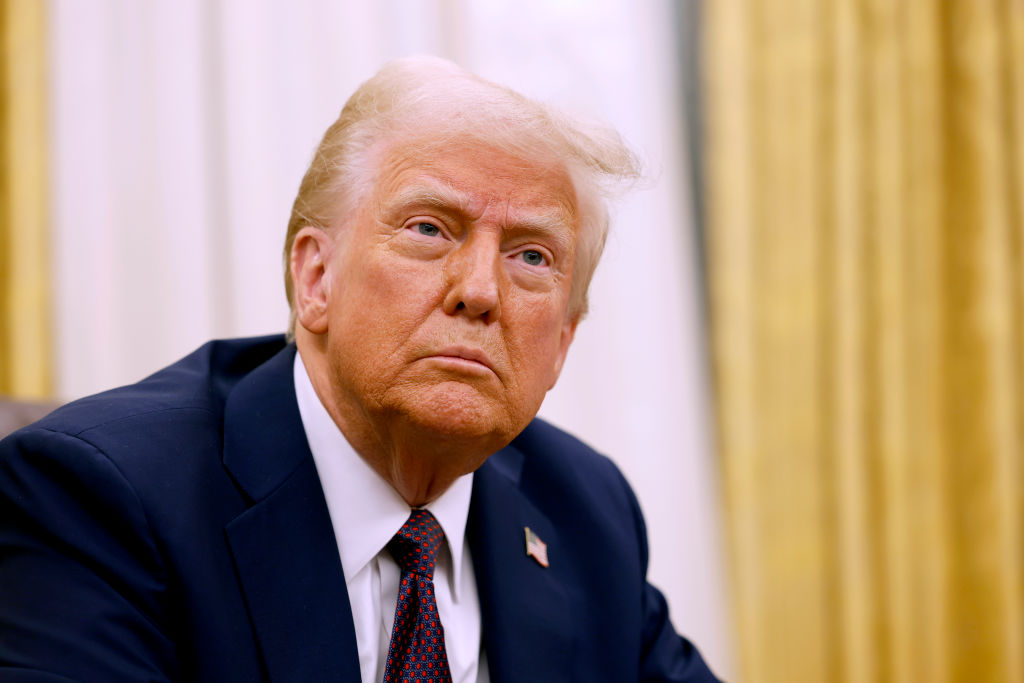
Some Senators in both parties agree that the only path to an extension of some sort relies on heavy involvement from President Donald Trump, who was set to propose a pared-back short-term subsidy extension last week before pulling the plug. Trump, they argue, is more than capable of pushing enough Republicans to accept a compromise that stabilizes health care costs while preventing big GOP electoral losses next November.
“I don’t think anything will pass without the president’s approval,” said Sen. Mike Rounds (R-S.D.), who’s been part of informal bipartisan negotiations on an extension. “There’s lots of ideas out there. Let’s see if we can’t put something together and take it to him.”
“It would help if [Trump] just said to the Republicans: ‘Make a deal,’” added Sen. Angus King (I-Maine), who caucuses with Democrats. “If it doesn’t happen, Republicans are going to own massive premium increases. I don’t know why they would want to do that.”
But time is running short, and Senate Majority Leader John Thune is upping the pressure on negotiators to come to an agreement.
At the same time, Thune is publicly casting doubt on the idea that a bipartisan proposal can come together in time for a vote by then, which he committed to as part of the shutdown-ending deal. Without any deal, that vote turns into a partisan exercise.
“We’ll see if, by the time that vote happens, there’s a path forward on resolving this in a way that’s bipartisan or whether these end up being what would probably be ‘show’ votes or political-type votes,” Thune added.
Democrats are set to revert back to their original demand of a clean Obamacare extension. It’s a policy position that unites Democrats and allows them to highlight GOP divisions.
Trump’s refusal to engage on the matter also allows Democrats to shelve their tactical disagreements over whether to accept a watered-down extension that may help Republicans politically.
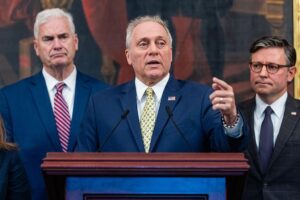
The House. House Majority Leader Steve Scalise is huddling with the Republican Governance Group to talk health care options today.
RG2, as it’s known in the Capitol, is a key faction in the House that includes many of the GOP moderates backing an Obamacare subsidy extension.
These moderates are in an extremely difficult political spot. Many of the House Republicans seeking an Obamacare patch are facing uphill reelection fights and are concerned about spiking health care costs. But there’s still heavy resistance to addressing the cliff inside the House GOP Conference.
Despite signs of trouble for the Obamacare efforts, GOP moderates insist they can still find a path to a deal.
“We’re having our own kind of internal House discussions,” Rep. Jen Kiggans (R-Va.) said. “I would love to hear what [the White House’s] thoughts are too but in the meantime, us members have been talking on a bipartisan basis.”
After the White House seemed to drop its extension proposal, Rep. Don Bacon (R-Neb.) said the episode still led him to believe “there’s a willingness there to compromise.”