

It’s another surreal week for Corporate America.
The nation’s business sector — Wall Street in particular — is facing a torrent of headlines coming out of Washington that are difficult to grasp in the absence of an immediate economic crisis.
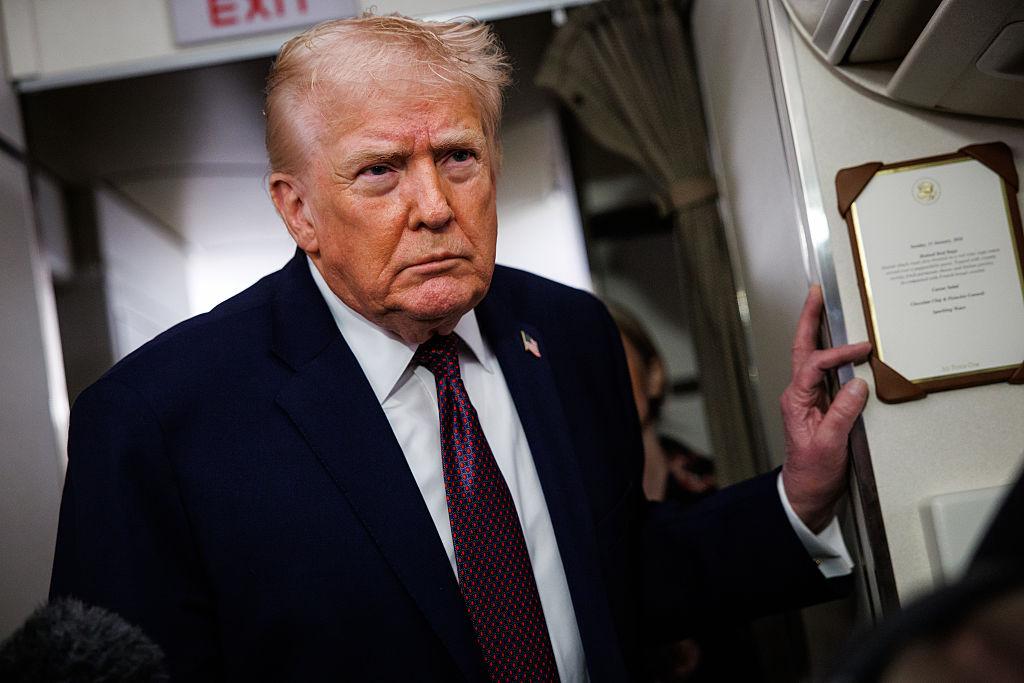
President Donald Trump will address the Detroit Economic Club this afternoon. We expect the president to expand on some of the policies he’s floated through his Truth Social account and White House advisers in recent days.
Just in the past week, the Trump administration has:
— Endorsed legislation to crack down on credit card swipe fees from Sens. Roger Marshall (R-Kan.) and Dick Durbin (D-Ill.), called for credit card interest rates to be capped at 10% no later than Jan. 20 (one week from today) and urged Congress to ban institutional investors from purchasing single-family homes.
— Begun a criminal inquiry into Federal Reserve Chair Jay Powell, setting off a political clash with the world’s most important central banker. Jeanine Pirro, the U.S. attorney for D.C., tweeted late Monday night that Powell was the only person talking about an “indictment,” signaling that the fight may be over sooner rather than later.
— Leaned on the Senate Banking and Agriculture panels to advance legislation that would overhaul the shape and function of the financial system to incorporate crypto assets.
— Continued to roll out tariffs, most recently targeting Iranian “trade partners” with a 25% levy.
— Floated barring Exxon from anything to do with Venezuela’s oil business (which Trump is “running”) because Trump didn’t like the CEO’s response during a White House roundtable.
The corporate world cares about all of these threads. Each represents a distinct undercurrent in the Trump-MAGA ethos.
The credit card push is affordability populism, plain and simple. The Powell inquiry is about power over the U.S. central bank and interest rates. And the crypto policymaking is ultimately about serving an insurgent industry that spent its way to prominence in the 2024 election. The oil sector is another benefactor Trump loves to woo.
Trump’s style has always blended populism with corporate giveaways. Following his inauguration nearly a year ago — attended by some of the world’s richest people — Trump successfully focused on passing his massive tax cut package. Then Trump’s attention seemed to focus more on foreign policy as crises in Gaza, Ukraine and now Venezuela beckoned.
Yet following Democrats’ wins in November — and the very real threat of a partially Democratic-controlled Congress next year — Trump has shifted back to his populist approach. In spurts anyway.
Taken together, this rollout has left many, many congressional Republicans unsettled about the direction of the president and his economic policy, all as the midterms begin to ramp up. Unlike other Trump controversies, the grumbling this week has largely occurred in public.
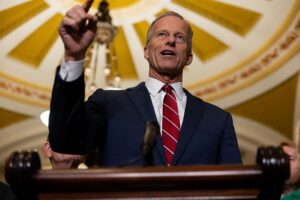
The party’s over. Numerous Republican senators chastised the Trump Justice Department for opening a criminal inquiry into Powell, including Senate Majority Leader John Thune, Sens. Thom Tillis (R-N.C.), Lisa Murkowski (R-Alaska), John Kennedy (R-La.), Susan Collins (R-Maine) and others.
“If you want to make interest rates go up instead of going down, I can’t think of a better way than to have the Federal Reserve getting into a pissing contest with the executive branch of government,” Kennedy told reporters Monday night.
Meanwhile, the push for credit card price controls is dividing Capitol Hill in strange ways. Sen. Elizabeth Warren (D-Mass.) gave an address Monday that urged the Democratic Party to embrace populist policies and abandon the whims of its donor class.
Just hours later, Warren announced she’d received an unscheduled phone call from Trump, where the two discussed credit card rate caps, as well as the ROAD to Housing Act.
“I told him that Congress can pass legislation to cap credit card rates if he will actually fight for it,” Warren said in a statement Monday afternoon. Uhhh, that smell you smell is the hair of bank lobbyists being set aflame.
Odds of a congressional move here remain low, for now. Many Republicans are either outright critical or extremely circumspect of the effort.
“Obviously, the idea of just putting in some type of cap, from a traditional finance standpoint, I don’t think very many of us would support,” Rep. Mike Lawler (R-N.Y.) said.
Plus, many progressives don’t believe Trump will commit to seeing this through.
“Trump is a total opportunist,” Sen. Bernie Sanders (I-Vt.) said. Sanders has introduced his own legislation to cap credit card interest rates at 10%, saying he “would hope that we can do that.”
But “this is what he says today,” Sanders said. “Tomorrow will be something else.”
Meanwhile in crypto: Monday night, we scooped a partial market structure bill offer from Senate Banking Committee Republicans, which was developed with some Democratic input. Negotiations continue. Here’s the official bill noticed for Thursday, which is not final.
Key language in Section 404, which would address limits on stablecoin yield and rewards, remains unresolved. That portion of the bill is currently subject to an all-out lobbying war between the crypto industry and banks. The 404 text being negotiated is so sensitive that the Banking panel has required outside legislative staff to review physical copies inside in the committee’s Dirksen office, according to two sources familiar with the arrangement.
Clinton-Epstein watch. House Oversight Committee Republicans are threatening to launch contempt of Congress proceedings against Bill and Hillary Clinton if they don’t appear at closed-door depositions scheduled for today and Wednesday. The panel subpoenaed the Clintons to testify as part of its Jeffrey Epstein investigation.
Smith speaks. Former Trump special counsel Jack Smith will publicly testify before the House Judiciary Committee on Jan. 22.