


January 28, 2026



PRESENTED BY

THE TOP
Senate Republicans go deal hunting with skeptical Dems
Happy Wednesday morning.
2025 threat index. In 2025, the U.S. Capitol Police investigated 14,938 threats to members of Congress, families, staff and the Capitol complex, a stunning 57% increase from 2024. Rep. Ilhan Omar (D-Minn.) was attacked Tuesday night during a Minneapolis town hall. The alleged assailant was charged with assault. Omar finished her speech following the incident.
A reckoning. Senate Republicans returned to Washington remarkably clear-eyed about the dismal state of President Donald Trump’s harsh immigration crackdown. Now comes the hard part — navigating a procedural morass to rein in DHS and avert a government shutdown on Friday night.
The unusually adversarial posture from GOP senators has fueled an overwhelmingly bipartisan consensus that something needs to change after federal immigration agents fatally shot Alex Pretti in Minneapolis on Saturday. It was the second such deadly shooting by federal agents and has sparked an intense national uproar.
So there appears to be a bipartisan will to get something done. The substance will be a challenge.
One of the major problems for Senate GOP leaders and the White House is procedural: Securing those reforms in legislation without triggering a partial government shutdown or forcing a volatile House to re-vote on the massive FY2026 funding package.
No sugarcoating. Even some of Trump’s closest Senate allies, who back the nationwide ICE operations, acknowledged the need for reforms, arguing that the crackdown is now harming public safety.
“We’re at a situation where this just isn’t safe,” Sen. Josh Hawley (R-Mo.) said. “It’s not safe for anybody. It’s not safe for bystanders. It’s not safe for law enforcement.”
Sen. Thom Tillis (R-N.C.) warned that the GOP is losing trust with the American public “on an issue that we should be winning on.”
Senators are racing against the clock, though, with just two days until funding runs out for the vast majority of the federal government. Senate Republicans and Democrats will meet separately for lunch today. The first procedural vote on government funding is slated for Thursday.
Despite the time crunch, there was a surprising bit of optimism from senators at the center of the current cross-aisle talks. Sen. Brian Schatz (D-Hawaii), a top appropriator, said the discussion has been “constructive,” adding: “I think we should be able to land this.”
“Nobody has said, ‘That’s ridiculous,’” Sen. Tina Smith (D-Minn.) said of her conversations with Republicans. “But the question is: Is there the will to actually make it happen?”
Procedural roadblocks. We asked several senators from both parties Tuesday night if they’ve heard ideas on how to codify DHS reforms without needing additional House action on the broader funding measure. None could spell one out.
Senate GOP leaders are facilitating conversations between senior Democrats and the White House in an attempt to determine whether any of the Democrats’ demands can be addressed without requiring Congress. But Senate Minority Leader Chuck Schumer made clear on Tuesday that these reforms must be enacted into law because Democrats can’t trust Trump to follow through on executive action.
“We are going to offer very reasonable ideas,” said Sen. Chris Murphy (D-Conn.), who’s been rallying Democrats on the issue. “We understand the whole problem can’t be solved. But it’s going to have to be [legislative] language.”
“You cannot trust this administration,” added Sen. Jacky Rosen (D-Nev.). “My Republican colleagues need to grow a goddamn spine.”
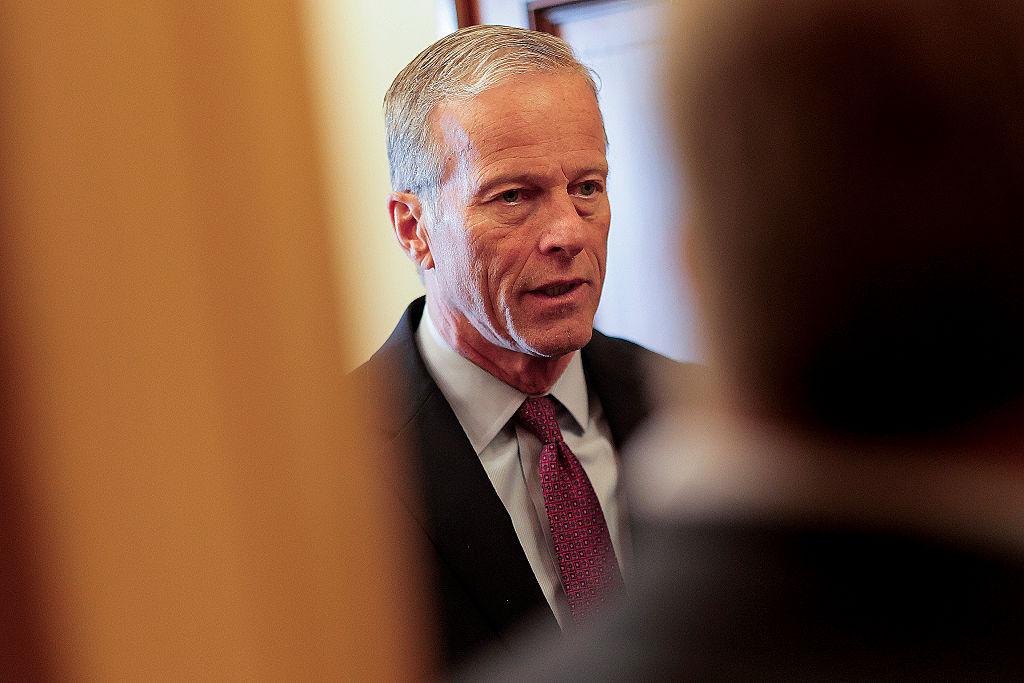
As we noted Monday, Senate GOP leaders and the White House don’t believe House Republicans can pass the funding package again, which would be needed if the Senate revises the measure in any way. Senate Majority Leader John Thune warned that this would be a “risky proposition,” but said Saturday’s shooting was “an inflection point and an opportunity” to reevaluate DHS policies and procedures.
“There are some things that can be done,” Thune said, referring to DHS reforms. “But I think they probably can be done independent of having to put it into the language of the bill, and therefore requiring it to have to go back to the House.”
The Trump factor. The White House believes that Trump’s decision to “de-escalate” in Minnesota is a sign of good faith. Administration officials’ preference is for the Senate to craft a separate bill with DHS reforms while passing the funding package. With Trump’s imprimatur, officials believe they can get that second DHS-centric bill through the House. It will be a humongous lift either way.
But Senate Democrats are also very unlikely to have faith in Speaker Mike Johnson’s ability to get that second bill through the House, even with Trump’s backing.
In the meantime, Thune is still waiting for Democrats to formalize their list of proposed changes to the DHS funding bill. Thune and other Republicans noted that the measure already includes new money for body cameras, for example.
Another challenge is that stripping the DHS measure from the broader funding package would likely require unanimous consent, and some Republicans are reluctant to green-light a process that could lead to new restrictions on federal agents.
“There’s already reforms in it, so what else do you want?” Sen. Markwayne Mullin (R-Okla.) said. “What I’m not going to do is handcuff the agents from doing their job.”
— Andrew Desiderio, Laura Weiss, John Bresnahan and Jake Sherman
Join us for a conversation with Sen. Shelley Moore Capito (R-W.Va.) on Thursday, Feb. 5, at 8:30 a.m. ET. We’ll discuss the news of the day and federal funding for medical research and cures across diseases and conditions, including Alzheimer’s disease. RSVP!



Defense: Rubio’s Hill gauntlet
The political tensions over President Donald Trump’s foreign policy will be focused squarely on Secretary of State Marco Rubio Wednesday morning, when he’ll be pressed to explain the decisions of a president hell-bent on flexing U.S. muscle abroad.
Senate Democrats are beyond frustrated with the administration’s lack of responsiveness on everything from the capture of Venezuelan leader Nicolás Maduro to Trump’s flirtation with controlling Greenland. They’re prepared to pepper Rubio about all of this during today’s Foreign Relations Committee hearing.
“The old Marco Rubio is unrecognizable today,” Sen. Chris Van Hollen (D-Md.) said. “The Rubio MAGA lobotomy is complete.”
But the former Republican senator will have plenty of backup from his one-time GOP colleagues, who’ve rebuffed Democratic efforts aimed at reining in executive power amid Trump’s military moves — real and threatened — abroad.
Senate Foreign Relations Committee Chair Jim Risch (R-Idaho) plans to applaud the Trump administration’s broader anti-narcotics work and tout the “tremendous opportunity” the United States has in Venezuela.
“After our lengthy engagements in the Middle East in years past, many Americans are concerned about so-called forever wars,” Risch will say, according to a copy of his opening remarks. “I know this administration is laser-focused on avoiding these experiences.”
What’s on tap. Democrats vowed to press Rubio on the Maduro operation, arguing that the rationale that’s justifying the deadly U.S. strikes — targeting alleged drug boats — has been undercut by subsequent events.
That issue of Venezuelan oil — and to what extent the United States could profit from it — will be a major theme for Democrats, multiple senators said.
“We need some visibility on what’s happening with this oil. This is crazy,” Sen. Chris Murphy (D-Conn.) said. “The American people need to understand who’s making money off of that and why Congress isn’t involved.”
This is likely going to be the only chance Democrats have for a while to grill Rubio in a public setting about Venezuela — and every other axe they have to grind with the Trump administration over its global posture.
Sen. Jeanne Shaheen (N.H.), the committee’s top Democrat, plans to ask whether the Maduro raid was “worth it,” while lamenting broader Trump administration cuts to foreign aid and rhetoric that is “pushing allies away.”
“From Venezuela to Europe, the United States is spending more, risking more and achieving less,” Shaheen will tell Rubio, according to her prepared remarks.
— Anthony Adragna, Briana Reilly and Andrew Desiderio


Vault: Wartime Jay Powell
Welcome to a Fed Day like no other in recent memory.
Federal Reserve Chair Jay Powell will address the world this afternoon after the Federal Open Market Committee announces its next interest rate move at 2 p.m. Analysts expect the Fed to hold interest rates steady — the first such pause since September.
All the while, it’s become increasingly hard for the U.S. central bank to ignore the politics buffeting its walls. “Donald Trump is doing everything he can to turn the Fed into a collection of sock puppets,” warned Sen. Elizabeth Warren (D-Mass.), no fan of Powell herself.
{if (profile.vars.Memberful_punchbowlnews_Plan_Premium_Policy_The_Vault_I_121828 == true || profile.vars.Memberful_punchbowlnews_Plan_Premium_Policy_The_Vault_I_103061 == true || profile.vars.Memberful_punchbowlnews_Plan_Premium_Policy_The_Vault_II_121827 == true || profile.vars.Memberful_punchbowlnews_Plan_Premium_Policy_The_Vault_II_103417 == true || profile.vars.Memberful_punchbowlnews_Plan_Premium_Policy_The_Vault_III_121826 == true || profile.vars.Memberful_punchbowlnews_Plan_Premium_Policy_The_Vault_III_103418 == true || profile.vars.Memberful_punchbowlnews_Plan_Premium_Policy_The_Vault_14_Day_Trial_121832 == true || profile.vars.Memberful_punchbowlnews_Plan_Premium_Policy_The_Vault_14_Day_Trial_103643 == true || profile.vars.Memberful_punchbowlnews_Plan_Punchbowl_News_Premium_Portal_The_Vault_Tech_121727 == true || profile.vars.Memberful_punchbowlnews_Plan_Punchbowl_News_Premium_Portal_The_Vault_Tech_121821 == true || profile.vars.Memberful_punchbowlnews_Plan_Punchbowl_News_Premium_Portal_Premium_Policy_The_Vault_121726 == true || profile.vars.Memberful_punchbowlnews_Plan_Punchbowl_News_Premium_Portal_Premium_Policy_The_Vault_121823 == true || profile.vars.Memberful_punchbowlnews_Plan_Punchbowl_News_Vault_Tech_126214 == true || profile.vars.Memberful_punchbowlnews_Plan_Punchbowl_News_Vault_Tech_126263 == true || profile.vars.Memberful_punchbowlnews_Plan_Punchbowl_News_Premium_Portal_The_Vault_Tech_Defense_138992 == true || profile.vars.Memberful_punchbowlnews_Plan_Punchbowl_News_Vault_Tech_Defense_136971 == true || profile.vars.Memberful_punchbowlnews_Plan_Punchbowl_News_Vault_Tech_Defense_138990 == true || profile.vars.Memberful_punchbowlnews_Plan_Punchbowl_News_Defense_Vault_136973 == true || profile.vars.Memberful_punchbowlnews_Plan_Punchbowl_News_Defense_Vault_138989 == true || profile.vars.Memberful_punchbowlnews_All_Access_Pass == true)}
The economy. The data picture hasn’t changed much during the last few weeks.
Inflation remains stubbornly elevated, with the 12-month personal consumption expenditures index coming in at 2.8% in November. The unemployment rate remains low, at 4.4%, but job growth plummeted through 2025. December’s job creation figures were the lowest recorded since 2003 outside of a recession.
Against that backdrop, today’s meeting comes after months of increasingly divisive votes among the FOMC’s participants.
December’s decision saw three votes come out against a 25 basis point cut. Federal Reserve Board Gov. Stephen Miran has mounted a lonely push for 50 basis point cuts since arriving in the job, while the Chicago Fed’s Austan Goolsbee and the Kansas City Fed’s Jeffrey Schmid wanted rates to hold steady after the last FOMC meeting.
Top of mind for Wall Street is whether the Fed leaves itself open to additional cuts in the near-to-midterm. Powell could signal that an extended pause is likely.
But President Donald Trump is expected to announce his nominee to lead the Federal Reserve in the coming weeks. Powell’s term ends in May. Having a new Fed nominee could quickly change Wall Street’s calculus about the trajectory of interest rates.
Then again, the nomination currently faces a rocky route through the Senate.
Aftershocks. The Justice Department’s criminal inquiry targeting Powell, and the chair’s extraordinary response earlier this month, is still being felt on Capitol Hill.
Sen. Thom Tillis (R-N.C.) told reporters Tuesday night that until the Powell probe was “disposed of,” he was still committed to maintaining a blockade on the Senate Banking Committee of any Federal Reserve nominees.
Tillis hasn’t spoken to the White House about his problems yet and didn’t plan to. “My position is pretty unambiguous,” the North Carolina Republican said. “I don’t think it needs clarification.”
– Brendan Pedersen
{else}

{/if}
PRESENTED BY THE ALZHEIMER’S ASSOCIATION

As many as half of the 7 million+ Americans living with Alzheimer’s are not diagnosed. Congress can support earlier detection with the ASAP Act.
NJ SPECIAL
AIPAC makes first big 2026 move
AIPAC is making its first major midterm play with its super PAC dropping $1.5 million and counting to defeat former Rep. Tom Malinowski’s (D-N.J.) comeback bid in a special election next week.
The move has sent shockwaves through New Jersey political circles ahead of the Feb. 5 primary, mostly because AIPAC backed Malinowski in past campaigns. Now it’s running attack ads against him.
United Democracy Project, the AIPAC-affiliated super PAC, said it turned on Malinowski because “he talks about conditioning aid” to Israel.
“That’s not a pro-Israel position, and he knows it. There are other candidates in the race who are far more pro-Israel than Tom Malinowski,” said Patrick Dorton, a spokesman for the group.
This is a significant highlighting of a 2026 red line for AIPAC, as well as a warning to others who might take a similar stance on aid to Israel. Malinowski’s position has become much more widespread among Democrats as the death toll in Gaza rises.
“It’s a mainstream position in the pro-Israel Jewish community,” Malinowski said of conditions on aid. “But AIPAC is sending a message to the party here that it’s not enough to be pro-Israel. You have to toe the line 100%.”
The special. The special election, triggered by now New Jersey Democratic Gov. Mikie Sherrill’s resignation from the House, has drawn a wave of Democratic candidates.
The winner of next week’s primary is likely to become the next member of Congress from the blue-leaning district in northern New Jersey. Malinowski is considered the frontrunner, having held a neighboring seat from 2019 to 2023.
Other top contenders: Essex County Commissioner Brendan Gill, former Lt. Gov. Tahesha Way and Analilia Mejia, a former aide on Sen. Bernie Sanders’ (I-Vt.) 2020 presidential bid.
Way has spent the most on TV ads of any candidate and has received $1.3 million in favorable ads from the Democratic Lieutenant Governors Association PAC.
Malinowski said he was in talks with AIPAC until late 2025 . Malinowski said an official told him the group would be opposing his candidacy and that they preferred Way.
“We were having constructive conversations. I’d had a relationship with them,” Malinowski said. “This came as a surprise.”
The group’s super PAC declined to say if it prefers one candidate, only that it opposes Malinowski. The ads have focused solely on Malinowski, attacking him on immigration and stock trading.
– Ally Mutnick
THE CAMPAIGN
News: House Minority Leader Hakeem Jeffries fundraised in San Francisco Monday with former Speaker Nancy Pelosi.
Jeffries was raising money for the DCCC, during his first western fundraising tour of 2026. Also in attendance: Democratic Caucus Chair Pete Aguilar (Calif.) and DCCC Chair Suzan DelBene (Wash.).
Endorsement news: The Congressional Black Caucus PAC is endorsing Rep. Sylvia Garcia’s (D-Texas) reelection bid.
VoteVets is endorsing Nancy Lacore in South Carolina’s 1st District Democratic primary. Lacore is running for the seat vacated by Rep. Nancy Mace’s (R-S.C.) gubernatorial run.
– Ally Mutnick and Max Cohen
PRESENTED BY THE ALZHEIMER’S ASSOCIATION

Earlier dementia detection will unlock access to new treatments.

Presented by AstraZeneca

The 340B program is supposed to help vulnerable patients—but without strong safeguards, it’s siphoning away funds that could be used for free and charitable medicine. The 340B Rebate Model Pilot improves program integrity, preventing duplicate discounts and strengthening accountability. Urge HHS to implement the pilot today. Learn why it matters.

Crucial Capitol Hill news AM, Midday, and PM—5 times a week
Join a community of some of the most powerful people in Washington and beyond. Exclusive newsmaker events, parties, in-person and virtual briefings and more.
Subscribe to Premium
Special Projects
Explore our deep dives into the issues that matter the most today and will shape tomorrow's future, with expert reporting that goes beyond the headlines and into the heart of the Capitol.
Check it outEvery single issue of Punchbowl News published, all in one place
Visit the archive
Presented by AstraZeneca
The 340B program lacks transparency—making it hard to tell if it’s actually helping vulnerable patients. HHS can fix the problem by implementing the 340B Rebate Model Pilot, ensuring the program is transparent, compliant, and accountable. Learn more.