
Skip to content
Sign up to receive our free weekday morning edition, and you'll never miss a scoop.

The State of Play

The economic promises of AI are endless. From increased spending by major tech companies to improved workplace efficiency, technology is quickly transforming the way companies do business and injecting more money into the economy.

It’s not just large firms benefiting from AI: Small businesses are also using it to raise productivity, handle routine administrative tasks and boost their online presence.

It is critical the United States remains a leader in AI adoption and advancement by continuing to foster a ‘try-first’ approach that encourages innovation while ensuring appropriate safeguards are in place.

House Financial Services Committee Chair French Hill (R-Ark.)

As AI becomes a greater part of economic activity and the financial world, policymakers are taking a careful approach to crafting regulations.

“It is critical the United States remains a leader in AI adoption and advancement by continuing to foster a ‘try-first’ approach that encourages innovation while ensuring appropriate safeguards are in place,” House Financial Services Committee Chair French Hill (R-Ark.) said.

While AI use expands across the economy and in workplaces, the public remains concerned that the technology could displace workers. Yet, that still has not happened on a mass scale.

Advertisement

Read Google’s 2025 U.S. Economic Impact Report


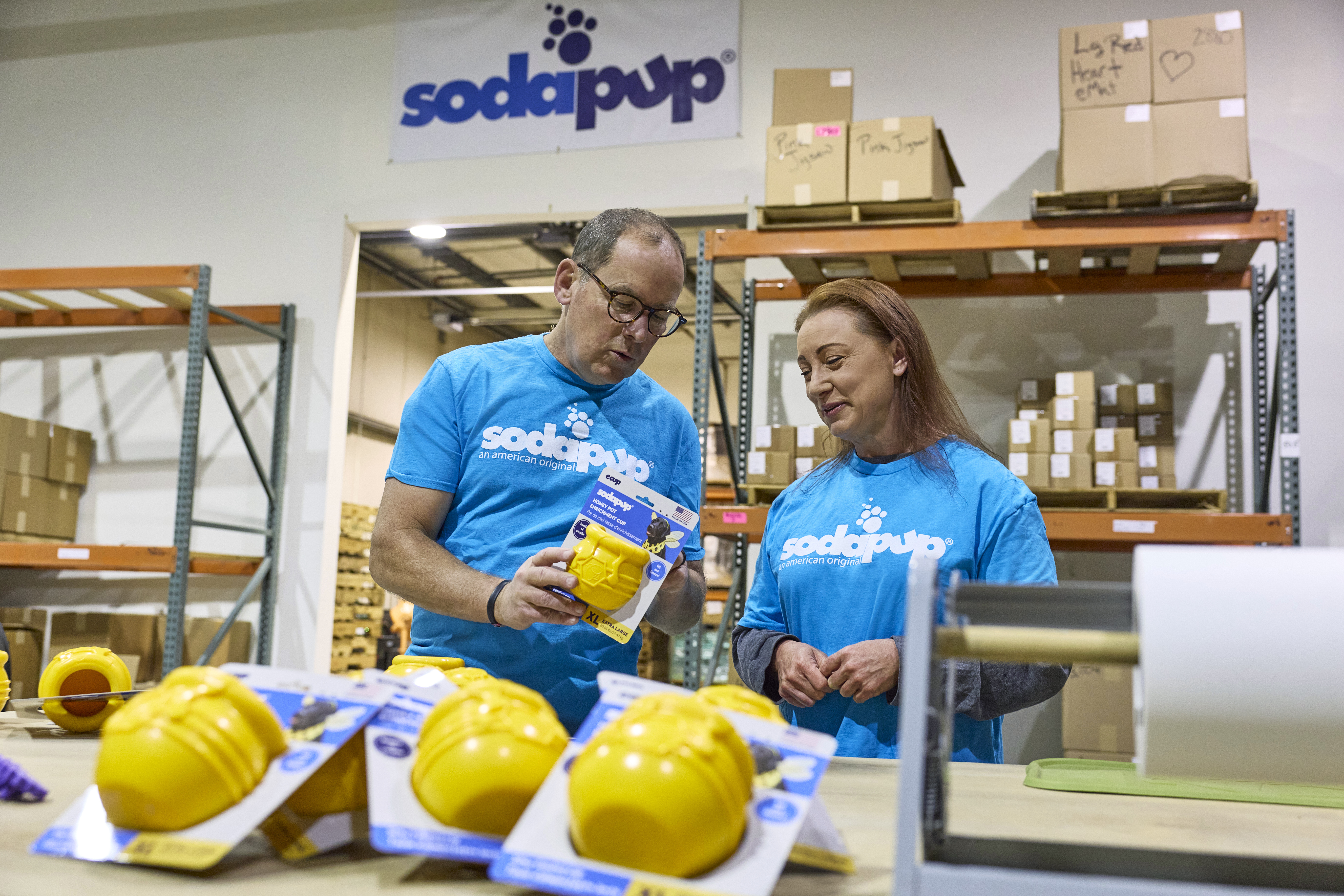
Digital tools, including AI, are a powerful engine for economic mobility, helping level the playing field for businesses and people everywhere. This week, we released Google’s 2025 U.S. Economic Impact Report to share impact stories of individuals using Google’s tools and products from every state. Explore the data and see how Americans in your state are leading a new era of American innovation.

 

Learn more

Capital investment. Big tech companies view adopting AI as crucial to their long-term success. That requires spending billions of dollars on critical AI tools and infrastructure, such as data centers and hardware.

Amazon, Alphabet, Microsoft and Meta are some of the biggest spenders. They are expected to fork out more than $600 billion in AI investments this year. 

Such AI-related capital expenditures contributed 1.1% to GDP growth in the first half of 2025, according to a J.P. Morgan report. That contribution, though small, could “evolve,” J.P. Morgan economists note. 

That capital infusion is notable as the economy faces hits from tariffs, tepid consumer spending, the affordability crisis and a weak labor market.

Data centers. Investments in data centers are creating new jobs for trade workers and technical professionals to keep up with the growing AI demand.

Top tech companies are expecting to spend about $710 billion in data centers in North America in 2026, according to Jones Lang LaSalle’s North American Data Center Report.

Data centers are a massive undertaking to plan and build. Once up and running, they consume a ton of energy and water to power and maintain the systems.

In the meantime, communities concerned about the negative impacts from data centers, like higher electricity prices, water usage and pollution, are pushing back.

“Hopefully in the future, what we’re going to be looking at is a situation where you can put a data center in a much more remote area,” said Rep. Bob Latta (R-Ohio), chair of the House Energy and Commerce Committee’s energy subpanel. 

Small businesses. Small enterprises often struggle with hiring staff, juggling administrative and management tasks, navigating regulations and marketing their products or services.  

AI tools are now transforming small-business operations, helping them save time, become more efficient and better placed to compete with larger firms. 

More than three-quarters of small businesses said they use AI in their operations, according to a Goldman Sachs survey.

Employers are using AI to speed up their hiring process by analyzing resumes and automating onboarding.

The technology is also helping businesses with smaller teams generate marketing and social media content, including blog posts and captions, to increase their reach at a fraction of the cost of hiring a marketing team.

Legislative Landscape

As Congress mulls ways to best regulate AI, businesses are grappling with how to appropriately incorporate the technology.

Effective AI implementation requires weighing ethical considerations, buy-in from employees and a proper understanding of the tools.

“There needs to be, yes, the regulation,” said Nicole Donnelly, AI adoption architect and founder of AI Smart Ventures. “But I wish we had some broader education that came along with it, because the everyday business owner isn’t necessarily paying attention to all the regulations.”

A few bills that passed the House in January would offer some AI guidance to businesses. 

The AI-Wise Act, introduced by Rep. Hillary Scholten (D-Mich.), would require the Small Business Administration to create educational resources and modules on AI tools. 

The DSCC raised more than the NRSC both in September and for the entire third-quarter.

And the AI for Main Street Act, introduced by Rep. Mark Alford (R-Mo.), would direct the SBA’s Small Business Development Centers to provide AI guidance and training to address small business concerns.

House Small Business Committee Chair Roger Williams (R-Texas) said these measures would provide small business owners with tools and resources to “grow, compete, and succeed in America.”

“I am committed to advancing pro-growth policies that empower Main Street to utilize AI, drive innovation, and stay competitive in a rapidly evolving global economy,” Williams said. 

Economic dislocation. AI promises to boost the economy, but there are still fears that it will disrupt the job market by automating certain tasks and displacing workers. 

While there have yet to be mass layoffs attributed to AI, policymakers are concerned about those who have already lost their jobs and how it impacts people’s careers. 

Junior employees are especially at high risk of displacement as entry-level jobs have plummeted in the United States due to AI’s ability to automate some of their tasks. 

Sen. Mark Warner (D-Va.), vice chair of the Senate Intelligence Committee and a member of the Finance Committee, said he is concerned about the economic dislocation. 

“Those kinds of first-year analysts you get as a job right out of college, I think that they will be gone very shortly,” Warner said. 

Warner co-sponsored a bill with Sen. Mike Rounds (R-S.D.) that would establish an Economy of the Future Commission. The commission would develop recommendations based on the economic and workforce impacts of AI, including reskilling for workers affected by the technology.

Advertisement

Google is offering free AI training and tools to U.S. small businesses, so they can grow their communities


Built by Google experts, the Google AI Professional Certificate equips small businesses with practical AI skills. And since the best way to learn AI is by practicing using the tools, every participant receives three months of no-cost access to Google AI Pro*, allowing small businesses to practice with our most capable models and start using AI to get more done and unlock new opportunities for their business. Terms apply*


Learn more

Warner said he’s an “AI optimist,” but he’s worried “that the economic disruption we’re about to see is going to be massive.”

However, Donnelly said the reality isn’t matching the market’s anticipation. 

“The market has been really reactive, and companies have been really reactive to letting go of too many people and then being like, ‘Oops, we should not have done that,’” Donnelly said. 

The Outlook

States have largely taken the lead in trying to regulate AI, though the Trump administration and members of Congress are also eager to create a national framework.

States vs. federal. In 2025, state legislatures introduced more than a thousand measures related to AI.

Many state measures have focused on regulating generative AI, protecting against deepfakes and mitigating AI biases. But conflicting regulations between states can leave national businesses confused about what rules to follow, potentially limiting how much companies feel comfortable incorporating the technology. 

Those kinds of first-year analysts you get as a job right out of college, I think that they will be gone very shortly.

Sen. Mark Warner (D-Va.)

Adam Thierer, senior fellow for the R Street Institute’s Technology and Innovation team, said Congress should create a national plan that provides “greater harmony and consistency” to define and regulate AI.

Thierer said state and international laws are putting a squeeze on AI innovators, particularly the smaller ones.

“There is a real disadvantage for companies that only have a handful of employees trying to cope with a multiplicity of differing definitions and regulations that develop like a patchwork across the nation,” Thierer said. 

Federal framework. The Trump administration wants to create a national standard for AI, something many in the industry prefer. 

The White House released its national legislative framework in March that would largely restrict state AI laws.

The framework urges Congress to provide resources, including grants and tax incentives, to small businesses to support an increased use of AI tools. 

The framework also calls on lawmakers to incorporate AI into workforce development and skills training programs. 

While President Donald Trump’s AI framework is just a proposal, Sen. Marsha Blackburn (R-Tenn.) has her own bill, the TRUMP AMERICA AI Act, that would codify much of the administration’s AI regulatory goals. 

Blackburn’s bill focuses on protecting children, conservatives, creators and communities worried about data centers, while making Big Tech pay for data center energy usage. 

— Shania Shelton

Listen on the platform of your choice

Welcome to Punchbowl News AM! We're glad to have you here.

Want to get more of what you need? Share a bit more about yourself to help us tailor your reader experience.

Thank you for signing up!

Thank you for signing up!


We have sent you a confirmation email. Please follow the provided instructions to complete your sign-up.

Thank you for confirming! You are now subscribed to the Punchbowl News AM list.

You're subscribed! Welcome to the community.