


May 23, 2026



THE TOP
House puts off Iran war powers action
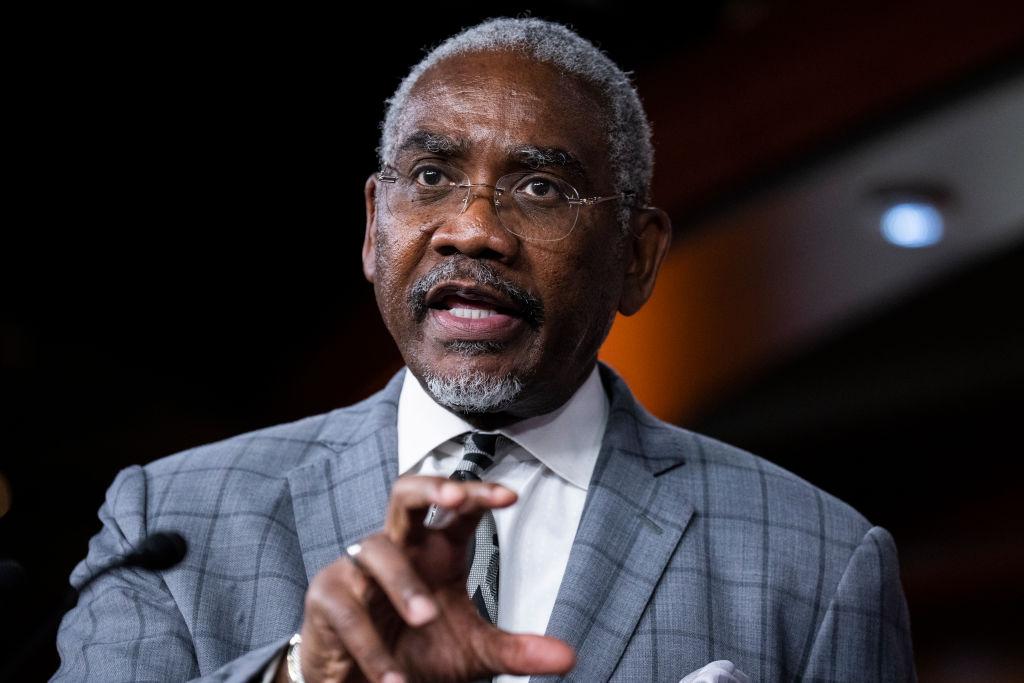
Welcome to the Readback, our weekend digest featuring the best of Punchbowl News this week – a quick roundup of all our scoops, analysis and Capitol Hill insight you won’t find anywhere else. We’ve also included a few of our favorite outside reads from the week.
War powers punt. House GOP leaders recognized they were on the brink of all but certain defeat when it came to the Iran war powers vote on Thursday.
So they did what everyone does in the face of impossible odds: they gave themselves more time.
In a stunning series of maneuvers, Republican leaders postponed consideration of Rep. Gregory Meeks’ (D-N.Y.) resolution to rein in President Donald Trump’s Middle East campaign, yanking the measure from Thursday’s calendar just as it was about to come up for a vote.
Now, lawmakers won’t take up the push until they return from Memorial Day recess in June. And at that time, GOP leaders hope they’ll have enough Republican votes to defeat it — at least until the next Democratic resolution hits the floor.
As all of this was going down Thursday night, reporters were scrambling to figure out what was happening.
I witnessed the moment Meeks first heard from an aide that GOP leaders would try to postpone the war powers vote. “They know they’ll lose,” Meeks told me as he rushed back to the House floor from the speaker’s lobby.
Procedure’s leading role. After the call was made, questions circulated over how GOP leaders could punt consideration of a privileged resolution.
The short answer: the 1973 War Powers Resolution gives lawmakers a period of “three calendar days” to hold a vote on a concurrent resolution. House GOP leaders’ action pushed consideration back another legislative day, but a vote would still occur within the stipulated three-day window.
“They’re claiming they have two more days to bring it,” Rep. Brian Fitzpatrick (R-Pa.) said of Republican leaders Thursday night. “I was prepared to vote for it.”
Fitzpatrick was one of three House Republicans to back the last Iran war powers vote, which narrowly failed on a 212-212 tie. The other GOP backers were Reps. Tom Barrett (Mich.) and Thomas Massie (Ky.).
The delay means both the House and Senate will see war powers action when they return the first week of June. Further procedural votes are in store for the Senate, which voted 50-47 to advance its own war powers push, capitalizing on a mix of GOP absences and Republican defections to clear the first step.
What I’m reading: I just finished “Real Americans” by Rachel Khong, a pretty interesting story that follows three generations of a Chinese-American family. I didn’t have any issue with the ending (unlike scores of Redditors), but the book was definitely a slow build to start.
– Briana Reilly
You can find The Readback in your inbox every Saturday at 8 a.m. And don’t hesitate to reach out to [email protected] with feedback. Enjoy The Readback.

The vote-a-rama that wasn’t
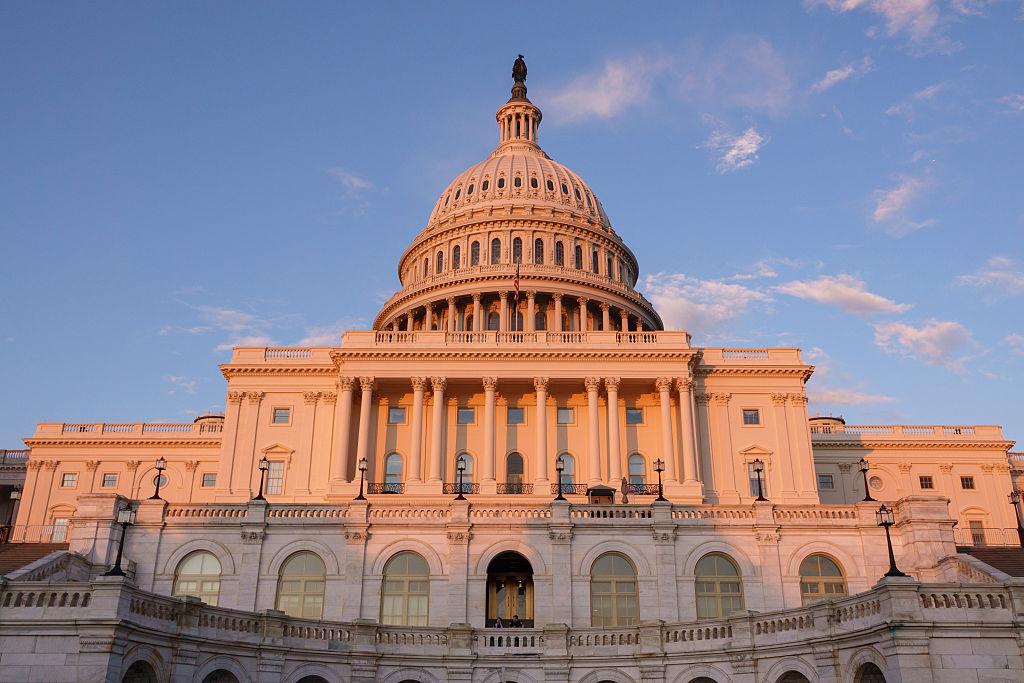
A week ago, I expected to be spending this rainy Friday mostly sleeping after a marathon all-night voting session in the Senate.
Instead, I’m here writing the readback and replenishing my stock of cherry cola Celsius for June, after Senate Republicans’ push to pass their reconciliation bill went off the rails.
It was a wild week in the Senate. Senate GOP leaders’ plan was to pass a roughly $70 billion package funding ICE and CBP, a key piece of Republicans’ plan coming out of the Department of Homeland Security shutdown. Then they’d depart for Memorial Day recess, perhaps even a little early.
A week ago, Senate GOP leaders had one big headache to settle: the White House’s request for $1 billion for the Secret Service and securing President Donald Trump’s ballroom project.
But the Senate Republican leadership made the call to drop the ballroom money from the reconciliation bill. The ballroom-related language was just never going to get the votes in the House and Senate, where key Republicans felt it was a politically toxic vote to take.
But then came a whole new storm. The Justice Department unveiled a new $1.8 billion “anti-weaponization fund” that could aid Trump allies targeted by federal investigations. The fund is part of a settlement from Trump’s lawsuit of the IRS over his leaked tax returns.
By midweek, Senate GOP leaders’ ability to pass the reconciliation bill totally flipped on its head. The “anti-weaponization fund” drew blowback from Senate Republicans and the leadership began mulling changes to the reconciliation bill or a GOP-authored amendment.
Acting Attorney General Todd Blanche came to Capitol Hill on Thursday and spent two hours in a mess of a meeting with GOP senators, who left totally unsatisfied. The Senate halls outside of the meeting were packed with reporters for hours as the chances of a reconciliation vote Thursday grew bleaker.
Senate GOP leaders ultimately punted reconciliation to June. The president’s artificial June 1 deadline for the bill has gone out the window.
Now Trump is doubling down. Senate Republicans are blaming the president for the ordeal, breaking with him and choosing their own political survival. And it’s not clear how GOP leaders can get out of this standoff.
Whenever a reconciliation vote happens, there will need to be a vote-a-rama before final passage in the Senate. That usually starts late and goes through the night.
One of the weird things about how the week unfolded is that there was a chance of a vote-a-rama Wednesday and again on Thursday. I came prepared with a sweatshirt for when the Capitol gets colder late at night, comfy shoes and a caffeine supply. I’ll just have to be ready for the next try.
What I’m reading: “Best Offer Wins” by Marisa Kashino.
– Laura Weiss

Don’t you know Richard Gere?
It’s an unmistakable head of hair.
I saw it coming my way. It wasn’t as dark as in the 1980s or had the charming salt and pepper look of the 1990s.
But it was there, as voluminous as ever, and now as white as snow.
“Is that Richard Gere?” I asked my colleagues Samantha Handler and Anthony Adragna.
“Uhh, I don’t know,” they responded as if I was speaking Greek.
We’re talking about the star of “American Gigolo,” “Primal Fear,” “Chicago” and, of course, “Pretty Woman.” Our mothers surely know him, our fathers may have wanted to be him once.
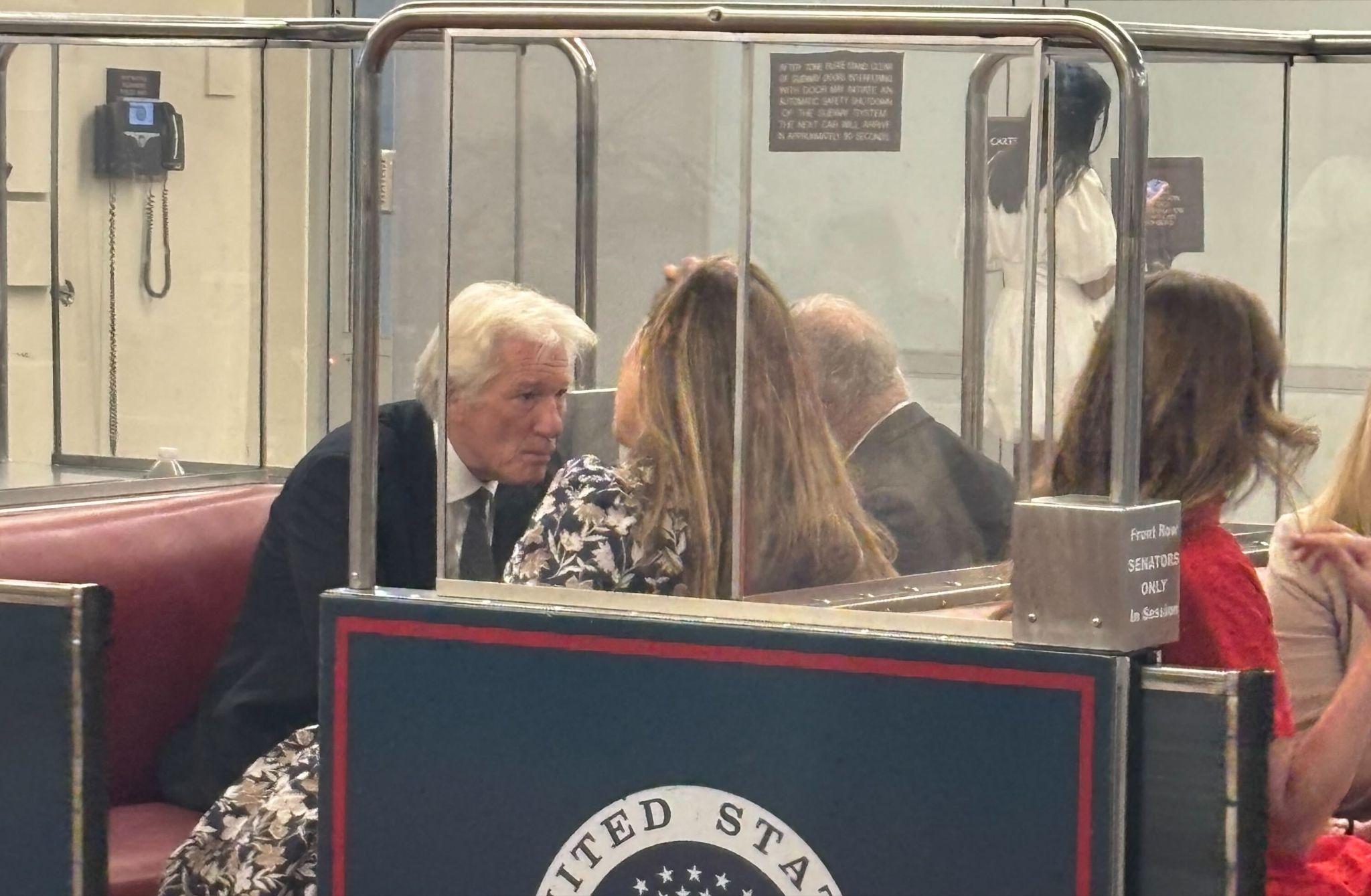
I was sure it was Richard Gere. He had just come off the Senate subway and was walking with Senate Foreign Relations Committee Chair Jim Risch (R-Idaho). They passed me, and I overheard Gere say Tibet once or twice.
Gere has long been an advocate for Tibetan causes and a fierce critic of China’s government. I’ve seen him on the Hill before, and he’s known to make trips here every once in a while.
“Should I tweet?” I asked them, voicing the perennial wonder of Washington reporters.
They said I should, but I remained reticent. What if it wasn’t Gere talking to Risch? I’d look silly.
As I debated whether or not to tweet, there they were again, coming down the escalator. But no one stopped them. No one asked for a picture, no one took a picture.
I was incredulous. We see our fair share of celebrities on Capitol Hill, but they tend to be swarmed with reporters and staff who are star-struck.
But it seemed like no one recognized the now 76-year-old Gere. Our friend Igor Bobic at NOTUS witnessed the same phenomenon in the Russell Office Building, where only Bobic and TMZ recognized Gere.
When I saw him for the second time, I took out my phone and snapped a couple of pictures of Gere and Risch talking and getting back on the train. In one of the photos, you can see Gere fixing his hair.
“SPOTTED” I tweeted, noting the film star was on the Hill and talking to the influential foreign policy senator.
The tweet went viral for some brief moments until it was completely buried by President Donald Trump endorsing Ken Paxton in the Texas Republican Senate primary.
Gere was back to anonymity. He went up and down the escalators in the Senate basement a few more times that day, uninterrupted by fans, making his way through the halls of the Capitol with Punchbowl News reporters, with and without hair, watching him go.
What I’m listening to: Anything from Miles Davis or John Coltrane. Both of these towering figures in American music would have been 100 this year. Davis’ birthday is coming up on May 26, and many places will celebrate the prince of darkness this weekend. If, for whatever reason, you haven’t heard anything from these two, start with the “Kind of Blue” album, one of the cultural jewels of America’s 250-year history.
– Diego Areas Munhoz

Arrington on Fly Out Day

Rep. Jodey Arrington (R-Texas), our guest this week on Fly Out Day and the chair of the House Budget Committee, is leaving Congress at the end of his current term. But even though Arrington is retiring, he’s going out with a bang.
The Texas Republican is in the middle of the Reconciliation 2.0 (and 3.0) debates that are dominating the final months of the 119th Congress. Even as Reconciliation 2.0, the effort to run Border Patrol and CBP, stalled out in the Senate, Arrington was optimistic Republicans could pass another party-line package before the end of the year.
In the Pink Room, I asked Arrington what advice he would give his House freshman self. At 54, Arrington is relatively young for a member who’s leaving the House.
Arrington pointed out that the country’s founders never intended politics to be a full-time career for Americans, but rather a pursuit that “citizen-legislators” undertook after already developing a career in another field.
Arrington told me his advice to his younger self would be to always follow through on promises he made on the campaign trail. Too often, Arrington bemoaned, politicians say one thing when seeking election and do something else once in Washington.
“Do what you say you’re going to do,” has become a rallying cry for many House Republicans frustrated that the institutional hindrance of Washington means many campaign promises go unheeded.
Arrington said President Donald Trump’s habit of following through on campaign promises is what makes him so uniquely beloved within the Republican Party base.
Memories of W. Trump wasn’t the only president that came up during my conversation with Arrington. A longtime former aide of former President George W. Bush, Arrington recounted a memorable trip to the golf course that he made with the then-governor of Texas.
As a junior staffer in his mid-20s, Arrington was invited to golf with Bush one day. Lacking proper equipment, Arrington wore basketball high-top sneakers to the course — much to the amusement of Bush. Check out the Pink Room video for the full story of what ensued when Bush made a wager with Arrington on a hole.
What I’m reading: After a long hiatus, I picked up “The Remains of the Day” by Kazuo Ishiguro again. What first seemed like a quaint slice-of-life story about an aging butler has now transformed into a sprawling tale involving foreign policy before World War II and the British class system. I’m hooked!
– Max Cohen

Presented by AstraZeneca

The 340B program is supposed to help vulnerable patients—but without strong safeguards, it’s siphoning away funds that could be used for free and charitable medicine. The 340B Rebate Model Pilot improves program integrity, preventing duplicate discounts and strengthening accountability. Urge HHS to implement the pilot today. Learn why it matters.

Crucial Capitol Hill news AM, Midday, and PM—5 times a week
Join a community of some of the most powerful people in Washington and beyond. Exclusive newsmaker events, parties, in-person and virtual briefings and more.
Subscribe to Premium
Special Projects
Explore our deep dives into the issues that matter the most today and will shape tomorrow's future, with expert reporting that goes beyond the headlines and into the heart of the Capitol.
Check it outEvery single issue of Punchbowl News published, all in one place
Visit the archive
Presented by AstraZeneca
The 340B program lacks transparency—making it hard to tell if it’s actually helping vulnerable patients. HHS can fix the problem by implementing the 340B Rebate Model Pilot, ensuring the program is transparent, compliant, and accountable. Learn more.