

For decades, Black power was on the rise on Capitol Hill.
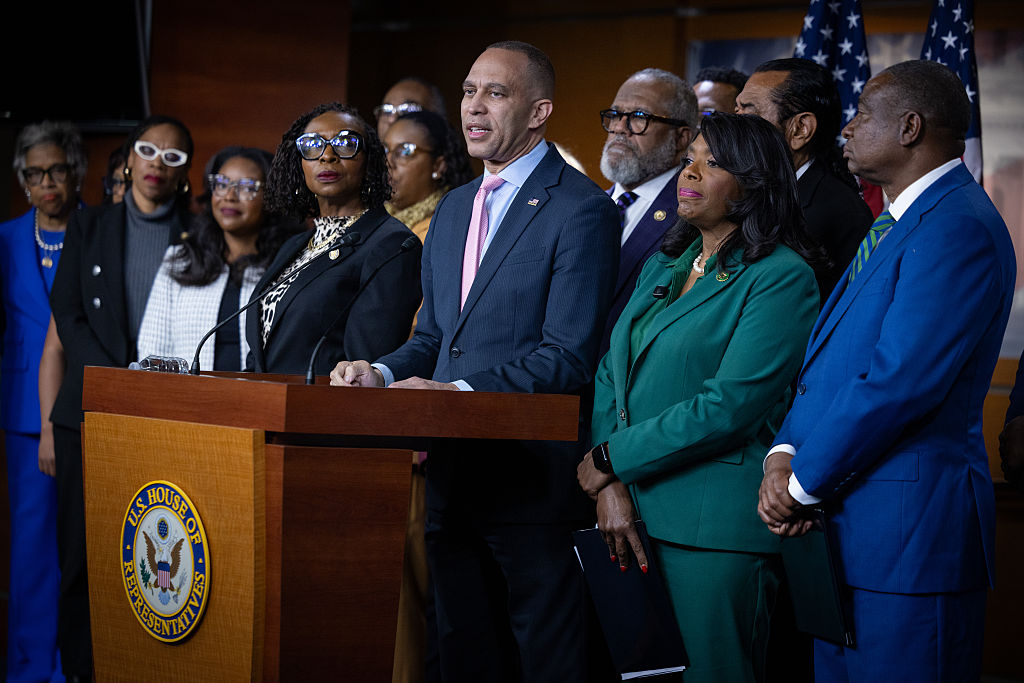
The Congressional Black Caucus’ membership swelled to an all-time high of 62 at the beginning of this Congress, up from only 13 in 1971. House Minority Leader Hakeem Jeffries is on the brink of becoming the first Black speaker of the House. There are now a record five Black senators.
But during the last two weeks, the conservative-dominated Supreme Court and Republican legislators across the South have blown this all up. GOP lawmakers across the region are targeting a half-dozen districts held by Black lawmakers this year for redistricting, and they’re promising to go even further next year.
This is an earth-shaking blow to the CBC, which has long been the most powerful voting bloc in Congress. Six or more Black Democrats could lose their seats this November due to the GOP redistricting blitz and the Supreme Court’s Callais decision. By 2028, a dozen Black Democrats could see their seats disappear.
Combined with the Virginia Supreme Court striking down a Democratic-driven attempt to draw four more blue seats there, plus GOP moves in Florida and other red states, it could be enough to save the Republican majority. Even if it isn’t, it’ll still make a House Democratic majority that much shakier during the next Congress and set up a GOP comeback in 2028, a presidential election year.
“This is an assault on free and fair elections, an assault on racial progress in America, and an assault on Black representation and the ability of African Americans to actually simply elect the candidate of their choice,” Jeffries told us Wednesday. “We’re not going to allow it. And we’re gonna forcefully push back against what’s happening in the deep South.”
Jeffries — under heavy pressure since the Virginia setback — has called a special House Democratic Caucus meeting today to discuss the fallout from the Callais decision, which gutted Section Two of the Voting Rights Act. That provision allowed states to draw minority-majority districts to address racial discrimination. Jeffries says that Democrats will still win the House, but he has put his own political future on the line.
“When you lose that level of institutional knowledge, it’s a real challenge,” said Rep. Troy Carter (D-La.), the CBC vice chair who may lose his own seat due to redistricting. “They could navigate this system, they bring years of wisdom and fight. But you know what? Everyone else has to step up.”
“The Supreme Court has been weaponized against Black people in this country,” added Rep. Bennie Thompson (D-Miss.), who could face redistricting in the next Congress. “With the swiftness of the states that are wiping out minority voting, there has to be an ulterior motive.”
CBC Chair Yvette Clarke of New York will be our guest on Fly Out Day today to talk about all of these dynamics, including the CBC’s future. Subscribe here.
We also want to put all this into a broader context. Led by President Donald Trump — who began the unprecedented national redistricting war last year in Texas — Republicans are waging a campaign against some of the most powerful pieces of the Democratic Party. Many Democrats believe this is a blatant GOP attempt to build a permanent majority by damaging the key structures of the minority party.
The Justice Department, at Trump’s direction, is investigating ActBlue, the Democratic funding juggernaut, as are House GOP committees. Trump fired hundreds of thousands of federal workers and ended collective bargaining for government unions, one of the Democratic Party’s most important factions. DOJ is seeking voter rolls from states, while Trump has repeatedly demanded passage of the SAVE America Act, which would require proof of citizenship and photo ID to vote. The Trump administration has even targeted the Southern Poverty Law Center, an iconic institution for Democrats dating back to the civil rights movement.
Democrats view all this as part of a larger Trumpian grab for power, while Republicans counter that they’re trying to even an electoral playing field that’s tilted way too far left.
Redistricting latest. South Carolina GOP Gov. Henry McMaster is expected to call back Palmetto State legislators later this week for a special session on redistricting. Five Republicans voted against a resolution that would’ve started a redistricting session earlier this week.
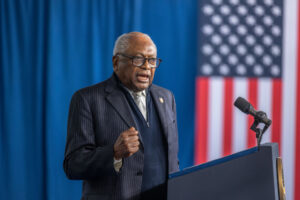
The move is aimed squarely at Rep. Jim Clyburn (D-S.C.), who has accused Republicans of trying to impose “Jim Crow 2.0.” The 85-year-old Clyburn predicted he would win in any district he finds himself in.
“I’m gonna run no matter what,” a defiant Clyburn said.
Tennessee has already redistricted out Democratic Rep. Steve Cohen, whose district is more than 60% Black, while Louisiana and Alabama are getting ready to redo their maps. There are two Black majority districts in each state, but only one Democrat is expected to survive this process. Democratic Rep. Emanuel Cleaver is very likely to lose following a Missouri Supreme Court ruling earlier this week.
All of this will increase pressure on blue states to break up existing Black and Latino-majority districts to spread out those voters and create more Democratic-friendly districts overall. But that strategy poses a threat to Black representation, too.
“As a Black member of Congress, particularly from seats where there’s a plurality or majority of Black constituents, we’re bringing the entire community’s voice with us,” said Rep. Marc Veasey (D-Texas), who lost his seat in Texas’ redistricting. “When those districts loosen up, I do worry about that affecting and impacting us being able to speak collectively with a Black voice.”
Meanwhile, in the House. House Financial Services Committee Chair French Hill (R-Ark.) and Rep. Maxine Waters (D-Calif.) secured a bipartisan deal to amend a major Senate housing bill. We scooped the news on our text platform late last night.
The House is eyeing a vote next week on the housing package. Read the bill text here, which includes changes to institutional investor prohibitions, introduces community bank deregulations and reworks a ban on an American digital dollar.