


The Workforce – Gina Raimondo
Presented by
Secretary Gina Raimondo
United States Secretary of Commerce
“America needs to be more globally competitive and a core piece of
that is talent. In order to enhance our business competitiveness,
we need to lean into our workforce development.”
Leaders in the public and private sectors have been trying to plan the
future of America’s workforce for decades. Covid-19 certainly
complicated matters.
Big new questions have arisen: Where can workers be found? Will they
ever show up? What can be done to entice employees to come back?
Enter: The Workforce. Punchbowl News’ effort to identify four
leaders who are focused on leading the country back to economic
stability and ensuring that there is a well-prepared workforce that
will allow America to remain competitive. This week we are profiling
Commerce Secretary Gina Raimondo.
Presented By

Our people make the difference. We’re proud to support associates by
offering jobs at all levels – and investing in our workforce through
training and skills development so that all jobs lead to careers.
Earlier this year, we announced a five-year, $1 billion investment in
career training and development. And we’re paying 100% of college
tuition and books for nearly 1.5 million eligible associates. Learn
how we’re creating a path of opportunity for associates to grow their
careers, so they can continue to build better lives for themselves and
their families.
Learn More
THE BACKGROUND
Raimondo has long been known for her workforce efforts as Rhode
Island governor. But the Smithfield, R.I., native’s first experience
with the challenges of education, training and employment goes back
much further. When Raimondo was young, her father taught night
school to make ends meet. “I remember staying up late at night for
him to come home because he’d come home, eat his dinner, rush out,
do a second job and get home at like 10 or 11 at night,” Raimondo
said. Her father, Joseph, regaled her with stories about his
chemistry students. “He would say, ‘You know, listen Gina, these
people are smart and hungry and they just need skills,” she
recalled.
Those words stuck with Raimondo. When she became the state’s first
female governor in 2015, Rhode Island had the nation’s highest
unemployment rate. “At the time, Rhode Island was spending tens of
millions of dollars on totally ineffective workforce development
training because it was detached from the skills businesses needed
and would hire,” Raimondo said. “So we turned the whole model upside
down. We focused more heavily on apprenticeships and business
engagement. We brought businesses to the table in a real way.” The
goal: create a system that would prepare job seekers for available
positions immediately after they finished training.
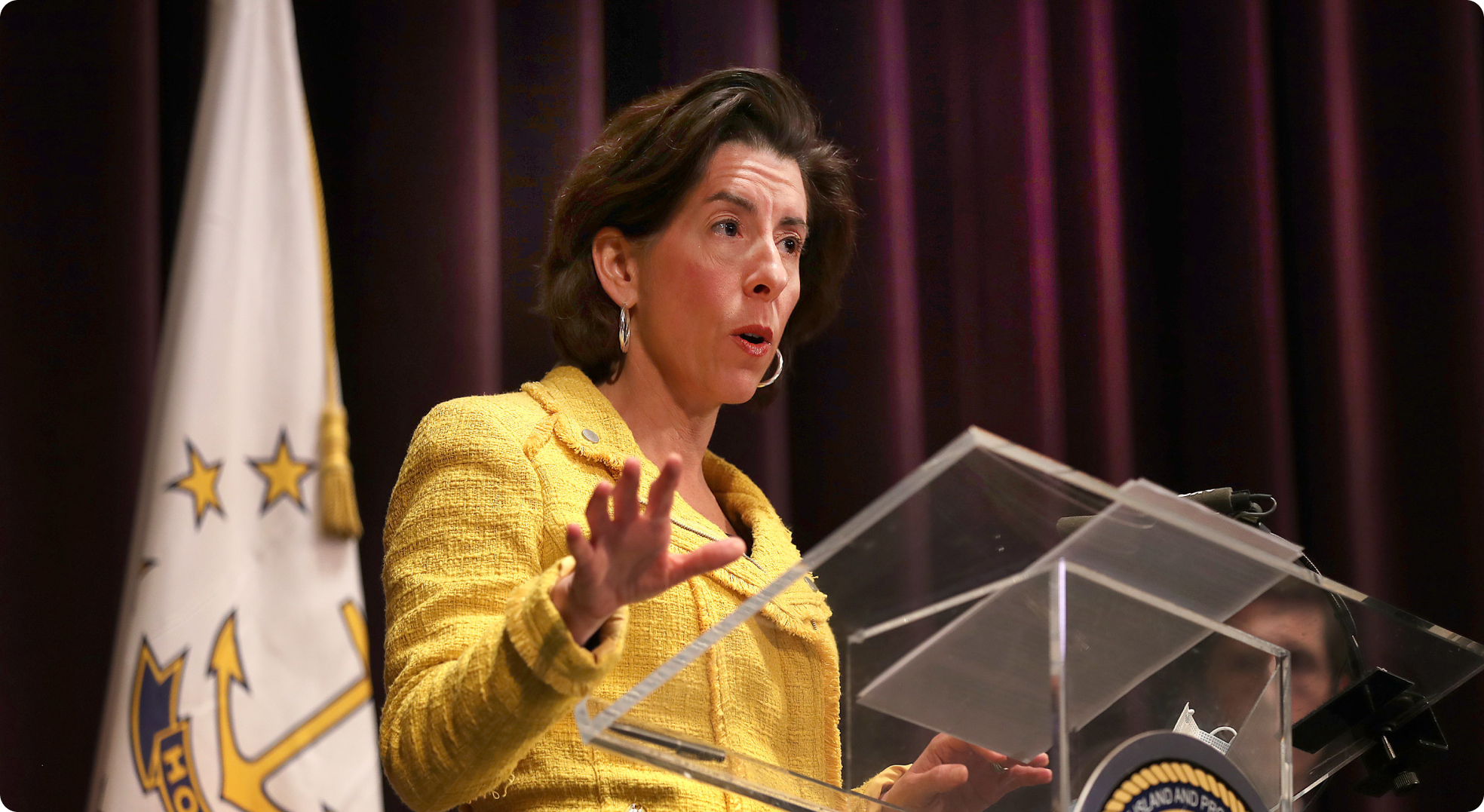

She also worked to cut taxes, reduce regulations and create the
largest infrastructure program in the state’s history. Under her
leadership, Rhode Island community colleges became tuition-free.
In 2020 with Covid raging, Raimondo announced a $45 million investment
to create jobs for thousands of state residents out of work due to the
public health crisis. The program “Back to Work Rhode Island” worked
closely with private sector companies — including Bank of America,
Microsoft and Salesforce — to find opportunities for people who had
lost their jobs.
Rhode Island Unemployment Rate, 2015-2020
Source: BLS.Gov
Current
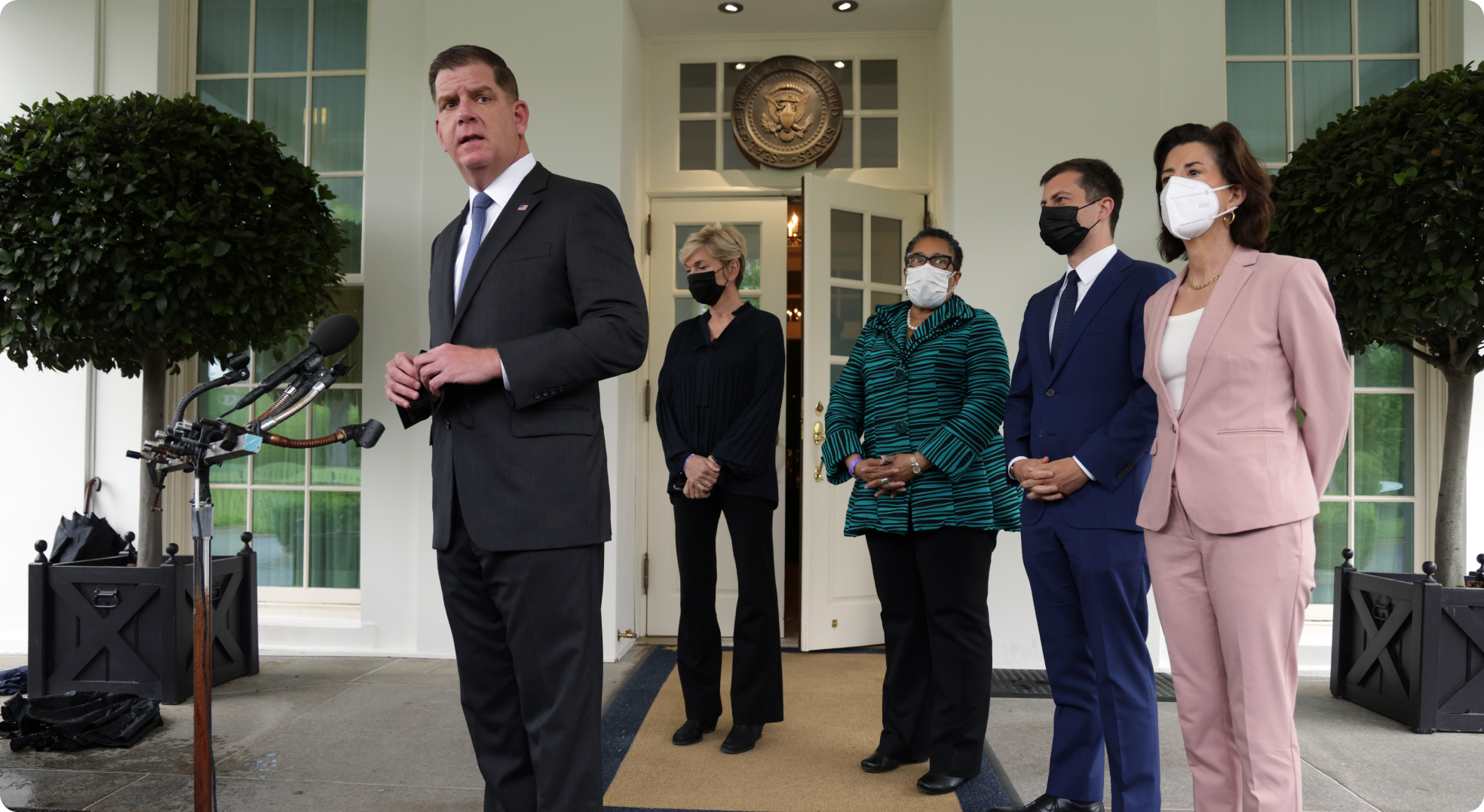
As Commerce secretary, Raimondo is trying to change the way the
government mobilizes around workforce development. She’s working
directly with Labor Secretary Marty Walsh and Education Secretary
Miguel Cardona to “break down the silos between our departments.” For
Raimondo, understanding what jobs businesses are committed to hiring
for is the key. “It’s a waste of money to train people for jobs that
don’t exist,” Raimondo said. “These things only work if businesses
step up from day one and commit to hiring, because once you get them
on the hook to commit to hiring … then they will pay attention to
the skills that these people are being trained for because it’s in
their business interest.”
There is no one solution. The labor shortage is a serious issue. It’s
core to the lack of equity in America and core to our lack of
competitiveness and this is an all-hands on deck effort that we all
need to participate in.
– Sec. Gina Raimondo, United States Secretary of Commerce
As she looks at the challenges related to America’s global
competitiveness, Raimondo is focused on making sure there is enough
talent with modern skills for the digital economy. Part of that is
reshaping the way businesses review job candidates. Her push: for the
private sector to be more inclusive of employment seekers re-entering
the workforce after having children or for those who have formerly
been incarcerated. “To be clear, this is a sea change in the way
education will be done, in the way job training will be done, in the
way hiring will be done,” Raimondo said, “But it’s necessary if women
and people of color are going to have a chance at getting decent and
high paying jobs.” She added, “And frankly it’s necessary for
businesses to be productive because right now businesses aren’t
growing at the rate they need to be growing, because they can’t hire
at the rate they need.”

Presented By
Walmart is a place of opportunity. Here, you can go as far as your
hard work and talent will take you. To help associates on their way,
Walmart’s invested more than $5 billion in training, education,
higher pay and expanded benefits for U.S. associates.
Through our Live Better U program, Walmart will pay 100% of college
tuition for nearly 1.5 million associates. And since not every
career journey includes a college degree, Walmart also offers access
to skilled trade programs for in-demand fields like Facilities
Maintenance, Electrical, Plumbing and Construction Trades. In
addition to creating pathways to future-proof jobs, Walmart is
helping associates prepare for the jobs of tomorrow through digital
certificates in fields like Data Fluency and UX/UI.
By creating opportunities for associates to pursue an education or
degree, Walmart is helping associates prepare for careers at Walmart
or wherever their professional ambitions take them.
Learn More
PEOPLE TO WATCH
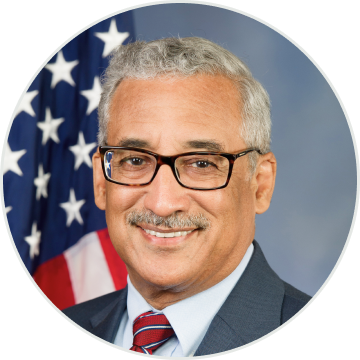
VIRGINIA DEMOCRATIC CONGRESSMAN
Bobby Scott
Rep. Bobby Scott has been involved in workforce issues since
he was first elected to office in the Virginia House of
Delegates in 1977. As chair of the House Education and Labor
Committee, he has continued to lend his voice on these issues.
In January, he introduced the Relaunching America’s Workforce
Act that included billions in spending for career training
programs for unemployed adults and students. And as the Biden
administration looks to inject tens of millions of dollars
into transforming America’s workforce for the next generation,
Scott has been at the forefront of leading that effort on
Capitol Hill.
Read more about Rep. Bobby Scott.

president of the Service Employees International Union
Mary Kay Henry
Henry is the first woman president of the Service Employees
International Union, which represents two million members in
the service industry. During her time at SEIU, Henry has
focused on improving jobs for workers in the health care,
property services and public sectors. She has also backed
workers in the fast-food industry for their “Fight for $15 and
a Union” movement. Throughout the pandemic, Henry has pushed
for caregivers to qualify as essential workers. Over the
summer, SEIU organized forums for six weeks in nearly two
dozen states to lobby members of Congress to back President
Joe Biden’s significant increase in spending to support home
care workers.

FOUNDER & CEO YEAR UP
Gerald Chertavian
Chertavian founded Year Up, a nonprofit organization dedicated
to making sure young people have the skills, experiences and
support to reach their full potential in their careers and
higher education. Founded in 2000, Year Up has an annual
operating budget of more than $170 million. Chertavian has a
long history of working with underserved youth through the Big
Brother mentoring program and has also served on the
Massachusetts State Board of Elementary and Secondary
Education.
FUTURE
Raimondo is urging increased investment in apprenticeships and job
training. That pipeline is key for the business community to have
enough skilled workers — in areas such as data analysis and software
engineering — to accommodate growth. “You want to have enough labor
and make sure it’s not just white guys,” Raimondo said, considering
that the majority of people entering the workforce seeking tech and
digital jobs will be women and largely non-white in the next 10 years.
“It’s really heartbreaking for me to see women, women of color
especially, concentrated so heavily in the lowest paying, most
back-breaking work, like in the care economy. There’s no need for it.
And the thing is, if we could just help these women to get access to
the job training they need, the support they need, they could get
these higher paying jobs and be great at it.”
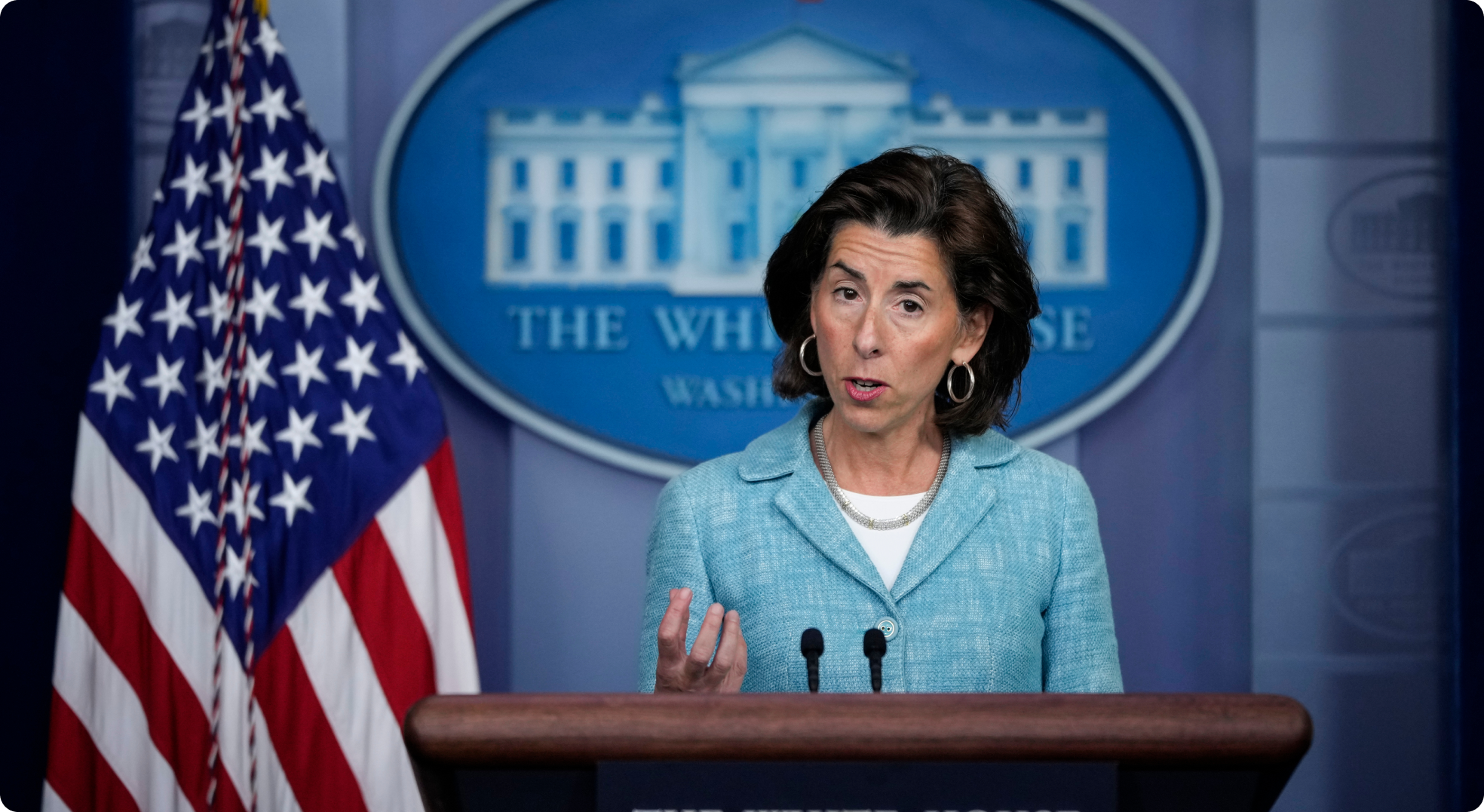
Raimondo is also focused on making sure women have access to childcare
and transportation in order to compete for those higher-paying jobs.
“If you really want to be able to unleash the creative and productive
potential of half of America’s workforce, which is women, we need to
invest in childcare. Period,” Raimondo stated. The last word: “Any
time you have to disrupt the status quo, it’s really hard. Change is
hard and this is easy to say and hard to do. But it’s worth it,” she
said.
Populations Served through Workforce Innovation and Opportunity Act
Training Programs 2019
Source: U.S. Department of Labor
53%
Women
58%
Low Income
32.3%
Black/African American
18.6%
Hispanic/Latino Ethnicity
Presented By



THE WORKFORCE
Government and the private sector are rethinking their roles in
preparing for the future labor market needs. And Covid-19 has
only added to the urgency as we are undergoing the most severe
worker shortage on record.