


January 22, 2026



PRESENTED BY

THE TOP
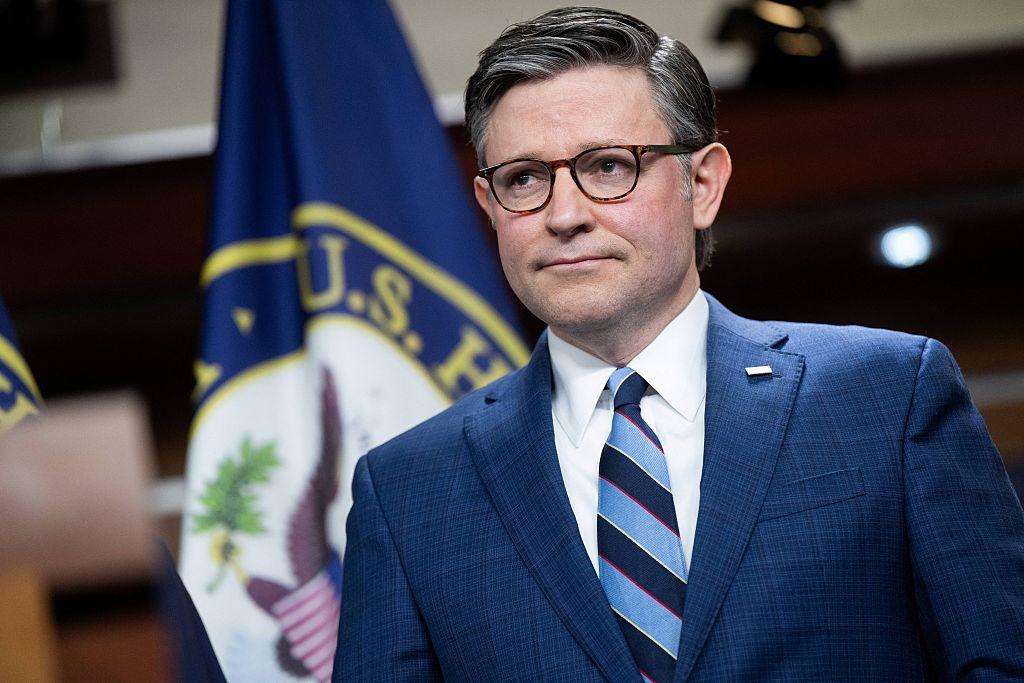
Johnson’s big money year. And a long day on tap in the House
Happy Thursday morning.
News: Speaker Mike Johnson raised $82 million during 2025, his first full non-election year as speaker. This includes a $16 million haul in the fourth quarter. Team Johnson says it’s a single-year record for any speaker.
Johnson has been helping keep the NRCC afloat. Johnson transferred $23.6 million to the national committee in 2025. Johnson also transferred a total of $13.4 million directly to incumbents, coming to $453,000 per campaign.
Combined with CLF, the Johnson-backed super PAC which raised $136 million in 2025, the speaker’s political committees have raised more than $215 million for House Republicans. That’s a lot of cash for what’s shaping up to be quite the election season.
The funding mess. The House Rules Committee will come back into session at 7:30 a.m. today to try to chart a pathway forward to fund the federal government.
With just eight days until the shutdown deadline, House Republican leaders will move today to get a rule out of the Rules Committee, adopt it on the floor and then pass a four-bill, $1.2 trillion spending package covering the Pentagon, Transportation-HUD, Labor-HHS and the Department of Homeland Security.
The Rules Committee was forced to press pause Wednesday evening because, in the last day or so, a bunch of problems cropped up for Johnson’s leadership team. The snafus forced the Rules panel into recess for hours while GOP leaders tried to hash out compromises.
It’s not entirely clear if these issues have been resolved to the liking of anyone involved in the negotiations. And remember that the House is supposed to be on recess next week as well.
Johnson’s first challenge has come from unlikely quarters. Midwestern Republicans, typically mild-mannered allies of the GOP leadership, are up in arms that the massive spending package doesn’t include language to make E15 — an ethanol-based biofuel — available for year-round purchase.
The ringleaders in this intra-Republican fight include GOP Reps. Zach Nunn and Ashley Hinson of Iowa, and Reps. Michelle Fischbach (R-Minn.) and Adrian Smith (R-Neb.).
Oil-rich states like Oklahoma, Texas and Louisiana would be natural opponents of this move. Johnson and House Majority Leader Steve Scalise are from Louisiana. House Appropriations Committee Chair Tom Cole is from Oklahoma. Senate Republican leaders are also opposed to the E15 policy change.
These Midwestern Republicans told House leaders on the floor — including Majority Whip Tom Emmer — that they’d been promised a permanent fix on the ethanol policy. But the GOP leadership says this isn’t the right time or place to enact this policy change.
However, there may not be another must-pass legislative vehicle suitable for the provision. Some members have discussed adding the provision to an upcoming disaster funding bill expected sometime in the next few months.
So the GOP leadership is betting that the Midwesterners will fold — a fair bet, for what it’s worth.
The stakes: If they don’t, Johnson won’t be able to get the rule across the floor. Johnson needs the rule to ensure that he can pass the Homeland Security FY2026 bill, which doesn’t have a prayer of reaching the two-thirds majority required under suspension of the rules, due to overwhelming Democratic opposition.
The rule will also stitch together several spending bills to help expedite Senate passage by the Jan. 30 shutdown deadline, another key factor.
There’s another problem brewing as well. The Rules Committee — meaning the GOP leadership — is under pressure to allow a vote on an amendment dealing with gender affirming care. If that amendment is made in order and adopted by the House, Democrats could bolt from voting for the bill.
Democratic leaders haven’t received any guidance from their GOP counterparts on the rule or minibus vote other than both are expected to take place Thursday. Republican leaders say they can deliver their votes.
Backed by the White House, Johnson has rolled the dice on the minibus strategy by giving into Democratic funding levels and policy demands on riders. Both sides badly want to avoid another shutdown following last fall’s 43-day debacle. Plus, appropriators desperately need to get back to some kind of regular order to reassert Congress’ power over the federal purse.
Johnson has been forced to deal with balky groups of GOP lawmakers throughout this Congress — first conservatives, then moderates, now Farm Belt reps. All of these members see the tough political landscape for Republicans in November and are doing what they can to buttress their own standing first and their leadership second.
Democrats are being pressed very hard by the base to vote no on ICE funding, although some swing-district Democrats will vote yes. Republicans are going to have to carry the DHS bill on their own.
Vice President JD Vance will head to Minneapolis today, further raising the political stakes in the ICE funding fight. Vance will “deliver remarks focused on restoring law and order in Minnesota.” Mass protests have broken out there since the Jan. 7 fatal shooting of Renee Good by an ICE agent.
House leaders face a looming weather challenge too. A major snowstorm is expected to hit the East Coast this weekend, and many members would like to leave town tonight (if possible) or early Friday to avoid getting snowed in. It won’t drive decision-making on the minibus package, but it adds some scheduling pressure.
House Republican leaders have no plans to send a stopgap funding bill to the Senate. But a big chunk of the federal government is slated to shut down next Friday if this minibus isn’t enacted. The expected snowstorm could complicate those travel and legislative plans.
– Jake Sherman, Samantha Handler, Max Cohen and John Bresnahan
Join us on Thursday, Feb. 5, at 8:30 a.m. ET. We’re speaking with Sen. Shelley Moore Capito (R-W.Va.) to discuss the news of the day and federal funding for medical research and cures across diseases and conditions, including Alzheimer’s disease. RSVP now!


THE SENATE
Hart renovation delayed amid senators’ complaints
News: A controversial renovation project for the Hart Senate Office Building is being delayed after senators complained that they’d be forced out of their offices for an extended period of time, according to multiple sources familiar with the matter.
Construction work was due to begin next month on the exterior of the Hart Building as part of a longer-term effort aimed at strengthening the building’s security. Phase I of the project has now been delayed until late 2026, the sources said.
Senate leaders, the Rules Committee and the Architect of the Capitol all have jurisdiction over the project. Senate offices started getting notified about potential displacement in November.
Since then, senators and senior aides have complained privately to party leaders and the Rules Committee that the construction would disrupt their daily business, and that attempts to mitigate the impact were insufficient.
Nearly all office suites in the Hart Building are on the outer perimeter, with an atrium in the middle. The upgrades are intended to “harden” the outer perimeter of the building.
Depending on which side of the building a Senate office is located, anywhere from three to 30 workspaces would be directly impacted by the renovation project, forcing senators to house much of their staff in temporary spaces far from Hart. Senators whose offices are at the corners of the building will see the highest displacement impact.
Making matters worse, the renovations weren’t disclosed as part of the annual suite selection process, during which senators can move to a more desirable office location. In other words, a senator who may have wanted to choose a more favorable office wouldn’t have been informed that space would be impacted as part of the renovation.
Last month, Sens. Markwayne Mullin (R-Okla.) and Martin Heinrich (D-N.M.), who lead the Legislative Branch subcommittee of the Appropriations panel, circulated a letter to Senate leaders and the Rules Committee expressing several concerns about the construction project.
But the letter was never sent, in part because Senate leaders made the decision to delay Phase I of the project until late 2026, when retiring senators — as well as those who lose their reelection bids — will begin to vacate their offices. This will reduce the overall impact.
The letter, dated Dec. 18, requests that the project be delayed until adjacent roads are closed to traffic and usable office space for affected senators is identified. Mullin and Heinrich said the project is “being pursued without adequate preparation to address their very real impacts on the functioning of the United States Senate.”
The Hart project has long been in the works, dating back to the post-9/11 period. Senators were told that the displacement would last for 12-15 months, depending on their exact location within Hart.
There have been a number of classified briefings about the revamp, attended by senators as well as senior aides.
— Andrew Desiderio and Jake Sherman


Tech: Moolenaar talks TikTok as deal set to close
House China Committee Chair John Moolenaar (R-Mich.) has two specific questions for TikTok’s new American owners, who are due to close on the sale of the Chinese app’s U.S. operations Thursday.
“Can we ensure that the algorithm is not influenced by the Chinese Communist Party?” Moolenaar said. “And two, can we ensure that the data of Americans is secure?”
Moolenaar was one of the foremost advocates of banning TikTok in the United States while it was under Chinese ownership. The Michigan Republican said timing is still in flux for his long-promised oversight of the TikTok deal.
Moolenaar made clear during a wide-ranging sitdown with Punchbowl News, however, that he’s committed to digging into the transaction that often put him and other China hawks in an awkward spot with President Donald Trump.
Ranking members, rare earths. Moolenaar will be particularly focused on the plan to copy Chinese owner ByteDance’s algorithm for the app and put it under the control of the new owners. Alongside the remaining minority ownership for Chinese interests, that’s been a key concern for hawks.
But Moolenaar will be without a crucial partner in his effort to dig into the TikTok deal, though.
That’s because Rep. Raja Krishnamoorthi (D-Ill.), the ranking member of the China panel who has been just as hawkish on TikTok and chips, is being replaced by Rep. Ro Khanna (D-Calif.). Khanna has actually been one of the few — but loud — voices in support of TikTok and has opposed its ban.
The two lawmakers are more likely to agree on the need to disentangle the United States from the Chinese supply of critical minerals. Moolenaar recently cosponsored legislation on the issue and we’re told critical minerals is an area Khanna wants to make inroads.
Overall, we wanted to know if Moolenaar felt his hawkishness was out of fashion.
He insists hawks aren’t in the political wilderness, pointing to some serious wins in the National Defense Authorization Act that push back on certain Chinese biotech companies and curb some investment in China.
“Those are both very positive things that a lot of people didn’t think could get done,” Moolenaar said.
Moolenaar also said he doesn’t begrudge Trump’s work toward “some kind of a peaceful coexistence” with Beijing, given the intertwined economies and nuclear capabilities of the two superpowers.
“No one wants to have unnecessary provocation,” Moolenaar said. “However, if you believe that the freedoms that we enjoy are provoking a country who will retaliate for those freedoms, that’s a problem.”
– Ben Brody and Diego Areas Munhoz
PRESENTED BY NIKE

From the starting line to the podium, Nike is proud to outfit Team USA with athlete-centered innovations to make their dreams real. Learn more.
THE HOUSE GOP
News: Cline says he’s set to be the next RSC chair
News: Rep. Ben Cline (R-Va.) is running to be the next chair of the Republican Study Committee and is already touting that he’s locked up the race.
In an interview, Cline — the current RSC vice chair — told us he’s secured endorsements from a majority of voting members of the conservative group.
“I’ve been honored to receive support from across the conference and a majority of members of the Republican Study Committee who would be coming back and voting,” Cline said.
Goals. A self-described “policy wonk at heart,” Cline said he’s focused on rolling back Biden-era regulations and advancing a second GOP reconciliation package.
Cline said he wants to build on Rep. August Pfluger’s (R-Texas) leadership of the RSC as a “crucible for policy discussions to try and bring together conservatives within the conference.” Pfluger is among the members endorsing Cline’s bid.
While Cline acknowledged that Reconciliation 2.0 doesn’t have “universal support” among House Republicans, he said it was the RSC’s job to rally support for the package.
The RSC’s influence has changed in recent years. The conservative caucus has grown extremely large, so it’s a bit difficult to corral the entire membership around a single policy view.
The RSC had much more power when the House Republican Conference had a larger contingent of moderate members, making the RSC the conservative core of the party.
Redistricting. Cline represents a western Virginia district that may be at risk given state Democrats’ plan to draw new lines ahead of 2026. But Cline was optimistic that he’ll be in the House next term.
“I plan on running in the Sixth District as currently drawn,” Cline said. “The appetite, in my view, is not there to undo the work of the nonpartisan commission and the will of the voters.”
Virginia is barreling toward a redrawn map this year, but there’s a raging debate among Democratic leaders about how far to go.
— Max Cohen
… AND THERE’S MORE
News: Maryland Gov. Wes Moore is meeting with House Minority Leader Hakeem Jeffries on Thursday to discuss Maryland redistricting.
Moore is pushing for his state legislature to redraw its congressional map to pick up one seat in 2026 over the objections of the top Democrat in the state Senate.
Moore will also meet with the New Dems today.
Fundraising. Rep. Young Kim (R-Calif.) raised $1.55 million in Q4 and has $5.5 million on hand. Kim is facing Rep. Ken Calvert (R-Calif.) in a contested primary.
Missouri. National Nurses United, the largest organization of registered nurses, is endorsing former Rep. Cori Bush’s (D-Mo.) comeback bid. Bush, a nurse, is challenging Rep. Wesley Bell (D-Mo.).
— Ally Mutnick and Max Cohen


Presented by AstraZeneca

The 340B program is supposed to help vulnerable patients—but without strong safeguards, it’s siphoning away funds that could be used for free and charitable medicine. The 340B Rebate Model Pilot improves program integrity, preventing duplicate discounts and strengthening accountability. Urge HHS to implement the pilot today. Learn why it matters.

Crucial Capitol Hill news AM, Midday, and PM—5 times a week
Join a community of some of the most powerful people in Washington and beyond. Exclusive newsmaker events, parties, in-person and virtual briefings and more.
Subscribe to Premium
Special Projects
Explore our deep dives into the issues that matter the most today and will shape tomorrow's future, with expert reporting that goes beyond the headlines and into the heart of the Capitol.
Check it outEvery single issue of Punchbowl News published, all in one place
Visit the archive
Presented by AstraZeneca
The 340B program lacks transparency—making it hard to tell if it’s actually helping vulnerable patients. HHS can fix the problem by implementing the 340B Rebate Model Pilot, ensuring the program is transparent, compliant, and accountable. Learn more.