


February 4, 2026



PRESENTED BY

THE TOP
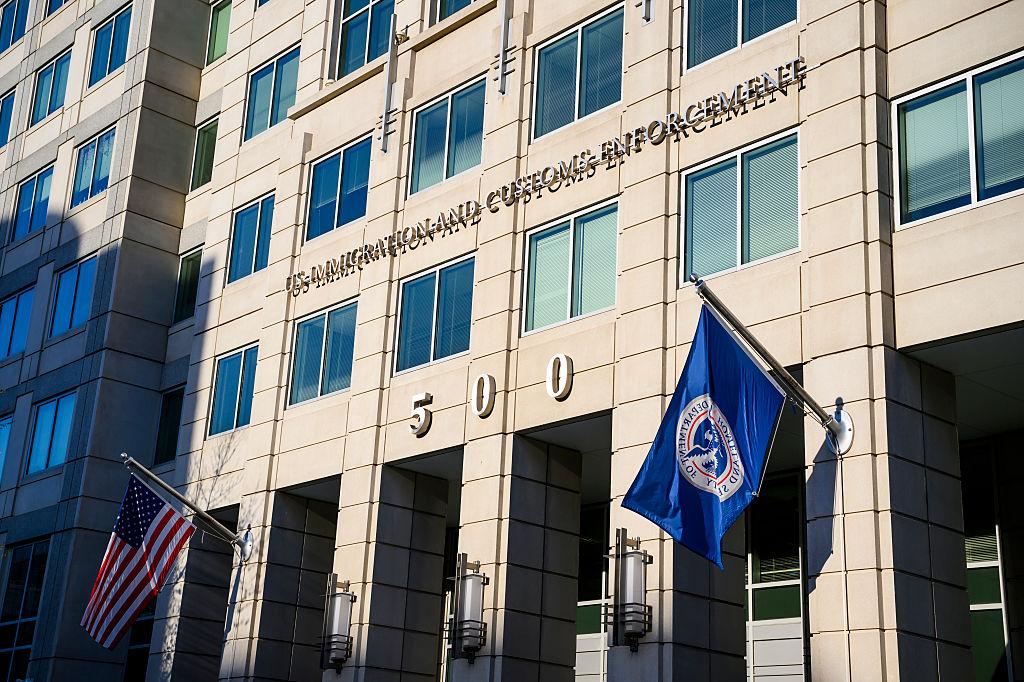
DHS is funded for 9 days. And then what?
Happy Wednesday morning.
Congress put out one fire just to start another.
About 12 hours ago, President Donald Trump signed a bill into law that funds most of the federal government through Sept. 30. But the Department of Homeland Security is only funded for another nine days — until Feb. 13.
Let’s reiterate this simple fact: Congress won’t be able to pass any deal to overhaul DHS policies and procedures by that time. Speaker Mike Johnson and Senate Majority Leader John Thune have expressed strong doubt about two of the policy changes most important to Democrats — barring federal agents from wearing masks and requiring judicial warrants to detain undocumented immigrants.
Johnson also said he wanted to use this opportunity to force Congress to crack down on “sanctuary cities” that won’t cooperate with federal authorities on deporting undocumented immigrants. That’s aimed right at Democratic-run cities, and it’ll never get Democratic support.
All this means that congressional leaders and the White House will need to focus on what to do when DHS funding runs out once again. Let’s talk about possible scenarios for the next two weeks.
Another short-term CR. Congress could try to pass another short-term CR to keep DHS funded past the Feb. 13 deadline.
From a policy perspective, this makes sense. DHS isn’t just ICE and CBP. The massive, unwieldy department includes TSA, the Coast Guard, FEMA and more. It’s both the strength and weakness of DHS.
Lawmakers are incentivized to keep funding for these critical functions flowing. Republicans think they have the upper hand in this situation because a DHS shutdown would impact the aforementioned entities, while ICE and CBP can still operate. That’s because Republicans included tens of billions of dollars for them in the One Big Beautiful Bill last summer.
“I think in many ways the Democrats boxed themselves into a very difficult negotiating position,” Sen. Kevin Cramer (R-N.D.) said. “That said, there’s still a genuine desire to do something and to make some reforms.”
But did you watch the House floor Tuesday? The chamber was barely able to clear a 10-day CR on the promise that Trump would negotiate with Hill leaders. Johnson would again have a very tough time passing a rule to bring a DHS funding bill to the floor.
Plus, we can’t foresee a scenario in which dozens of House Democrats vote for a DHS bill in any form. Just 21 House Democrats voted Tuesday for the short-term DHS CR coupled with a package of five bipartisan spending bills they overwhelmingly favored. It won’t get better by next week.
In the Senate, Republicans would need at least seven Democrats to join with them to clear another DHS funding patch. For now, Senate Democrats are using the imminent deadline to try to prevent a loss of momentum. Which means nearly every Democratic senator is indicating they wouldn’t support another stopgap funding bill for DHS.
A Democratic senator who attended the Senate Democratic Caucus’ closed-door lunch on Tuesday told us that there likely would be sufficient support for a two- or three-week extension, but only if there’s been “tangible progress” toward a bipartisan product.
Furthermore, hardline conservatives like Rep. Anna Paulina Luna (R-Fla.) will definitely use another must-pass bill for their pressure campaign to have the Senate pass the SAVE America Act.
This is why Thune and Johnson were opposed to a two-week funding patch. There was never a chance that Trump would be able to get a deal in such a short timeframe.
The House GOP makes a play. This is improbable, but House Republicans could try to jam the Senate and then leave town for the Presidents Day recess.
One way Johnson may be able to pass a DHS funding bill is if he can convince House Republicans that the only option is to enact a full-year CR for the department.
Republicans in both chambers say they’re very comfortable with a yearlong CR. It would give the Trump administration maximum flexibility, something that might be appealing to House Republicans in particular.
Yet Thune would be put in an impossible situation because a yearlong DHS CR has zero chance of getting 60 votes in the Senate.
Several lawmakers are scheduled to leave Feb. 12 for the Munich Security Conference. The following week is a scheduled recess.
A deal that nobody likes. Is there any agreement that Republicans and Democrats could reach that makes some progress but leaves everyone a bit disappointed?
Probably not. We’re in a maximalist era in politics where neither side is incentivized to compromise. Yet the basic outlines of such an agreement aren’t hard to divine. Congress could mandate that federal officers wear body cameras and coordinate with local law enforcement agencies. That’s just about the only area of overlap at this point.
No deal. What if DHS stays unfunded for a long period of time? It isn’t a goal for any of the leaders, but given the politics of all participants, an off-ramp isn’t obvious to us.
We’ll note once again — as will congressional leaders and the White House — that not funding DHS won’t shut down ICE or CBP.
If Congress can’t pass a CR to fund DHS, Republicans will hammer Democrats for cutting off key agencies and Democrats will say that they will never give another dime to the department until ICE is reformed.
— Jake Sherman, Andrew Desiderio, John Bresnahan and Laura Weiss
Today: Reps. Tony Gonzales (R-Texas) and Andrea Salinas (D-Ore.) will join us for a summit focused on understanding the many factors shaping youth mental health. RSVP to save your spot!
Tomorrow: Sen. Shelley Moore Capito (R-W.Va.) joins us at 8:30 a.m. ET to discuss the news of the day and federal funding for medical research and cures across diseases and conditions, including Alzheimer’s disease. There’s still time to RSVP!


PRIMARY WATCH
AIPAC’s first 2026 test
AIPAC turned on former Rep. Tom Malinowski (D-N.J.) — who the group previously supported — when Malinowski said he’d be open to conditioning aid to Israel. A Thursday special primary election will reveal whether Malinowski can survive a spending onslaught in a new era of anti-AIPAC sentiment among Democrats.
This race in New Jersey’s 11th District is AIPAC’s first big test of 2026. The high-profile organization’s anti-Malinowski blitz underscores a bright-red line for the midterms and its zero-tolerance policy toward those wavering on Israeli aid.
United Democracy Project, AIPAC’s super PAC, has pumped $2.3 million into the race, most of it on TV ads tying Malinowski to President Donald Trump.
Rep. Alexandria Ocasio-Cortez (D-N.Y.), who’s backing progressive Analilia Mejia in the race, said AIPAC’s attacks on Malinowski, a center-left candidate, were “an attempt to wholesale intimidate the entire party.”
“It’s quite shocking how moderate of a stance that they are mobilizing against. We’re not even talking about them targeting the left,” Ocasio-Cortez said.
Malinowski, who represented a neighboring New Jersey district for two terms, started as the frontrunner, but it’s not clear who benefits from UDP’s attack on him.
The field. Malinowski is running in a crowded field of candidates vying to replace Democratic Gov. Mikie Sherrill — the seat’s previous occupant — in a safe blue North Jersey district. Malinowski’s main rivals are Mejia, former Lt. Gov. Tahesha Way and Essex County Commissioner Brendan Gill, who has the endorsement of former New Jersey Democratic Gov. Phil Murphy.
More than $6 million has been spent on ads in the race, with UDP as the top spender. Way has run $520,000 in ads and received $2 million in help from outside groups.
Gill has spent roughly a half-million dollars on ads. Malinowski has dropped $313,000. While the former congressman has a group backing him, its spending is dwarfed by UDP’s outlay.
Yet Malinowski supporters like Rep. Jason Crow (D-Colo.) said “attack ads like that in primaries almost always blow back.”
“What they mean is that some outside group wants to put their hand on the scale, and usually people will locally bristle at that,” Crow added.
— Max Cohen and Ally Mutnick


Vault: Bessent in the hot seat
Treasury Secretary Scott Bessent begins a two-day tour of Capitol Hill this morning. First stop: the House Financial Services Committee. The Senate Banking Committee gets the second bite on Thursday.
This won’t be Bessent’s first time in front of the banking committees, but a lot has happened in the U.S. economy since last spring. Here’s what lawmakers have in store for the Treasury secretary:
Big picture. Bessent remains one of the Trump administration’s foremost voices on policy and economics — a market soother one day and a partisan pugilist the next.
That status gives Bessent’s hearings this week even more weight, even for a Cabinet official. Lawmakers of both parties will try to use that to their advantage.
Some Republicans are focused on messaging. Sen. Bernie Moreno (R-Ohio) said he hopes Bessent would tout the Trump administration’s wins over the past year.
“He should take a victory lap,” Moreno said of Bessent on Tuesday. “He should talk about the great things that we’ve done.”
Lawmakers have plenty of policy questions for Bessent. The Senate particularly remains concerned about the fate of the Federal Reserve’s independence. Top Senate Banking Committee Democrat Elizabeth Warren (Mass.) said her line of questioning would focus in part on Kevin Warsh, who was nominated by the Trump administration this week to be the next Fed chair.
Warren said she wants to ask Bessent “where he agrees and disagrees with the Fed nominee on inflation, interest rates and the role of deregulation.”
One notable Republican said he may not bother pressing Bessent on the Fed. Sen. Thom Tillis (R-N.C.) says he won’t budge on blocking the nomination of Warsh until the Trump Department of Justice drops its criminal probe into Fed Chair Jay Powell.
“Nobody needs to talk with me, because I’m not going to change my mind,” Tillis told reporters on Tuesday. “If [Bessent] has an update on the [Powell] investigation, that’d be helpful, but I doubt he would.”
Little picture. You’re also going to hear a lot of lawmakers press Bessent on their personal policy priorities. There’s a lot of potential for news here.
— Rep. Andy Barr (R-Ky.) said he’ll ask Bessent about Treasury’s efforts to implement new outbound investment restrictions which were signed into law in late 2025. Barr said he’ll “discuss congressional intent.”
— Rep. Frank Lucas (R-Okla.) wants to ask Bessent about deposit insurance reform. House Financial Services Committee Chair French Hill (R-Ark.) hasn’t been enthusiastic about this push, but Bessent has touted it as a priority. “Fun will be had,” Lucas said.
— Sen. Mark Warner (D-Va.) will press Bessent about the Community Development Financial Institutions Fund, which has repeatedly faced the ire of the White House since 2025. Warner and Sen. Mike Rounds (R-S.D.) both said they’ll seek clarity on the Trump administration’s preferences on crypto market structure legislation.
– Brendan Pedersen

MONEY MOVES
The incumbents who got outraised in Q4
One of the surest signs that an incumbent is in for a tough reelection: getting outraised by a challenger.
That happened more than three dozen times last quarter. The trend plagued Republicans in the battleground seats more than Democrats and signals the danger facing the razor-thin House GOP majority.
At least 20 GOP incumbents raised less than a Democratic challenger last quarter, per a Punchbowl News analysis of FEC filings. Many of them are in purple districts.
Meanwhile, only about a half dozen Democratic incumbents were outraised by a Republican. Three of those Republicans were significantly self-funded.
Republican incumbents outraised by a Democrat: GOP Reps. Dale Strong (Ala.), Paul Gosar (Ariz.), Darrell Issa (Calif.), Lauren Boebert (Colo.), Jeff Crank (Colo.), John Rutherford (Fla.), Cory Mills (Fla.), Mariannette Miller-Meeks (Iowa), Trent Kelly (Miss.), Michael Lawler (N.Y.), Tom Kean Jr. (N.J.), Scott Perry (Pa.), Andy Ogles (Tenn.), Jen Kiggans (Va.), John McGuire (Va.), Ben Cline (Va.), Derrick Van Orden (Wis.), Chuck Edwards (N.C.), Dan Crenshaw (Texas) and Brian Babin (Texas).
Democratic incumbents outraised by a Republican: Democratic Reps. Val Hoyle (Ore.), Dina Titus (Nev.), Don Davis (N.C.), Frank Mrvan (Ind.) and Debbie Wasserman Schultz (Fla.).
Far more incumbent Democrats were outraised by primary opponents, a sign that they’re in for a bruising clash with a younger generation of hopefuls looking to nudge them out of office.
Democrats outraised by a primary challenger: Democratic Reps. Mike Thompson (Calif.), John Larson (Conn.), Sheila Cherfilus-McCormick (Fla.), David Scott (Ga.), Stephen Lynch (Mass.), April McClain Delaney (Md.), Wesley Bell (Mo.), Yvette Clarke (N.Y.), Valerie Foushee (N.C.), Steve Cohen (Tenn.) and Shri Thanedar (Mich.).
The disparity is particularly stark in Tennessee, where Cohen raised just $84,000. His challenger, state Rep. Justin Pearson, raised $732,000.
Only a handful of Republican incumbents trailed a primary opponent last quarter.
Republicans outraised by a primary challenger: GOP Reps. Andrew Clyde (Ga.), Thomas Massie (Ky.), Tony Gonzales (Texas) and Ogles.
– Ally Mutnick
AND THERE’S MORE…
The Campaign. House Energy and Commerce Committee Chair Brett Guthrie (R-Ky.) hosted a fundraiser Tuesday night in support of the panel’s endangered Republicans Mariannette Miller-Meeks (Iowa), Tom Kean (N.J.) and Gabe Evans (Colo.). The event raised more than $500,000, and nearly all GOP Energy and Commerce members were in attendance.
Scoop: Rep. Young Kim (R-Calif.) is adding $500,000 to her broadcast/cable TV reservation ahead of a GOP primary clash with Rep. Ken Calvert (R-Calif.) in California’s newly redrawn 40th District. That brings Kim’s total ad reservation to a whopping $3.75 million. Kim plans to go on air in early April.
Kim raised $600,000 in January, per her campaign. She began 2026 with $2 million more cash-on-hand than Calvert.
Calvert told us he currently “represents about 70% of the district, so I feel pretty good about it.”
– Samantha Handler and Ally Mutnick


Presented by AstraZeneca

The 340B program is supposed to help vulnerable patients—but without strong safeguards, it’s siphoning away funds that could be used for free and charitable medicine. The 340B Rebate Model Pilot improves program integrity, preventing duplicate discounts and strengthening accountability. Urge HHS to implement the pilot today. Learn why it matters.

Crucial Capitol Hill news AM, Midday, and PM—5 times a week
Join a community of some of the most powerful people in Washington and beyond. Exclusive newsmaker events, parties, in-person and virtual briefings and more.
Subscribe to Premium
Special Projects
Explore our deep dives into the issues that matter the most today and will shape tomorrow's future, with expert reporting that goes beyond the headlines and into the heart of the Capitol.
Check it outEvery single issue of Punchbowl News published, all in one place
Visit the archive
Presented by AstraZeneca
The 340B program lacks transparency—making it hard to tell if it’s actually helping vulnerable patients. HHS can fix the problem by implementing the 340B Rebate Model Pilot, ensuring the program is transparent, compliant, and accountable. Learn more.