


July 12, 2025



THE TOP
Approps take center stage

Welcome to The Readback, our weekend digest featuring the best of Punchbowl News this week – a quick roundup of all our scoops, analysis and Capitol Hill insight you won’t find anywhere else. We’ve also included a few of our favorite outside reads from the week.
With reconciliation done, all the attention on Capitol Hill has moved to the appropriations committees.
That’s for two reasons. For one, government funding runs out at the end of September. And two, many of the Republican senators who have problems with the upcoming rescissions package sit on the spending panel.
On Thursday, the Senate Appropriations Committee completely unraveled over these issues.
It all starts with Sen. Chris Van Hollen (D-Md.).
On Wednesday night, Van Hollen announced he was against the Commerce-Justice-Science funding bill, which he helped negotiate. He made the rare move of holding a public subcommittee markup — which the Senate Appropriations Committee doesn’t usually do — to air his grievance about the location of the new FBI headquarters.
The Trump administration last week had announced the bureau’s new headquarters would be in the Ronald Reagan building in Washington.
However, Greenbelt, Md. had been selected as the new location during the Biden administration. The Maryland site had won after a competitive selection and vetting process.
Van Hollen wanted language in the appropriations bill to restrict the Trump administration’s use of the new FBI funds so that the money could only be used for the Maryland location. Sen. Lisa Murkowski (R-Alaska) joined Democrats during the Thursday markup to adopt the amendment.
The FBI fight had turned into a microcosm of the rescissions vote senators will take next week. Murkowski and Van Hollen likened the Trump relocation of the new headquarters to a rescission. Murkowski is one of the key holdouts on the Trump rescissions package, too.
But, as Murkowski and Van Hollen were trying to find a way forward with CJS Chair Jerry Moran (R-Kan.), Republicans rebelled. GOP appropriators started switching their votes, now opposing the CJS bill that they were about to support just hours earlier.
Moran wasn’t on board with the agreement Murkowski and Van Hollen forged. Senators were trying to stall for time during the markup. At one point, senators asked if they were about to tank the whole bill. After huddling while the markup was still live, they eventually settled on recessing until they could figure things out.
And that’s where we stand going into next week. We’ll see what happens on both the rescissions vote and if the CJS markup ever finishes.
What I’m watching: “Your Friends & Neighbors” on Apple TV. Jon Hamm once again plays a rich guy with some questionable morals. I just finished the show and can’t wait to see if they’ll do another season.
– By Samantha Handler
You can find The Readback in your inbox every Saturday at 8 a.m. And don’t hesitate to reach out to [email protected] with feedback. Enjoy The Readback.

What to watch on Tuesday’s FEC deadline
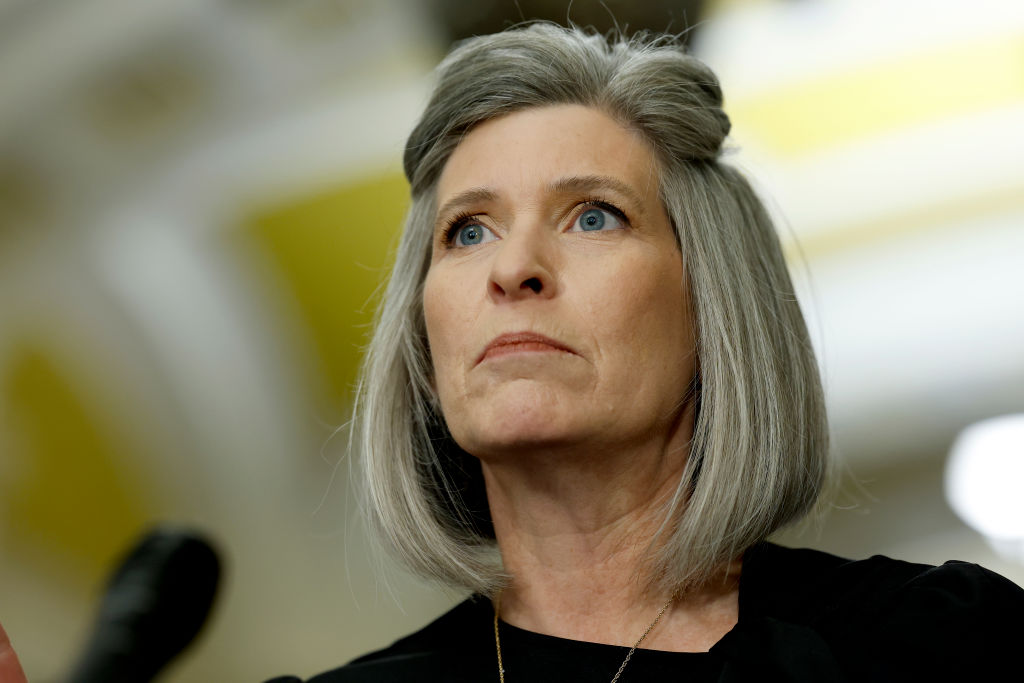
By the time the clock strikes midnight on Tuesday, July 15, every federal candidate will have to report their second-quarter fundraising to the Federal Election Commission.
This is a huge day for campaign-finance nerds and we will be up late into the night to provide analysis in our AM edition. All this data will bring the midterm battles into sharper focus.
Here’s what I’ll be looking for next week and what it can tell us about 2026:
Retirement Watch. Some members, such as Rep. Don Bacon (R-Neb.) and Sen. Thom Tillis (R-N.C.), have already announced they will hang it up in 2026. Others are keeping us guessing.
Low fundraising numbers for a House member or in-cycle Senator could certainly be a sign they are heading for retirement. I’m watching for Sens. Joni Ernst (R-Iowa) and Susan Collins (R-Maine). In the House, I’m looking at Reps. Marcy Kaptur (D-Ohio), Jim Costa (D-Calif.), Mike Turner (R-Ohio) and Michael McCaul (R-Texas) — to name a few.
Primary Battles. The second quarter will clarify just how competitive unwieldy primary fields can get. I’m especially interested in the massive Democratic fields to take on Rep. Mike Lawler (R-N.Y.) and Gabe Evans (R-Colo.).
A bevy of Democrats are lining up in those races, but the intraparty brawling may not be too intense if only a few candidates actually raise serious money. If no one raises serious money in Lawler’s district, could that draw former Rep. Sean Patrick Maloney (D-N.Y.) in? How did former Rep. Yadira Caraveo (D-Colo.) fare in her first quarter?
On the Senate side, we will find out if Sen. John Cornyn (R-Texas) outraised his primary challenger, Texas Attorney General Ken Paxton. And in Illinois, did Rep. Robin Kelly (D-Ill.) raise enough to make it a three-way race with Lt. Gov. Juliana Stratton and Rep. Raja Krishnamoorthi (D-Ill.)?
Outraised Incumbents. Fundraising is a tell-tale sign of which way the political environment is shifting. History suggests this will be a bruising midterm for the GOP. It’s an ominous sign for Republicans if Democratic challengers are raking in small-dollar donations and outraising their incumbents.
An even more concerning omen will be if a Democratic challenger surpasses a GOP incumbent in cash-on-hand. Of course, some members are just lackluster fundraisers but I’ll be keeping an eye on the overall trend.
What I’m reading: “Washington: A Life” by Ron Chernow. I’m on a personal quest to read 50 books in 2025. This is my 30th book and it’s more than 800 pages long. It’s slowing down my pace a bit but very worth it!
– Ally Mutnick

Chatting with Schumer
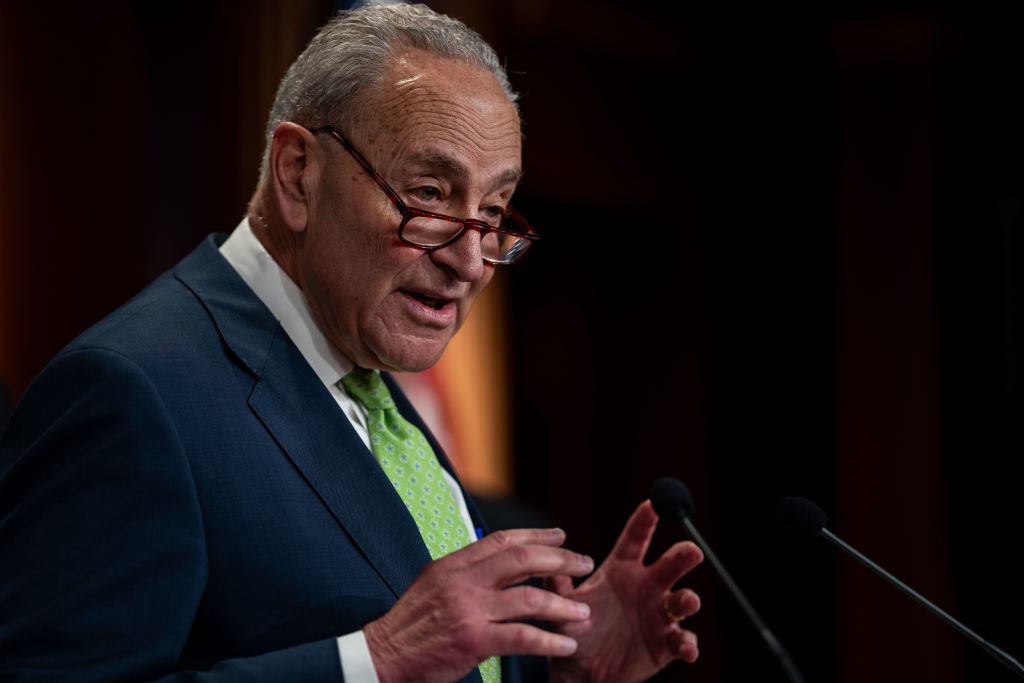
Democrats are stuck in the House and Senate minority and don’t control the White House. Still, after Republicans passed the reconciliation bill last week, Senate Minority Leader Chuck Schumer found himself in an optimistic mood.
Of course, Democrats are furious about the content of the bill. But Schumer says the toxicity of the package gives Democrats a chance at winning back the Senate.
“We believe this bill has put their majority at risk,” Schumer told us during an interview at the DSCC headquarters on Thursday.
In many ways, Schumer has to say this. It’s the role of a party leader to project confidence at all times. Remember then-Speaker Nancy Pelosi predicting Democrats would gain seats in the House in the final days of the 2022 campaign?
To be clear, it’s an uphill battle for Senate Democrats at the moment. Just look at the numbers: Republicans control 53 seats and Democrats have 47. For any shot at winning the majority after 2026, Democrats would have to protect two seats in states that went red in 2024 (Michigan and Georgia) while flipping GOP-held swing seats (North Carolina and Maine).
Even in this rosy scenario, Democrats would still have to flip two Republican-held seats in redder states. That includes Texas, Ohio, Iowa, Alaska and Florida.
However, in a wave year, surprises can happen and Schumer is bullish that 2026 will deliver Democrats big wins in unexpected places.
“There are a whole bunch of states that we think are now in play that might not have been before this bill passed,” Schumer said, without getting into details.
While I’m still skeptical about Democratic chances of taking control of the Senate, it’s clear that things are shifting in the right direction for the party. The biggest sign came from Sen. Thom Tillis (R-N.C.), who declared his opposition to the bill and promptly announced he wouldn’t seek reelection.
Schumer predicted voters will hear Tillis’ warnings over and over again in ads nationwide. Democrats need to flip voters in solidly red states that went hard for President Donald Trump, which feels ambitious.
What I’m watching: The final of the FIFA Club World Cup between Chelsea and PSG. The tournament surprised me and ended up being way more entertaining than I expected.
– Max Cohen

The Hill after reconciliation
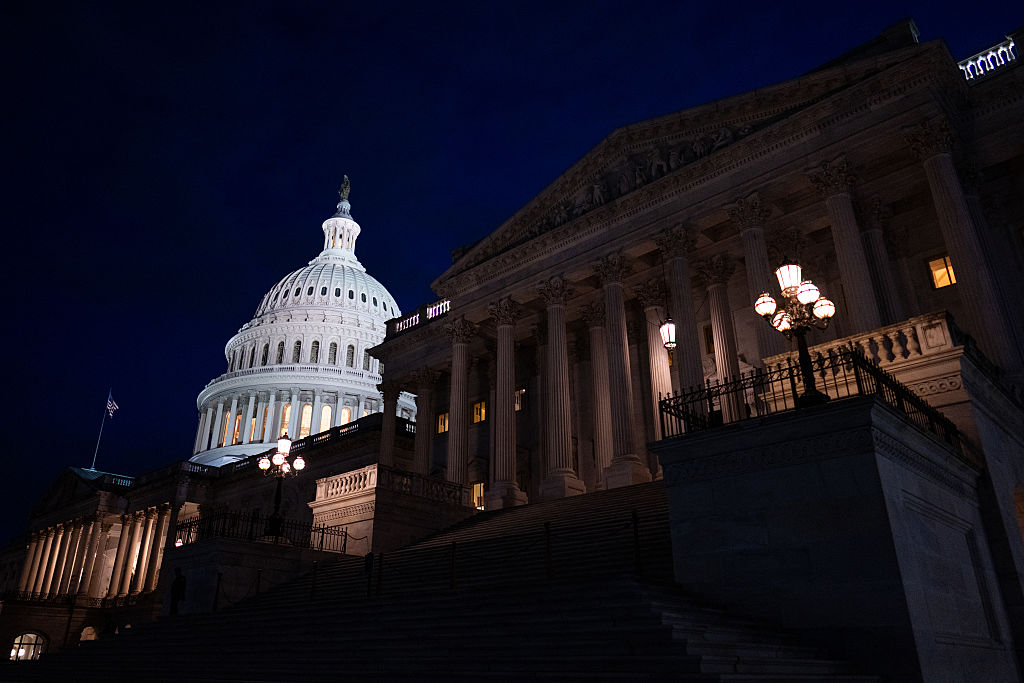
It’s been a wild six months on Capitol Hill with Republicans pushing through a party-line bill that cut taxes and slashed hundreds of billions of dollars in federal spending.
The first half of 2025 has involved a lot of late nights (and a few all-nighters) in the Capitol chasing the latest news on the reconciliation process in both the House and Senate.
I learned a lot of lessons along the way. For one, I’ve finally given in and now I think Celsius is great. My controversial take is that cherry cola is the best flavor. In related news, I learned I am able to stay awake for 30 hours straight.
I also learned to always bring spare contacts after I lost one in the middle of the night on July 3. Unfortunately, my main task at the time was to watch the House floor so it made that difficult. But I was able to swing home for 10 minutes to get a new one.
On a more serious note, Republicans’ chaotic and drawn-out sprint to get the One Big Beautiful Bill done underscored that most GOP lawmakers were ultimately unwilling to stand in the way of President Donald Trump’s agenda or to block tax cuts that represent a central party priority.
But Hill life now that the reconciliation bill is done won’t be boring. It never is.
The messaging battle over the law is only beginning. How this is messaged to voters will be critical to the midterms, and Democrats will do their best to put the GOP on defense for cuts to social safety net programs, like Medicaid in particular.
The next government funding deadline is less than three months away. It already looks like it’s going to be extremely difficult to get a bipartisan deal on funding bills. Meanwhile, Republicans’ rescissions package promises another vote-a-rama in the Senate next week. Even without reconciliation, there’s a chance for a Senate all-nighter with high political stakes.
Plus, Republicans are already talking about another reconciliation bill or two before the midterms, though we’re skeptical that’s a realistic goal.
Another lesson learned: conservative hardliners forced a huge amount of spending cuts in the first party-line package and that pressure isn’t going away. That means tough dynamics for the GOP to do it again.
What I’m listening to: Some family members came to visit this week and my dad is a big “Deadhead” so we went to see some Grateful Dead music live. A great summer outing.
– Laura Weiss

Presented by AstraZeneca

The 340B program is supposed to help vulnerable patients—but without strong safeguards, it’s siphoning away funds that could be used for free and charitable medicine. The 340B Rebate Model Pilot improves program integrity, preventing duplicate discounts and strengthening accountability. Urge HHS to implement the pilot today. Learn why it matters.

Crucial Capitol Hill news AM, Midday, and PM—5 times a week
Join a community of some of the most powerful people in Washington and beyond. Exclusive newsmaker events, parties, in-person and virtual briefings and more.
Subscribe to Premium
Special Projects
Explore our deep dives into the issues that matter the most today and will shape tomorrow's future, with expert reporting that goes beyond the headlines and into the heart of the Capitol.
Check it outEvery single issue of Punchbowl News published, all in one place
Visit the archive
Presented by AstraZeneca
The 340B program lacks transparency—making it hard to tell if it’s actually helping vulnerable patients. HHS can fix the problem by implementing the 340B Rebate Model Pilot, ensuring the program is transparent, compliant, and accountable. Learn more.