

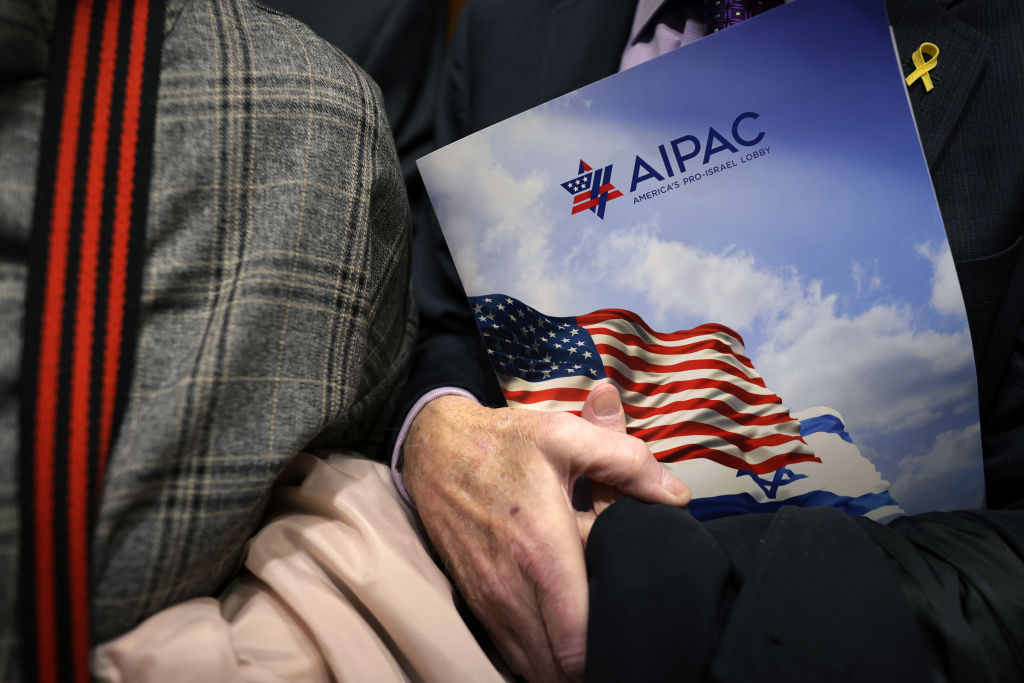
AIPAC turned on former Rep. Tom Malinowski (D-N.J.) — who the group previously supported — when Malinowski said he’d be open to conditioning aid to Israel. A Thursday special primary election will reveal whether Malinowski can survive a spending onslaught in a new era of anti-AIPAC sentiment among Democrats.
This race in New Jersey’s 11th District is AIPAC’s first big test of 2026. The high-profile organization’s anti-Malinowski blitz underscores a bright-red line for the midterms and its zero-tolerance policy toward those wavering on Israeli aid.
United Democracy Project, AIPAC’s super PAC, has pumped $2.3 million into the race, most of it on TV ads tying Malinowski to President Donald Trump.
Rep. Alexandria Ocasio-Cortez (D-N.Y.), who’s backing progressive Analilia Mejia in the race, said AIPAC’s attacks on Malinowski, a center-left candidate, were “an attempt to wholesale intimidate the entire party.”
“It’s quite shocking how moderate of a stance that they are mobilizing against. We’re not even talking about them targeting the left,” Ocasio-Cortez said.
Malinowski, who represented a neighboring New Jersey district for two terms, started as the frontrunner, but it’s not clear who benefits from UDP’s attack on him.
The field. Malinowski is running in a crowded field of candidates vying to replace Democratic Gov. Mikie Sherrill — the seat’s previous occupant — in a safe blue North Jersey district. Malinowski’s main rivals are Mejia, former Lt. Gov. Tahesha Way and Essex County Commissioner Brendan Gill, who has the endorsement of former New Jersey Democratic Gov. Phil Murphy.
More than $6 million has been spent on ads in the race, with UDP as the top spender. Way has run $520,000 in ads and received $2 million in help from outside groups.
Gill has spent roughly a half-million dollars on ads. Malinowski has dropped $313,000. While the former congressman has a group backing him, its spending is dwarfed by UDP’s outlay.
Yet Malinowski supporters like Rep. Jason Crow (D-Colo.) said “attack ads like that in primaries almost always blow back.”
“What they mean is that some outside group wants to put their hand on the scale, and usually people will locally bristle at that,” Crow added.