


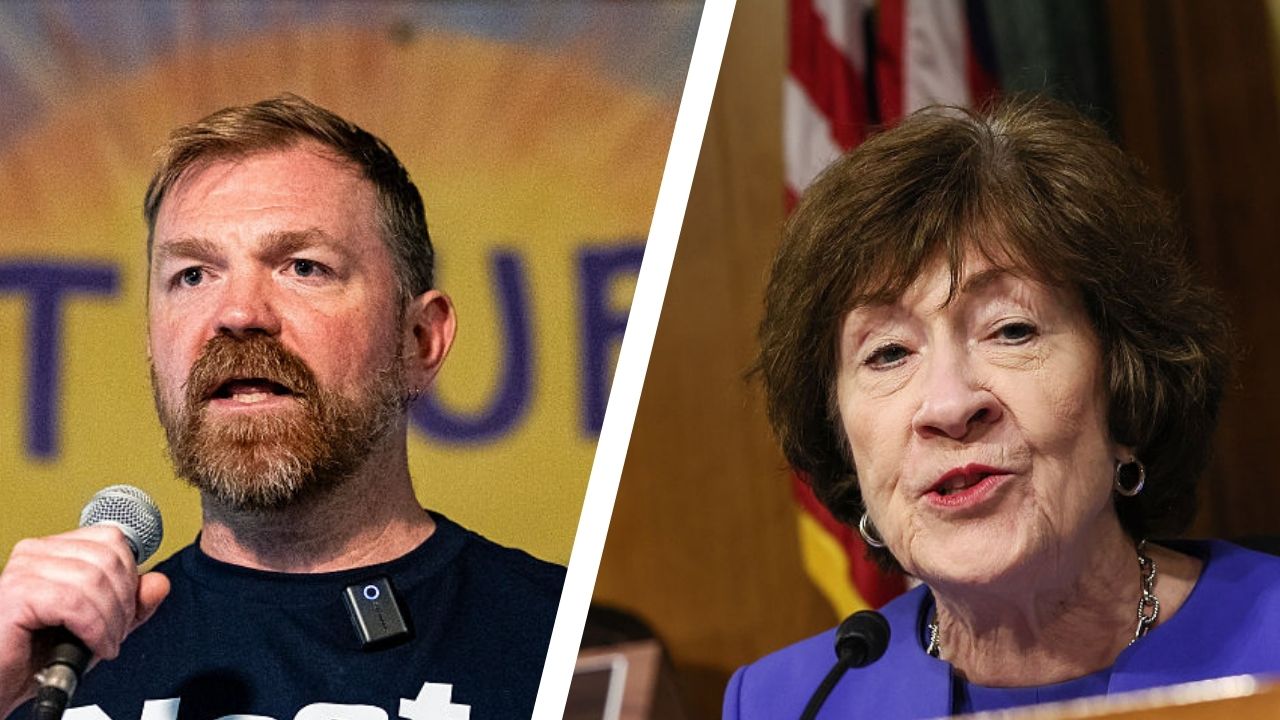
MILLINOCKET, Maine — In a state that could end up deciding which party controls the Senate next year, GOP Sen. Susan Collins (Maine) is touting her mastery of Washington’s system of power and influence to bring home the dough for her constituents.
The presumptive Democratic nominee, Graham Platner, wants to burn that system to the ground. With this as his central message, Platner toppled a sitting Democratic governor who had the support of the party apparatus in Washington.
Collins, a 30-year incumbent, and Platner, a Marine combat veteran turned oysterman, held dueling events at opposite ends of the Pine Tree State this past weekend, where that contrast was on full display.
“I’ve brought home much-needed help to this state,” Collins told us in an interview here. “There are certainly those on the far-left and the far-right who are constantly criticizing me. But I believe that most people appreciate a pragmatic, common-sense, solutions-oriented approach.”
Collins is unapologetically leaning into her seniority and institutional know-how, which have enabled her to use that very system to benefit Maine. It’s a formula that’s been successful for the battle-tested Collins in her previous races, to the endless dread of Democratic leaders. Collins is betting that this same approach will insulate her from what’s becoming a deeply unfavorable political environment for Republicans.
But Platner is confronting that argument head-on without getting into the nitty-gritty of D.C.’s inside baseball. That’s a trap that Platner’s predecessors often fell into, even though he once suggested he could get a seat on the Senate Appropriations Committee as a freshman.
Platner acknowledged the importance of Senate seniority. But he said Collins’ earmarking success is a distraction from decades-long problems such as stagnant wages and high costs.
“Talking about it and being like, ‘No, you are right. [Seniority] is important. The power does matter. Structurally, you have to know what’s going on,” Platner said in an interview. “But also, since things didn’t get better, she clearly isn’t very good at this. Because if she was, we wouldn’t have this problem.”
Platner added, “She’s had 30 years. If the money you’re bringing into Maine is making it better, then why did it get worse?”
On the ground. Collins, the Senate Appropriations Committee chair, received a hero’s welcome here Friday in rural northern Maine. It was the grand opening of a hospital for which Collins secured more than $13 million in federal dollars.
Collins touted her stewardship of the Appropriations Committee as a “once-in-a-century opportunity” for Maine.
Meanwhile, at a town hall Sunday with military veterans 200 miles south in Portland, Platner railed against Collins as the embodiment of a corrupt political system. In fact, Platner uttered the word “system” more than three dozen times as he took questions from veterans of the wars in Vietnam, Iraq and Afghanistan at a VFW post.
Still, over the past five years, Collins has steered $1.5 billion in federal money to Maine, including more than $400 million this year alone. That’s a massive haul for a state that’s among the least populous in the country.
But Collins’ influence still may not be enough to overcome a potentially brutal midterm year for Republicans. High costs are top of mind for voters, even more so now with gas prices skyrocketing amid an unpopular war in Iran. President Donald Trump has openly dismissed these concerns. Collins said it’s “a huge burden.”
“The gas prices are way too high, and they’re a big problem for people in my state,” Collins said, noting that many Mainers have to drive long distances for work or school.
Headwinds. While Collins and Platner couldn’t be more different — on style, substance and so much more — they share one significant challenge: Both are trying to manage being out of step with their respective parties.
For Platner, it’s his antagonism of the Democratic establishment. Yet Platner will need to work closely with Democratic leadership to defeat Collins. This is the same leadership that’s been worried about Platner’s controversial past.
Platner was able to overcome initial revelations about his tattoo of a Nazi symbol, as well as racist and sexist comments he made online years ago, to easily beat Democratic Gov. Janet Mills, a top recruit of Senate Minority Leader Chuck Schumer.
For Collins, breaking with Trump is a necessity given his sagging approval ratings and his longstanding unpopularity in Maine. Senate GOP leaders talk openly about the importance of giving Collins space to distance herself from the party when necessary, while still viewing her as a team player. Vice President JD Vance acknowledged this last week as well.
To that end, Collins has leveraged her Senate clout to reverse some of the White House’s unilateral funding cuts and other federal moves that were particularly harmful to Maine, including attempts to withhold funding for a home heating assistance program. Earlier this year, Collins’ lobbying helped end an ICE surge in Maine.
Collins also opposed the One Big Beautiful Bill Act due to its Medicaid cuts, even though the legislation included a $50 billion rural hospital fund intended to blunt the impact. Senate Majority Whip John Barrasso said this only happened because Collins was at the table.
Platner argues Collins isn’t using her power nearly enough and too often resorts to “symbolic opposition” and “weak condemnations.”
“Since [Collins] has not displayed a real commitment to having a spine, she has not been able to use the power that I do think she has access to,” Platner added.