


It’s not a coincidence that Democrats made health care the centerpiece of their government shutdown messaging.
Sure, there was a timely element: the Obamacare enhanced premium tax credits were set to expire.
But health care has also been a uniquely beneficial issue for Democrats in recent elections — and they’re using the 2018 election as a blueprint for next year’s midterms.
The 2018 cycle is most analogous to the current moment — a midterm election taking place two years into a Trump presidency. Democrats certainly hope that’s the case. They gained 40 House seats that year and won the majority.
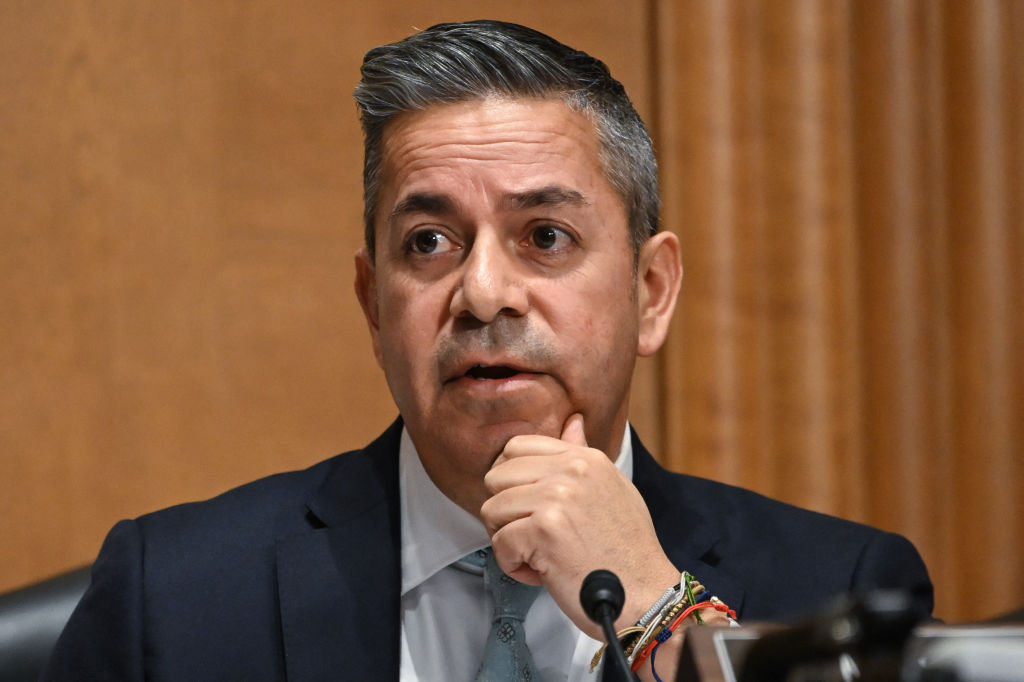
At the time, Democrats tried to capitalize not only on backlash to President Donald Trump, but also on the ultimately unsuccessful GOP efforts to repeal Obamacare. Sen. Ben Ray Luján (D-N.M.), a former House member, chaired the Democratic Congressional Campaign Committee for that cycle and sees clear parallels.
“In 2017, when Republicans tried to eliminate the Affordable Care Act and health care was front and center in this conversation, it clearly did not bode well for Republicans,” Luján told us.
Today, Luján said, health care is once again “top of mind” because of rising health care costs and the threat of expiring Obamacare subsidies.
Hopes for the House. Democrats are betting that elevating health care as part of that broader conversation will pay big dividends as they look to end the GOP’s power grip on Washington. Democrats’ likeliest path to doing so is by flipping the House.
The results of today’s gubernatorial elections in Virginia and New Jersey will also likely be instructive for Democrats as they evaluate the overall effectiveness of their messaging and the base’s enthusiasm.
Even before the shutdown, Democrats were already gearing up to use the Medicaid cuts in the GOP reconciliation bill as a focal point for their 2026 strategy.
“This has been a Manichean battle on health care between Democrats and Republicans,” Senate Minority Leader Chuck Schumer told us. “My caucus feels very strongly about health care — we always have. From the days of when we fought for the Affordable Care Act back in 2009.”
The threat of rising health care premiums also dovetails with the party’s focus on affordability and overall cost of living. Democrats are already blaming the higher prices on the GOP by citing, in part, the economic uncertainty from Trump’s tariff regime.
GOP response. Democrats’ emphasis on the boosted Obamacare subsidies hasn’t swayed most congressional Republicans or GOP leadership. Republicans, particularly in the House, still largely oppose the enhanced tax credits. Many of them have argued that the entire debate has proven that Obamacare failed in its stated objective of keeping health care costs down.
But some Republicans are concerned about the politics of health care.
Some of the most vulnerable House and Senate Republicans have taken public stances in favor of extending the subsidies. The White House and Speaker Mike Johnson say they want a broader overhaul of the health care system to address costs, which would be very difficult to pull off.
Still, even Republicans who back a one-year extension of the enhanced subsidies say they aren’t moved by Democrats’ tactics.
“Democrats can say they’re fighting for health care, but they’re really just fighting for attention,” Rep. Nick LaLota (R-N.Y.) said.
The government shutdown and the criticism Democrats are getting for blocking a stopgap funding bill probably won’t be on voters’ minds a year from now when the 2026 polls open. Still, Republicans are highlighting comments from Democrats who have described the pain of a shutdown as their “leverage” in the health care fight.
You’ll recall that Republicans hammered Schumer after he told us in an interview earlier this month that “every day gets better” for Democrats.