


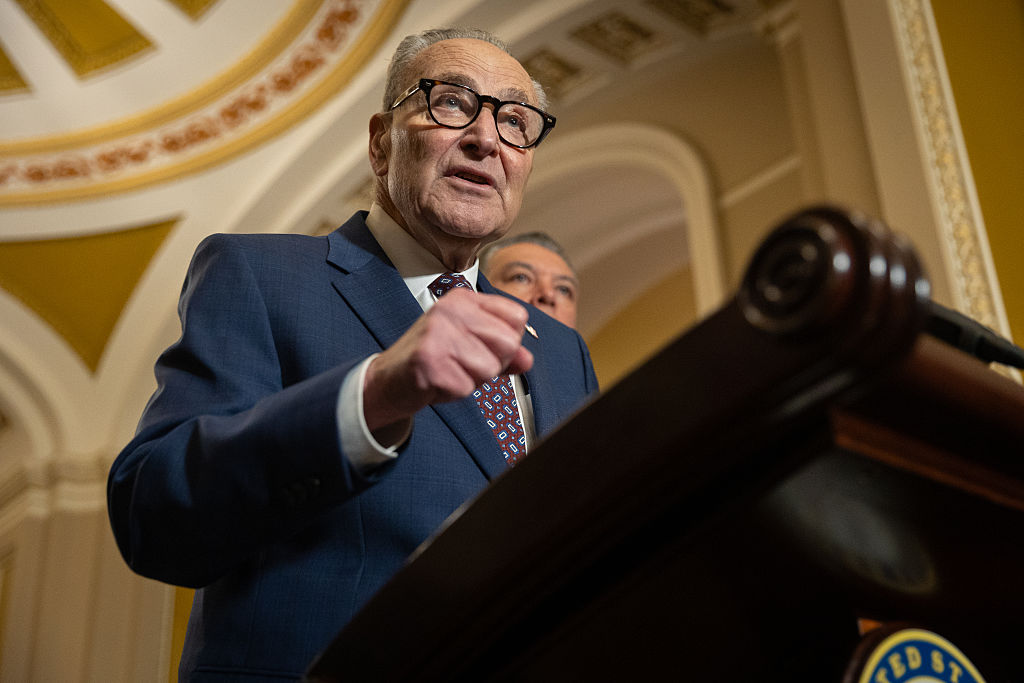
Senate Minority Leader Chuck Schumer has scored major Democratic recruitment coups this cycle in North Carolina, Alaska and Ohio. But in other top races, Schumer’s preferred candidates are locked in competitive primaries and failing to break ahead in the polls.
This is crunch time for Senate Democrats, who are increasingly optimistic about their chances of taking the majority in November. But even as they open up an outside chance to win the Senate, primary problems could stand in the way of a big Democratic upset.
In Maine, Gov. Janet Mills is flailing as progressive Graham Platner builds up a formidable lead. In Michigan, Democratic Rep. Haley Stevens is in a three-way race with state Sen. Mallory McMorrow and former health official Abdul El-Sayed. And in Iowa, state Rep. Josh Turek is running neck-and-neck with the more progressive state Sen. Zach Wahls.
Adding to the drama: Sens. Elizabeth Warren (D-Mass.), Bernie Sanders (I-Vt.), and other progressive senators are endorsing and campaigning against Schumer’s preferred candidates in these races.
“Moderate candidates are the only ones who overperformed [former Vice President] Kamala Harris in 2024 in those swing states,” cautioned Sen. Catherine Cortez Masto (D-Nev.), who’s backing center-left candidates in primaries. “So that’s our map to winning.”
Schumer’s allies say he’ll ultimately be judged on general election results, not primaries. Cutting the number of GOP-held seats from 53 to 51 — or even 50 — would be considered an overperformance for Democrats given how bad the map was to start this cycle.
Maine. Unlike other contested Democratic primaries, Schumer has openly endorsed Mills, arguing she’s the most electable candidate given her statewide track record.
Platner has spent $6.9 million on TV and digital ads. With a big lead in the public polls, Platner is already pivoting away from the primary and has begun attacking GOP Sen. Susan Collins. Mills has spent less than $2 million on ads and has gone largely dark on TV since mid-April.
Mills’ sluggish campaign has surprised many Democrats. Platner has so far beat back a growing set of scandals, namely Reddit posts that demeaned victims of sexual assault and minimized rape, plus his Nazi tattoo. A pro-Collins super PAC tied to GOP mega donors has already started running ads against Platner. That would help Mills, a more traditional Democratic opponent for Collins to face in the general election. But it could also signal that Collins’ allies believe Platner is almost certain to be the nominee and want to start tearing him down now.
With the primary just seven weeks away, some Democrats are questioning the utility of a last-minute push for Mills, noting that attacking Platner could backfire if the current trajectory holds.
“If we’ve concluded that Mills is too far gone, I don’t think it makes much sense to deploy millions of dollars to attack the guy who we’re going to eventually all have to rally around to defeat Susan Collins,” said a Democratic senator who hasn’t endorsed in the Maine primary.
Michigan. While Schumer hasn’t publicly endorsed in Michigan, his allies believe Stevens is best positioned to beat former GOP Rep. Mike Rogers in the general election.
Stevens is polling even with El-Sayed and McMorrow. But a vocal contingent of progressives have a problem with Stevens’ candidacy, as evidenced by the scenes from the state party convention.
Schumer’s allies insist that Stevens will perform strongly with Black voters. Plus, they argue Stevens’ relentless focus on manufacturing makes her the most electable candidate in the general election.
Iowa. Schumer world is believed to be backing Turek in the Iowa primary, where both candidates posted nearly identical Q1 fundraising hauls. VoteVets is spending on a statewide ad buy pushing Turek.
Wahls has Warren’s endorsement and a larger national profile after he went viral for a speech defending LGBTQ+ rights in 2011. Wahls has aggressively criticized Schumer’s leadership.