


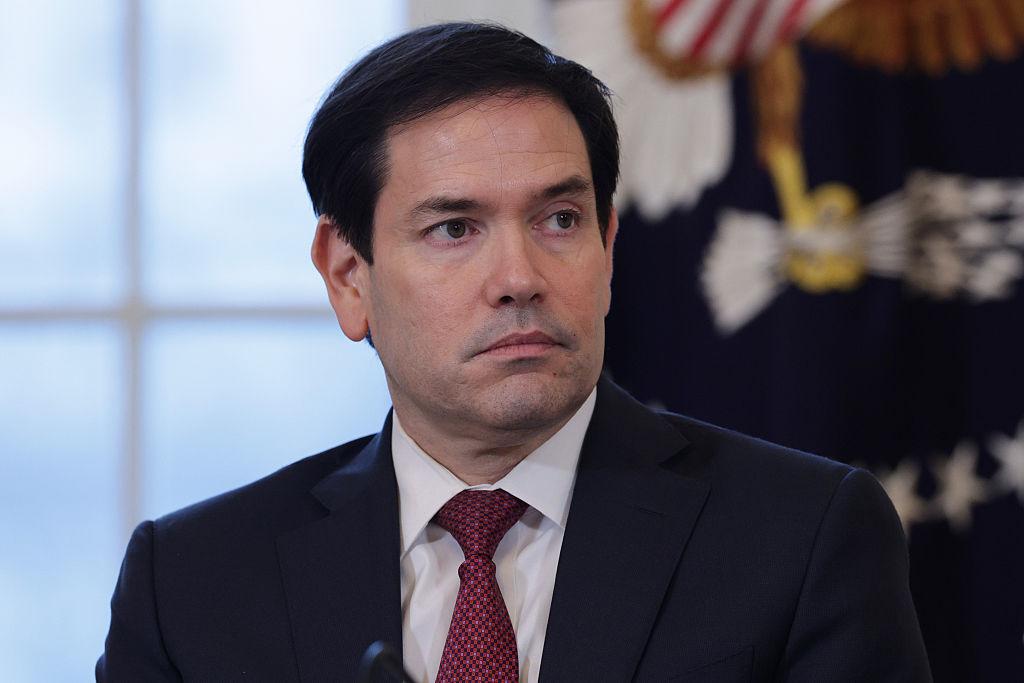
Breaking Defense news. Secretary of State Marco Rubio will address lawmakers publicly for the first time next week on the United States’ stunning capture of former Venezuelan President Nicolás Maduro.
Rubio — who’s also President Donald Trump’s national security adviser — will testify before the Senate Foreign Relations Committee next Wednesday at 10 a.m., a committee aide told us.
The hearing will mark Rubio’s first appearance on Capitol Hill in open session since the Trump administration began striking suspected drug boats in the Caribbean and Pacific on Sept. 2. More than 100 alleged “narco terrorists” have been killed in the U.S. strikes.
Rubio’s appearance comes at a critical moment for Trump’s foreign policy agenda beyond Venezuela. Trump’s pursuit of U.S. control of Greenland has set off a transatlantic crisis, with NATO’s future hanging in the balance.
Ukraine and Gaza remain huge challenges, while Trump has threatened U.S. military action against the Iranian regime as it uses deadly force to suppress mass protests. China’s military power continues to advance rapidly. So there will be lots for Rubio and his former colleagues to spar over.
Some Dems are voting for DHS spending. A number of vulnerable House Democrats are considering voting to fund the Department of Homeland Security despite a nationwide reckoning over ICE’s deployment to major American cities.
The House Democratic leadership understands the politics at stake. Despite ICE’s harsh tactics, voting against funding DHS could be politically perilous for Democratic members in purple districts.
Democratic leaders expect roughly 10 of their lawmakers to vote for the bill, said members and aides.
House Minority Leader Hakeem Jeffries’ leadership team hasn’t decided whether they’ll whip against the legislation, although that seems pretty unlikely. Members are expected to discuss the bill at a caucus meeting this morning.
Rep. Henry Cuellar (D-Texas), an appropriator who oversees DHS funding and backs the bill, will give a presentation on it to the caucus. Ranking Democrats from Appropriations’ subcommittees will also do presentations on their sections. Members will have to decide what is “in the best interest” of their districts, Cuellar said.
“Certainly the Minnesota situation changed the dynamics. There’s no ifs, no buts. We did put [in] some oversight, not everything that we wanted, but we did get some oversight in there,” Cuellar added.
House Democratic Whip Katherine Clark said Democrats will have “a robust discussion” about whether to back the Homeland Security bill. But Clark said the restrictions on ICE in the appropriations package didn’t go far enough.
“A lot of the requests we made around ICE, [Republicans] simply decided to leave out of the bill,” Clark said.
The DHS bill provides flat funding for ICE for FY2026, while adding new language directing how the department must spend money. There are some increased transparency requirements mandating DHS brief appropriators about certain spending plans. Top Democratic appropriators have emphasized that while the bill isn’t perfect, it’s better than a CR that doesn’t put any restrictions on the Trump administration.
Still, there’s deep-rooted skepticism among much of the Democratic Caucus about ICE’s conduct nationwide. Rep. Pramila Jayapal (D-Wash.), a former chair of the Congressional Progressive Caucus, said it was “unconscionable for us to continue to vote for more money to this lawless agency.”
Frontliners. Many of the most politically at-risk Democrats told us they were undecided on how they’ll vote. Immigration is a hugely charged issue for these members, especially as Trump’s immigration crackdown gets headlines nationally.
The DHS bill also funds crucial national security programs unrelated to ICE. And plenty of independent and conservative voters want their representatives to take tough stances on immigration.
That some Democrats are even considering voting yes shows the massive chasm between the base and lawmakers who will face tough re-elections later this year. The shooting death of Renee Good at the hands of an ICE agent in Minneapolis drew widespread outrage. Even moderate Democrats fear that the agency is operating with few guardrails under Trump.
“I go into it with healthy skepticism, and then we’ll see what happens,” Rep. Eugene Vindman (D-Va.) said. “But it shouldn’t surprise anybody if I vote no on it.”
Rep. Don Davis (D-N.C.), one of the leading Democratic moderates running in a Trump-won district, acknowledged he has “concerns” over ICE’s conduct.
“At the same time, there’s an important role that has to be implemented. So we’re gonna take a look at the bill in totality, and we’ll go from there,” Davis said.
Over in the Senate, top DHS appropriations Democrat Chris Murphy (Conn.) came out against the bill and said Democrats have “no obligation” to support it. Murphy, who fought for more restrictions during negotiations, said the final product contains “no meaningful constraints.”
“Members will vote their conscience on this,” said Rep. Rosa DeLauro (Conn.), the top Appropriations Committee Democrat.