

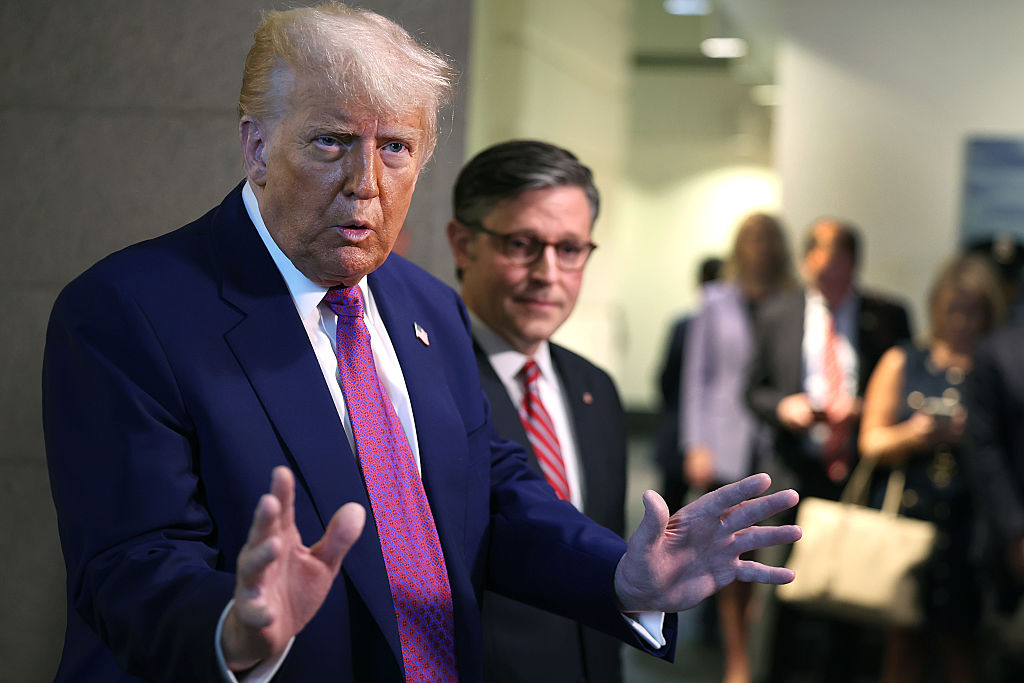
Heading into an election that could be defined once more by Americans’ cost of living, congressional Republicans are anxious to hear President Donald Trump give them marching orders on their approach to the U.S. economy.
There will be points for Trump to tout, certainly. Recent economic data has gotten a touch sunnier for the White House. Inflation estimates are slowly ticking down. Annual GDP growth clocked in above 4% during the third quarter, though it dropped to 1.4% in the fourth. The latest jobs report for January beat economists’ expectations, and weekly jobless claims remain low, while revisions for 2025 showed the labor market was weaker than we thought.
And as far as economic policy goes, getting the One Big Beautiful Bill through the reconciliation process was a triumph for Trump and GOP congressional leadership. Republicans are hoping that some of the benefits – including a potential windfall in tax returns over the next few weeks – would form a bunker heading into a tough midterm cycle.
But more than once, the president has been his own worst enemy on economic policy and messaging. Democrats have never stopped hammering Trump for saying that affordability was a “hoax” and “Democrat scam” in late 2025.
Then came Trump’s populism pivot in early 2026, when the president called for credit card interest rate caps and a crackdown on swipe fees, plus the push to ban institutional investors from purchasing single-family homes. But those policies have badly divided congressional Republicans, if not encountered stiff resistance.
Those Republicans are now looking at a tough, tough election cycle. And while GOP lawmakers have told us for months that the economic boom of the second Trump administration is right around the corner – or, depending on who you ask, already here – Americans aren’t feeling it yet.
It’s going to take one heck of a sales pitch from Trump and congressional Republicans to turn that around before November.