

Can Republicans escape the long shadow of the Iran war?
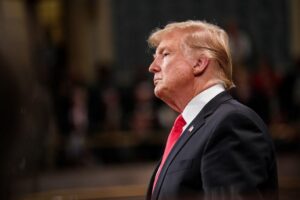
President Donald Trump will head to Arizona and Nevada next week to talk about the One Big Beautiful Bill Act and its tax cuts, the biggest policy win notched by the GOP-run Congress. And there will be a MAHA roundtable at the White House today. Trump is seemingly trying to turn the page from a brutal month of war in Iran and Republican infighting in Washington.
But it won’t be that easy.
Despite the ceasefire, oil tankers still aren’t moving through the Strait of Hormuz yet, and the question of Israel’s offensive against Hezbollah in Lebanon is being disputed by U.S., Israeli and Iranian officials. Trump warned late Wednesday night that U.S. forces “will remain in place in, and around, Iran, until such time as the REAL AGREEMENT reached is fully complied with.”
Plus, with lawmakers returning to Washington for the first time in two weeks on Monday, the Capitol will be dominated by votes and action related to the 40-day long conflict.
Consider this: Just next week, Congress is going to have to wrestle with the expiration of FISA Section 702, a key national security policy that needs House approval. There will be war powers resolution votes in both the House and Senate, with growing anger and dismay about Trump’s handling of foreign and military policy. Lawmakers also need to begin grappling with a multibillion-dollar Pentagon supplemental spending bill.
Army Secretary Dan Driscoll will be on Capitol Hill Thursday for a budget hearing in front of the House Appropriations Committee. This will give Democrats their first chance to directly hammer the Trump administration over the conduct of the war. Driscoll is a close ally and Yale Law School classmate of Vice President JD Vance, the Iran war skeptic who is now leading the peace talks. Driscoll also has his own rivalry with Defense Secretary Pete Hegeth.
And do you remember that the Department of Homeland Security is still shut down? That 54-day crisis still has to be solved. Trump has ordered DHS employees to be paid, yet no one is quite sure whether it’s completely legal or how long it can last.
Before Iran and after Iran. The issue for Trump and GOP congressional leaders is whether they can somehow move beyond Iran to talk about domestic issues.
Much will depend on the negotiations in Islamabad. This is by far the most important assignment of Vance’s life. A failure here could lead to a renewal of the war, with all that means for the soldiers and citizens of both countries.
A secondary issue is Vance’s own political interests. This could have big repercussions for a potential White House run in 2028.
Trump and Hill Republicans face major consequences as well. Trump’s reckless, dangerous Iran rhetoric over the last 10 days shocked lawmakers in both parties. Dozens of Democrats are calling for Trump’s impeachment once again. They won’t be able to remove him from office, but they can try.
Trump was already sliding in the polls before this war. His approval ratings on the economy and cost-of-living issues have tanked. Republicans have done nothing significant on the affordability front in months (new inflation data will be out this morning). If Trump and Republicans can’t turn this around, they’re very likely to lose the House and some Senate seats.
Another challenge for Trump. Congress’s return will kick off another clash — a massive supplemental spending bill for the Pentagon.
The latest thinking in the White House is that the administration wants to try to pass a Pentagon spending bill on a bipartisan basis after hostilities cease. This seems to be a long shot, but administration officials will make the case that the United States needs weapons also to help protect Ukraine, something Democrats theoretically would be more receptive to.
But again, this doesn’t help Trump or Republicans focus on domestic issues.
On the ground. Senate Republican leaders have already started hitting the road to sell the OBBB, including appearances with GOP candidates and vulnerable incumbents to tout the newly created tax benefits — chief among them, no tax on tips and overtime. It’s exactly what Republicans want to be talking about a week out from Tax Day.
But that message hasn’t broken through in places where Republicans need it most. Meanwhile, Democrats have focused on the bill’s hundreds of billions of dollars in Medicaid cuts, in addition to Republicans’ opposition to extending Obamacare subsidies.
The war in Iran has intensified Democrats’ focus on affordability. Democrats argue that Trump and Republicans are cutting health care benefits to pay for an unpopular war of choice. You’ll hear that a lot more from Democrats as Republicans consider ways to pass a defense supplemental via budget reconciliation, a process in which GOP conservatives would likely demand spending offsets.
Democratic lawmakers in Arizona and Nevada are already pushing back on Trump’s efforts to turn the page amid a shaky economy and a volatile war effort that has jacked up gas prices.
“It’s a mess, and he created this mess in a number of different ways — the war in Iran and crappy legislation,” Sen. Mark Kelly (D-Ariz.) said in an interview.
Sen. Jacky Rosen (D-Nev.) told us that Nevada’s tourism industry — the lifeblood of the state’s economy — has taken a big hit because of Trump’s economic policies.
“It’s hard for hospitality workers to be happy about ‘no tax on tips’ when they aren’t getting as many tips as they used to, so the president would do well to explain to Nevadans what concrete actions he’s going to take to lower costs and support our tourism industry,” Rosen said.