

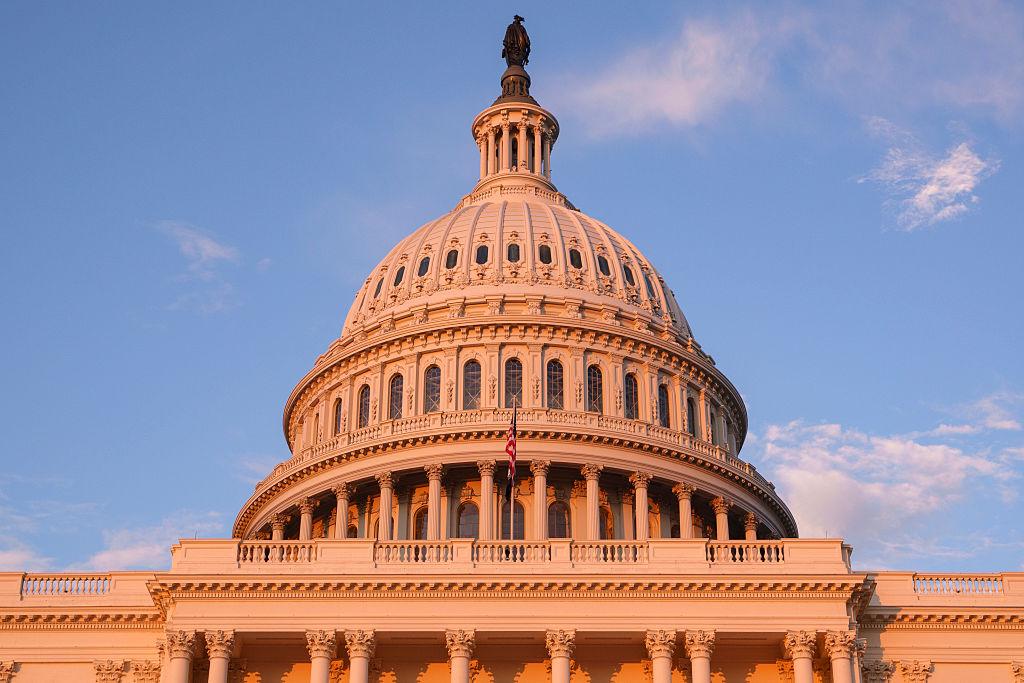
Today is the fifth anniversary of the Jan. 6, 2021, attack on the Capitol. Like you, we’ll never forget the events of that dark day.
All of a sudden, it’s turned into a high-stakes legislative week on Capitol Hill.
Not only is Congress dealing with a president who insists he’ll “run” Venezuela and may reimburse major energy companies to rebuild that country’s oil infrastructure. Not only are lawmakers watching an administration that is publicly toying with taking Greenland and overthrowing the communist government in Cuba. But now members and senators face a stack of high-profile votes to kick off this election year.
Consider what the House will take up just this week:
— A three-bill, 414-page FY2026 funding bill. The package includes the Interior, Energy and Water and Commerce-Justice-Science spending bills. But there’s still no deal yet on the most difficult and largest of the annual measures, including Defense or Labor-HHS.
— The House GOP leadership expects a procedural vote on Wednesday and a final passage vote on Thursday on legislation to extend the enhanced Obamacare premium subsidies for three years. Passage of the legislation — forced onto the floor after a revolt by GOP moderates — is an early-year defeat for Speaker Mike Johnson. This will put pressure on Senate Majority Leader John Thune to find a path to extend the expiring tax credits.
— On Thursday, the House will vote to overturn President Donald Trump’s first two vetoes of his second term, both of which came during the holiday break. If successful, the overrides would be a rare instance of GOP pushback against Trump. More on this in a moment.
Add to that: Trump will speak to House Republicans at 10 a.m. today during a legislative retreat at the Kennedy Center. This is a closed-door session aimed at rallying House Republicans as they enter a difficult election year.
Across the Capitol, the Senate is expected to vote Thursday on a Democratic-led war powers resolution to end the administration’s efforts in Venezuela. This follows early Saturday morning’s capture of Venezuelan President Nicolás Maduro in a daring military raid. Maduro is now being held in a federal prison in New York while Trump decides what’s next for the embattled South American nation.
Administration officials will be on Capitol Hill to hold separate briefings for the Senate and House on the situation in Venezuela. Top committee lawmakers and the “Gang of Eight” got a briefing Monday evening.
Again, all of this is in the first week back from the two-week holiday break.
Now let’s dig deeper.
Venezuela war powers. Sen. Tim Kaine’s (D-Va.) Venezuela war powers resolution is on track to get a vote on Thursday. But Kaine is making clear that he won’t stop with Venezuela, as lawmakers are now taking Trump’s threats toward other nations more seriously following what happened in Caracas.
Citing Trump’s increasingly escalatory rhetoric regarding Cuba, Greenland and Colombia, Kaine told us he plans to force similar votes aimed at preventing Trump from engaging in hostilities elsewhere without congressional approval.
Kaine, though, is unsure whether Republicans will join him.
“It might be this. It might be the vote on Greenland. It might be the vote on Cuba. It might be the vote on Mexico. It might be the vote on Colombia,” Kaine said. “You’re gonna see a lot of votes on these things … When it’s repeated over and over again, you’ve got to take it seriously.”
The Venezuela resolution isn’t likely to go anywhere, even if it passes. The White House is already working overtime to try to hold Republicans together. There were just two GOP defections — Sens. Lisa Murkowski of Alaska and Rand Paul of Kentucky — on a previous war power effort centered on the wave of deadly U.S. boat strikes.
At least one additional Republican, Maine Sen. Susan Collins, expressed an openness to the new war powers effort on Monday and said there are “too many unanswered questions” about the Venezuela operation.
Plus, there’s no guarantee that a GOP-run House will approve it.
Veto override. One of the bills Trump vetoed is a water infrastructure project in Colorado. Trump’s veto was the latest salvo in his push to punish Colorado amid state officials’ refusal to release a convicted election-tamperer.
The second bill benefits a Native American tribe in Florida that Trump accused of trying to “obstruct” his immigration policies.
Overriding a presidential veto requires a two-thirds majority vote. House leaders believe they can hit that threshold, but Thune was noncommittal about what the Senate would do.
Sen. Rick Scott (R-Fla.), who’s among the backers of the Native American bill that was vetoed, didn’t sound ready to break with Trump.
“I talked to the president about it. He has concerns about it. I think we ought to address his concerns,” Scott told us.
Assuming all 47 Democratic senators vote to override, it would take at least 20 GOP senators for a successful override.
Health care. While the House’s three-year clean extension is D.O.A. in the Senate, Thune told us he’s “not averse” to a deal that includes a pared-back extension of the Obamacare subsidies. Thune said any deal would need to come together within the next month in order to have a realistic chance of success.
A bipartisan group of senators met again Monday night as they try to strike a compromise. Sen. Bernie Moreno (R-Ohio), who’s helping lead those talks, said after the meeting that they’ve made “a tremendous amount of progress” but compared the effort to “climbing Mt. Everest.”
“If there’s a deal to be made, it’s going to be made very soon or not at all,” Moreno added.
Moreno also said the group wants any bipartisan deal to include an extension of the open enrollment period through March 1.