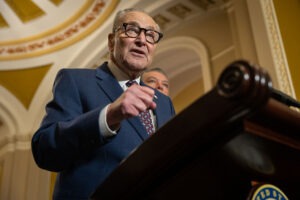


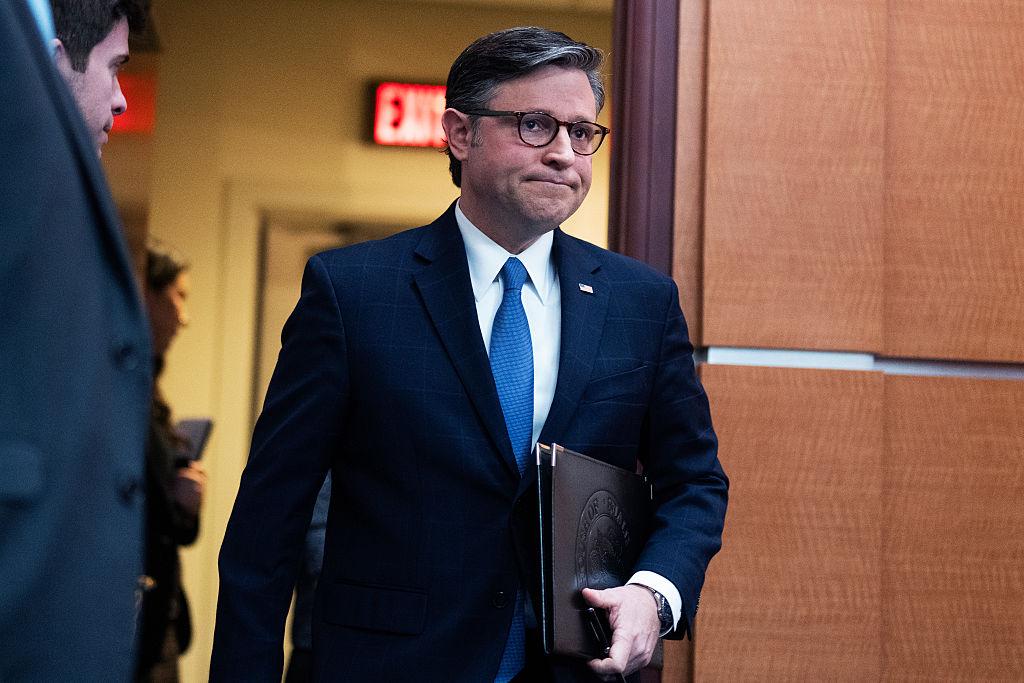
If Senate Minority Leader Chuck Schumer and the White House come up with a deal to avert a shutdown, that proposal will then come over to Speaker Mike Johnson’s House, where any plan to overhaul the Department of Homeland Security will be met with deep skepticism.
The House will return Monday night to several new dynamics.
Voters in Houston will elect a candidate this weekend to replace the late Rep. Sylvester Turner (D-Texas). If Johnson swears in a new Democrat as expected, the House will have 218 Republicans and 214 Democrats. That’s a one-vote margin on any bill for the GOP (remember, ties don’t count.)
Now let’s review the other issue at hand – funding for DHS, and ICE in particular. As the Senate seeks to avert a shutdown, the House Republican leadership is extremely concerned about what lies ahead.
In fact, House Republican leaders don’t see a clear path to getting a new Homeland Security funding bill through the chamber again. President Donald Trump will have to be directly involved in the whipping effort to have any chance at all.
The House Freedom Caucus has made clear that it is opposed to renegotiating the DHS measure. Rep. Chip Roy (R-Texas) — who’s running for attorney general in the Lone Star State — said that if the DHS bill gets reopened, he’d seek to cut all funding for sanctuary cities. Rep. Andy Harris (R-Md.), the chair of the House Freedom Caucus, would likely push for additional H-2B visas, something he’s fought for in the past.
More fundamentally, most House Republicans don’t agree with the main policy demands from Senate Minority Leader Chuck Schumer and House Minority Leader Hakeem Jeffries. For example, the House GOP leadership has serious reservations about mandating that ICE obtain judicial warrants for arrests. Privately, the White House says this is a non-starter. Yet it’s also a red line for most Democrats, so there’s a huge gap here.
The only hope is that Trump gets deeply involved in the negotiations and brings skeptical House Republicans along.
Meanwhile, House Democratic leaders seem incredibly comfortable with their position. They feel as if a showdown over DHS funding will continually remind voters that federal agents fatally shot two people in Minneapolis and Republicans are refusing to take any legislative action to respond to the crisis.
“Our cards are great and they know their cards are bad,” one House Democratic aide told us.