

New: President Donald Trump announced late Wednesday night that he’ll formally nominate Acting Attorney General Todd Blanche for the post full-time. This will be a difficult nomination for Senate Republicans. There’s no guarantee that Blanche — Trump’s formal personal lawyer — can even get through the Judiciary Committee, much less get confirmed by the full Senate. More on Blanche and Senate Republicans below.
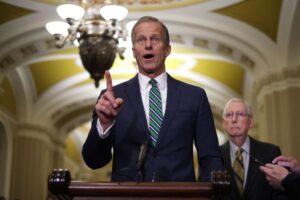
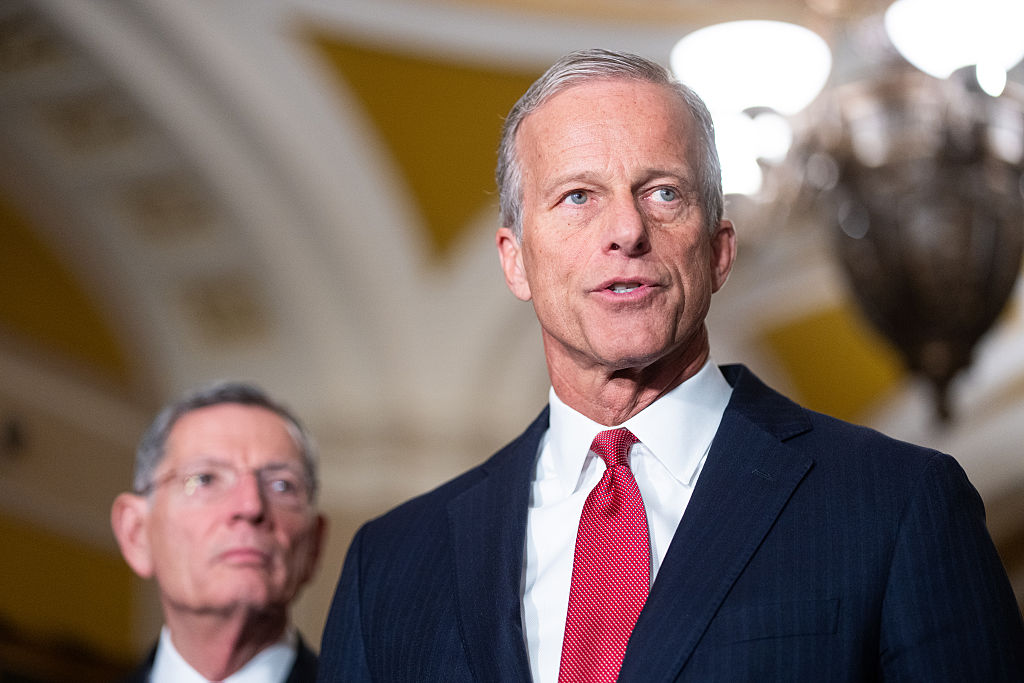
Reconciliation now. It’s going to be a really long day for Senate Majority Leader John Thune and Senate Majority Whip John Barrasso.
The GOP leadership duo is in for a marathon of twisting arms and whipping votes on two pieces of legislation that have little in common except for this: Trump has made passing them much harder than it needed to be.
Trump is causing Senate Republicans a ton of heartburn right now. GOP senators really want to wrap up the reconciliation bill funding ICE and Border Patrol, find a long-term solution for FISA Section 702 and move on to other priorities, like the long-stalled bipartisan affordable housing bill.
Vulnerable Republicans are desperate to show they’re trying to address the high cost of living, the top issue for voters. And GOP leaders want to be talking about their economic program — mostly the One Big Beautiful Bill’s tax cuts — amid a Democratic barrage over affordability.
Instead, Trump is lobbing problems at Senate Republicans in the middle of crucial legislative fights. Just in the last few weeks, the Trump administration tried to secure $1 billion for White House ballroom security, unveiled the “anti-weaponization” fund as the reconciliation bill was about to pass and tapped Bill Pulte as acting director of national intelligence days before another FISA deadline.
All of these moves derailed elements of the GOP’s agenda while heightening tensions between Trump and Senate Republicans. The Pulte standoff is far from solved and could tank FISA reauthorization altogether. Yet Trump isn’t showing any signs he cares much at all about Congress.
Now Trump wants to formally confirm Blanche as the nation’s top law-enforcement official. This comes just weeks after a hostile meeting between Blanche and Senate Republicans over the “anti-weaponization” fund that left GOP senators fuming and delayed the reconciliation bill. And for Senate Republicans, Trump’s move on Blanche could pave the way for the president to further erode their power on nominations.
Floor action. First up today is the GOP reconciliation bill, which has been stalled for two weeks over the weaponization fund fiasco.
Despite assurances from Blanche that the fund won’t move forward, some GOP senators want to codify that promise into law, especially as Trump is still actively defending the fund. Several Republicans have indicated they’d oppose the bill on final passage if it doesn’t include such language. GOP leaders can’t lose more than three votes on final passage.
“We need to take action here. It’s creating headwinds that we don’t need,” said Sen. Thom Tillis (R-N.C.), who told us it’d be “hard” for him to support the reconciliation bill without language on the fund. “If we’ve got the acting AG saying it’s done, then let’s just stick a fork in it.”
But Thune and Barrasso want to defeat every amendment during today’s vote-a-rama while also giving their vulnerable senators the space to vote for some of them. The GOP pair hopes to keep the bill focused on its original intent and avoid moves that complicate its passage by House Republicans.
“Why add something that’s not part of the bill?” Sen. Ron Johnson (R-Wis.) told us. “We should just vote to table all of those amendments… I’m assuming our leadership has all of the wrinkles out of this thing.”
That remains to be seen. Many of the amendments will require 60 votes. As we scooped Wednesday night, the very first amendment from Senate Minority Leader Chuck Schumer will only require a simple majority, meaning it’ll need just four GOP “yes” votes. Schumer’s amendment will be a motion to commit — sending the bill back to committee — with instructions to eliminate the weaponization fund.
Republicans to watch include Sens. Bill Cassidy (La.), Susan Collins (Maine), Dan Sullivan (Alaska), Mitch McConnell (Ky.) and Lisa Murkowski (Alaska).
FISA fight. Assuming Senate Republicans pass the reconciliation bill, Thune then wants to quickly move to the first procedural vote on a bipartisan bill to reauthorize FISA Section 702, which expires June 12.
As we scooped again, Democrats are threatening to block the compromise bill after Trump’s surprise appointment of Pulte as acting DNI. Pulte — the Federal Housing Finance Agency director — would be in charge of the 702 program as acting DNI, despite his lack of national security experience and MAGA warrior rep. Many Democrats want Pulte out before backing a FISA extension. House Minority Leader Hakeem Jeffries is echoing this threat.
Thune doesn’t technically need Democrats for the FISA procedural vote, which only requires a simple majority. Yet the problem is that there aren’t 51 Senate Republicans who would vote to reauthorize Section 702.
“I don’t think FISA’s going to be a cake walk,” Sen. John Kennedy (R-La.) said. “I’ve got to take a good, hard look at what they’ve done. I’m not sure I like the idea of extending it for three years.”
In order to clear the first hurdle, Thune and Barrasso will need to convince Republicans like Kennedy to support a procedural vote for legislation they’ll end up voting against, especially since Democrats aren’t likely to help.