

The battle over artificial intelligence policy will soon move to the campaign trail.
That’s where two opposing camps plan to spend big money to elect candidates at the federal and state levels who are supportive of their vision for the transformative technology.
This dynamic echoes the crypto community’s involvement in the 2024 election, an unprecedented effort by an industry to reward its friends and defeat its enemies with oodles of cash.
The key difference here is that, unlike the crypto industry, the pro-AI campaign effort will have an opposing group fighting for the hearts and minds of voters. It’s a battle between the AI boomers and the AI doomers.
Together, the two groups are planning to spend at least $150 million between them, which is more than the $100 million the crypto industry doled out in 2024. It’s hard to overstate how influential this spending could be in key races.
The AI boomers are represented by the industry-backed Leading the Future super-PACs, while the doomers are represented by PACs run by two former lawmakers.
Let’s dig into how each plans to fight it out in the midterm elections.
Boomers. Leading the Future was seeded with money from industry leaders such as OpenAI President Greg Brockman, venture capital firm a16z and Palantir co-founder Joe Lonsdale. It’s ready to spend $100 million.
“You will see a broad consensus in Congress to have the federal government lead on creating a national, pro-AI, pro-America regulatory framework,” Josh Vlasto, who’s co-leading the pro-AI side, said of his group’s approach.
That’s a way of saying his group will support candidates who want the federal government to block states from enacting individual rules for AI, which the industry says will cripple its ability to win the AI race with China.
Vlasto said his group does want a federal standard for AI, but it will leave the specifics to its associated advocacy group. And it’s clear Vlasto’s group will spend its money to help candidates most supportive of the AI industry’s desire to block state laws.
Vlasto is also a spokesperson for Leading the Future’s crypto forebearer, Fairshake, which supported 50-plus candidates last year. Vlasto isn’t putting a cap on how many candidates his pro-AI group will support.
How is Leading the Future actually going to work as a political actor? Its first move was to announce it will spend to defeat Democratic New York State Assemblymember Alex Bores, who has pushed state AI regulation and is running for Congress.
Leading the Future is not, however, rolling out an early list of targets. Vlasto said it’s structured to be able to nimbly move into races when it senses the need.
“This is a highly dynamic moment in this policy debate,” Vlasto said. “We are built… to use our resources and bring the AI sector together to advocate for this agenda.”
Appropriately enough, the group has so far leaned into digital ad spending, which is cheaper, although it’s also bought TV spots.
As for tactics against the opposition, Vlasto would only say that he’s working hard to confront a “sophisticated, well-funded network advancing an ideological agenda to try and slow down American AI.”
Doomers. AI skeptics also plan to put a mountain of cash on the table in 2026 to combat tech companies’ narratives about regulation and the U.S.-China race to win the artificial intelligence competition.
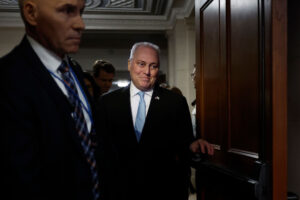
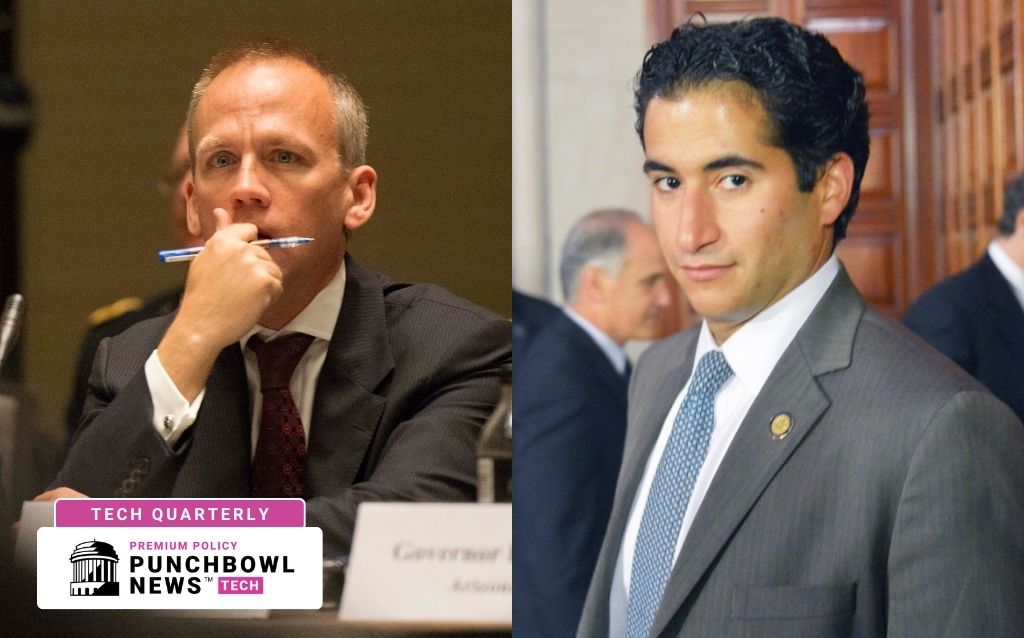
Former Reps. Chris Stewart (R-Utah) and Brad Carson (D-Okla.) are launching two separate super PACs with a promise to raise $50 million for their effort to pump up pro-AI regulation candidates.
While the figure is half of what Leading the Future is promising to spend, the bipartisan duo is hopeful they’ll be able to fight back against Big Tech’s cash flow.
“Most people are anxious about AI. They’re not opposed to it, they’re anxious,” said Carson. He added that tech’s “accelerationist YOLO agenda” is not going to fly. Carson said his PACs will disclose their funders in the next few months.
The PACs will support candidates for the House and Senate, and they plan to announce those names next year. Carson said they’re also thinking about spending in state legislature races as well as fights for governor’s mansions.
They’ll spend on ads for TV, digital and “whatever medium is best to reach the voters,” Carson said. And their commitment is to support candidates from both sides of the aisle.
The two main issues driving Carson and Stewart’s PACs are AI regulation and export controls of AI chips going to China.
Carson said they’ll support candidates “who favor strong export controls.” Carson, who’s president of the Americans for Responsible Innovation group, has been very opposed to President Donald Trump’s decision to allow Nvidia to sell its advanced AI chips to China.
The PACs will also endorse candidates who believe the government has a role in regulating AI. That includes believing that states have a regulatory role, especially absent a federal framework.
Carson and his allies don’t consider themselves to be anti-AI. They argue that the technology needs more guardrails to flourish and best serve society.
“Big tech has lost the confidence of the American people,” Carson said. “And if the American people don’t believe in [AI], you’re going to see politicians turn against it in a very severe way.”
Correction: A previous version of this article misidentified Josh Vlasto as the head of Fairshake. He is its spokesperson.