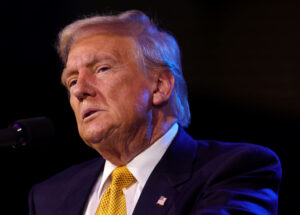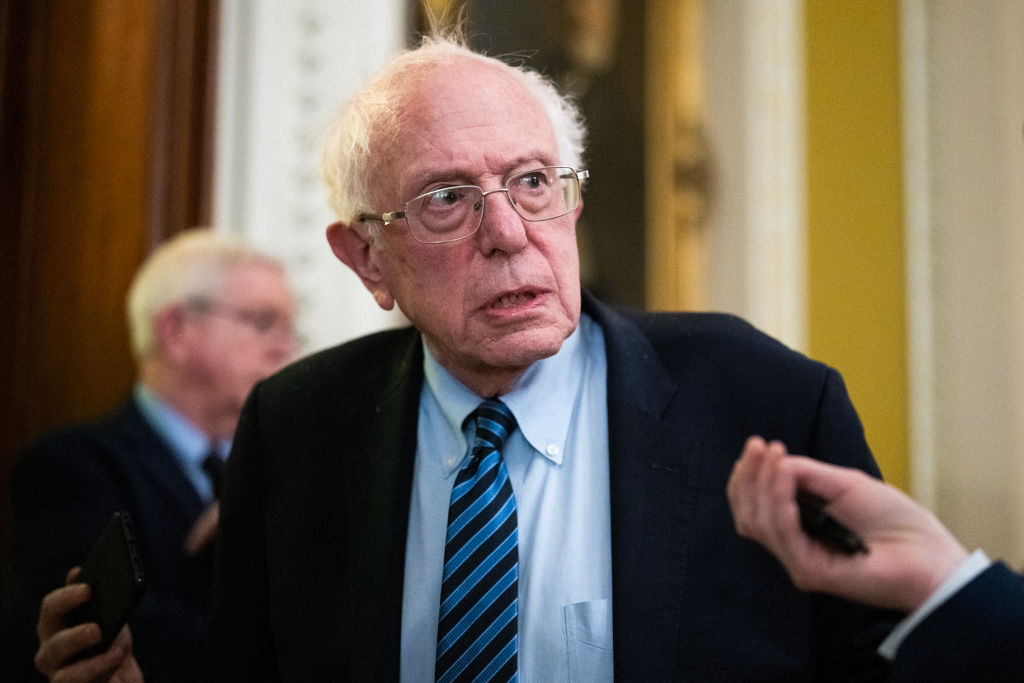
There’s at least one senator supportive of President Donald Trump’s negotiations to take a government stake in chip maker Intel: Bernie Sanders (I-Vt.).
The Trump administration revealed this week that it is working to turn CHIPS Act grants Intel received into equity in the company. Commerce Secretary Howard Lutnick told CNBC such a move will ensure the federal government gets “a good return for the American taxpayer instead of just giving grants away.”
Here’s the thing, though: this idea was first proposed by Sanders and Sen. Elizabeth Warren (D-Mass.).
When the CHIPS Act made its way through the Senate in 2022, the two senators offered an amendment that would have conditioned the funding on companies issuing a warrant or equity interest for the federal government. Sanders tried to get it adopted by unanimous consent but didn’t succeed.
Here’s what Sanders told us about Trump’s plan for Intel:
“I am glad the Trump Administration is in agreement with the amendment I offered three years ago to the CHIPS Act. No. Taxpayers should not be providing billions of dollars in corporate welfare to large, profitable corporations like Intel without getting anything in return.”
The agreement on how to treat Intel is an example of where the populist politics of Trump and progressive Democrats, particularly Sanders, can sometimes align. Like Sanders, Trump criticized the CHIPS Act early on, saying it was a bad idea to subsidize an already very rich industry.
Warren is skeptical. The Massachusetts Democrat wasn’t as supportive of Trump’s still-being-negotiated move. Warren said Trump “seems to have stumbled” on the idea pushed by her and Sanders.
Trump “just saying he wants the public to have a stake in a major company isn’t the same as having a real strategy” to promote “corporate accountability,” Warren said in a statement to us.
Not your father’s GOP. Trump has intervened in the private sector fairly often during his second term, including to secure a government cut of company profits in some instances. This is causing deep discomfort among traditional conservatives and laissez-faire thinkers. The Wall Street Journal editorial pages called a federal stake in Intel “corporate statism.”
Sen. Todd Young (R-Ind.), an original sponsor of what became the CHIPS law, is taking a cautious approach toward the negotiations with Intel. But Young, who takes a more traditional GOP view of the economy, doesn’t sound like a huge fan of the equity idea.
Young said in a statement to Punchbowl News that “the law has already unlocked over $450 billion in private sector investment commitments — which qualifies as more than a good return on taxpayer investment in my estimation.”