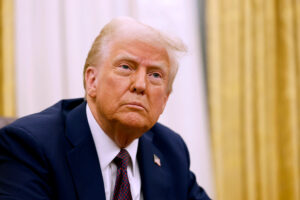


Congressional Republicans have been sitting back and letting President Donald Trump launch aggressive trade wars all over the world — even though the tariffs still make many in the GOP squirm.
But in 2026, Congress may finally have to face the trade agenda head-on. And regardless of whether tariff policy is thrown into lawmakers’ laps by the Supreme Court, trade will undoubtedly become an even bigger issue on Capitol Hill next year.
Here’s why.
1) From corporate America to Congress, everyone’s waiting on pins and needles for the Supreme Court’s ruling on Trump’s tariffs.
The court is expected to rule sometime in the coming months. The case is focused on whether Trump can use the International Emergency Economic Powers Act to levy tariffs worldwide.
If the tariffs go down, the Trump administration could draw on other authorities and investigations to fuel its trade wars, which may be enough to satisfy the president. But there are Hill Republicans convinced the president will want them to step in, which would be a brutal political exercise.
House Republican leaders put in place a policy this year that blocks measures overturning Trump’s tariffs from coming to the floor. But that prohibition expires at the end of January. The House GOP leadership faced a minor revolt over the last extension of the ban, so it’s not clear how a future effort would go.
2) There’s a massive trade deadline bearing down in 2026: the review date for USMCA, the landmark North American trade deal from Trump’s first term.
The Trump administration has already kicked off its formal review of the pact with Canada and Mexico. Key parties are weighing in on their priorities.
The Ways and Means Committee has started to ramp up its own review of the USMCA. The panel hosted Mexico’s top economic official for a meeting in September.
Senate Finance Committee Chair Mike Crapo (R-Idaho) named the USMCA review as a priority and told us he’s already hearing a lot of stakeholder feedback.
“It’s like almost every political issue we have today, there’s a lot of different positions,” Crapo said.
3) Republicans are antsy for some trade activity. GOP leaders of the trade committees are pushing to renew key trade extenders, including a program for exports from sub-Saharan African countries. The African Growth and Opportunity Act will likely be a candidate if there’s a legislative vehicle available for it to ride in this January.
GOP lawmakers would like some new trade deals to review — a common feeling on the Hill. And Republicans are continuing to focus on global tax talks, including opposition to foreign countries’ digital services taxes. That’s an issue that has previously been dealt with in trade negotiations.