


August 17, 2025



THE TOP
Look to the Senate for the future of flood insurance
Welcome back to our weekly Vault Lookahead newsletter, your Sunday finance policy read. For a limited time, we’re giving you a taste of what Premium Policy: Vault members get by previewing our weekly newsletter. Learn more about the benefits of a full subscription by scheduling a free demo and two-week trial with our team. From exclusive briefings and Q&As with our finance reporters to access to all paywalled finance content and monthly survey data from top Hill and K Street leaders, our membership gives you the actionable insights you need.
There’s a big deadline coming up for flood insurance in September. And in a shock to no one, Congress will not be meeting it.
That’s not to say Congress is sitting on its hands, though. Lawmakers and top staffers are slowly working toward something that resembles real reform of the National Flood Insurance Program. You just need to know where to look. And these days, that place is the Senate Banking Committee.
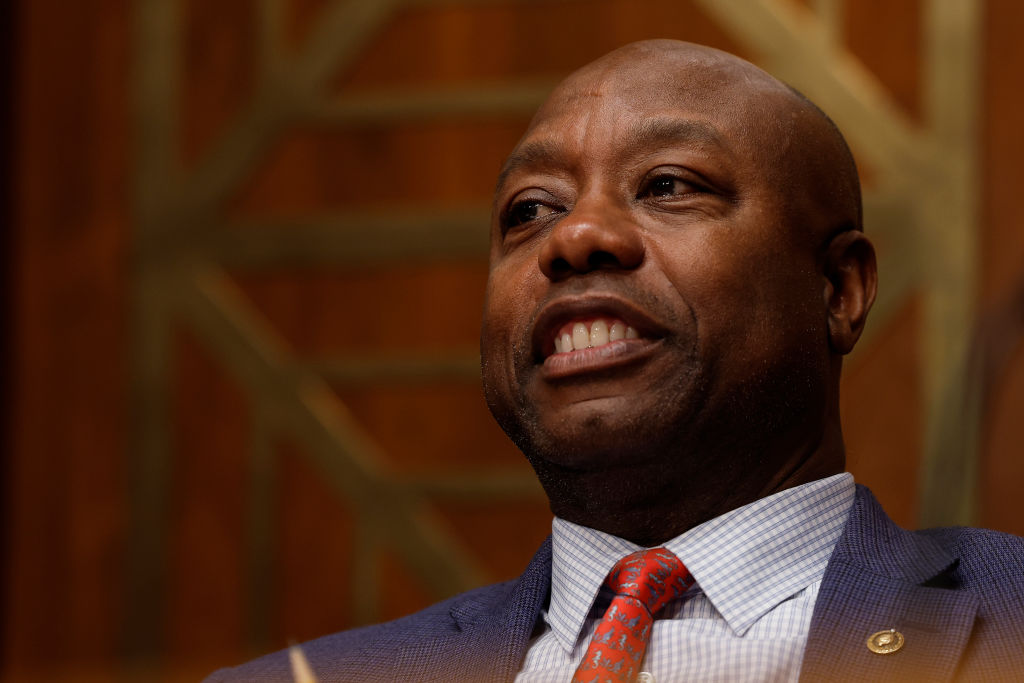
Chair Tim Scott (R-S.C.) created a working group on flood insurance in January. He tapped Sens. Mike Rounds (R-S.D.) and John Kennedy (R-La.) to lead the effort. And that work is happening! But it won’t be complete by the end of September.
“We’re making progress,” Kennedy told us. But “it’s going to take several months, at least.”
The landscape. The National Flood Insurance Program must be reauthorized by Sept. 30. No one on Capitol Hill expects anything but a short-term extension, given it’s been about eight years since the last full reauthorization.
But a couple of things have shifted the NFIP’s kick-the-can politics on Capitol Hill. A big one is the state of the insurance industry, which has struggled to cover homes from natural disasters in hotspots like California, Texas, Florida and Louisiana. Climate change has worsened the severity and frequency of floods across America.
“What were once 100-year events are becoming ten-year events,” Sen. Elizabeth Warren (D-Mass.) said. “That means we have to rethink the role that the federal government plays in backstopping insurance around the country.”
The Senate Banking Committee has changed, too. Bipartisan dealmaking is very much in vogue on the fifth floor of the Dirksen office building, particularly after a unanimous committee vote on a landmark housing package last month.
The policy. Kennedy and Rounds are two different kinds of Republicans when it comes to insurance, which is a key reason why Scott thrust them together for the working group. (View a directory of Kennedy’s staff and Rounds’ staff in The Portal.)
Kennedy has argued for bigger changes to the insurance market, like the creation of a federal program that could help stabilize the sector. Rounds is a former insurance executive — along with Scott — who has pushed for more moderate changes.
“We have had a couple of meetings, exchanged some ideas,” Kennedy told us before the August recess. “We want to open it up to other members of the Banking committee, but right now it’s Senator Rounds, me and Senator Scott.”
We checked in with Rounds on flood insurance after a recent Senate pro forma session on a few areas the group was examining.
Rounds said one change they’re mulling could address the current limits of national flood insurance policies. “The average home today, to replace it, is probably $350,000 anywhere in the United States. You can buy $250,000 in flood insurance,” Rounds said. “You have to insure the value.”
There’s also a looming political reality under these talks: Reforms that make the NFIP more fiscally solvent will almost certainly require some homeowners to pay more. “I’m thinking there’s a possibility that we could look at perhaps some higher deductibles,” Rounds said.
But the goal isn’t simply forcing homeowners to fork over more money to protect themselves. Republicans want the flood insurance market to function like a market.
“If we make it desirable, I think there’ll be a whole lot more of what I’d call healthy premium dollars coming into the market,” Rounds said. “There isn’t an agent out there who wouldn’t offer a flood insurance endorsement or flood insurance policy if it was reasonably priced for the lowest of the risks out there.”
Across the Hill. We’re not knocking the House Financial Services Committee. But key leaders over there will tell you that flood insurance has not been their top priority this year.
Rep. Mike Flood (R-Neb.), who chairs the House Financial Services Subcommittee on Housing and Insurance, told us he was following the Senate’s lead on this one, for now.
“The momentum on this issue has come from the Senate — from Senator Kennedy and Senator Rounds,” Flood said. “I would not say that I personally, as chair of the subcommittee, have been putting my shoulder into this.”
In our experience, House Republicans are also more likely to defer to the states on insurance issues. The industry has largely avoided major federal regulations for the past century.
“The last couple of legislative sessions in Florida have been very aggressive about taking on the issue,” said Rep. Mike Haridopolos (R-Fla.), who previously served in the Florida Senate. “I want to work with our friends in Tallahassee to see how those reforms are coming along.”
House Democrats aren’t optimistic, either. “I don’t think the Republicans want to do anything about it, quite frankly,” Rep. Sylvia Garcia (D-Texas) said.
– Brendan Pedersen
INSIDE TRACK
Dems angle for Ways and Means moves
Turnover is accelerating for Democrats on one of the most powerful House panels, making room for a new wave of members to climb the ranks.
The Ways and Means Committee is poised to have several openings for Democrats next Congress and at least one subcommittee post up for grabs. It could be a prime opportunity for House Democrats.
Long stifled by stagnant leadership across the caucus, House Democrats have seen significant change within their top ranks in recent years. House Minority Leader Hakeem Jeffries took over in late 2022 after two decades of Nancy Pelosi (D-Calif.) and her deputies. There was further upheaval atop some committees late last year as longtime top Democrats were forced to step down.
But the party base is eager for even more generational change and fresh faces. Plus, Democrats could flip the House in next year’s midterms, which would give a new group of members prized subcommittee gavels on the powerful panel.
Heading for the exits. Rep. Danny Davis (D-Ill.) is retiring after this Congress. That opens up a spot for a new top Democrat on the Work and Welfare Subcommittee.
Two other senior Ways and Means members, Reps.Lloyd Doggett (D-Texas) and John Larson (D-Conn.), are facing primary threats. Doggett is locked in a messy standoff with Rep. Greg Casar (D-Texas) under Republicans’ new proposed Texas map. Larson has drawn multiple challengers, including former Hartford Mayor Luke Bronin.
Doggett leads the Health Subcommittee for Democrats. Larson helms the Social Security panel.
The shift for Democrats already began this Congress. Rep. Bill Pascrell’s (D-N.J.) death last year and Rep. Earl Blumenauer’s retirement (D-Ore.) opened a lane for Reps. Linda Sánchez (D-Calif.) and Terri Sewell (D-Ala.) to move up the ranks.
Sánchez is the Trade panel’s top Democrat and the first Latina to serve as a Ways and Means subcommittee ranking member. Sewell took over as the Oversight subcommittee ranking member. That made her the first Black woman to serve in a subcommittee leadership role for the centuries-old panel.
The next most senior Democrats on Ways and Means include DCCC Chair Suzan DelBene (Wash.) and Reps. Judy Chu (Calif.) and Gwen Moore (Wis.).
The rank-and-file. Ways and Means Democrats will also see a big influx of new members if the House flips in the 2026 elections.
Rep. Dwight Evans (D-Pa.) isn’t running for reelection, so Democrats would have two seats to fill, even in the minority.
But if Democrats win the majority, that could mean nine spots opening up at minimum. That would be a huge chance for new members to join the influential panel.
It would also mean a lot of change for Ways and Means, which has seen a big shift in its ranks over the last couple of years. The committee has welcomed 14 new GOP members since 2023.
— Laura Weiss
The Vault Recap

Presented by AstraZeneca

The 340B program is supposed to help vulnerable patients—but without strong safeguards, it’s siphoning away funds that could be used for free and charitable medicine. The 340B Rebate Model Pilot improves program integrity, preventing duplicate discounts and strengthening accountability. Urge HHS to implement the pilot today. Learn why it matters.

Crucial Capitol Hill news AM, Midday, and PM—5 times a week
Join a community of some of the most powerful people in Washington and beyond. Exclusive newsmaker events, parties, in-person and virtual briefings and more.
Subscribe to Premium
Special Projects
Explore our deep dives into the issues that matter the most today and will shape tomorrow's future, with expert reporting that goes beyond the headlines and into the heart of the Capitol.
Check it outEvery single issue of Punchbowl News published, all in one place
Visit the archive
Presented by AstraZeneca
The 340B program lacks transparency—making it hard to tell if it’s actually helping vulnerable patients. HHS can fix the problem by implementing the 340B Rebate Model Pilot, ensuring the program is transparent, compliant, and accountable. Learn more.