


December 15, 2025



PRESENTED BY

THE TOP
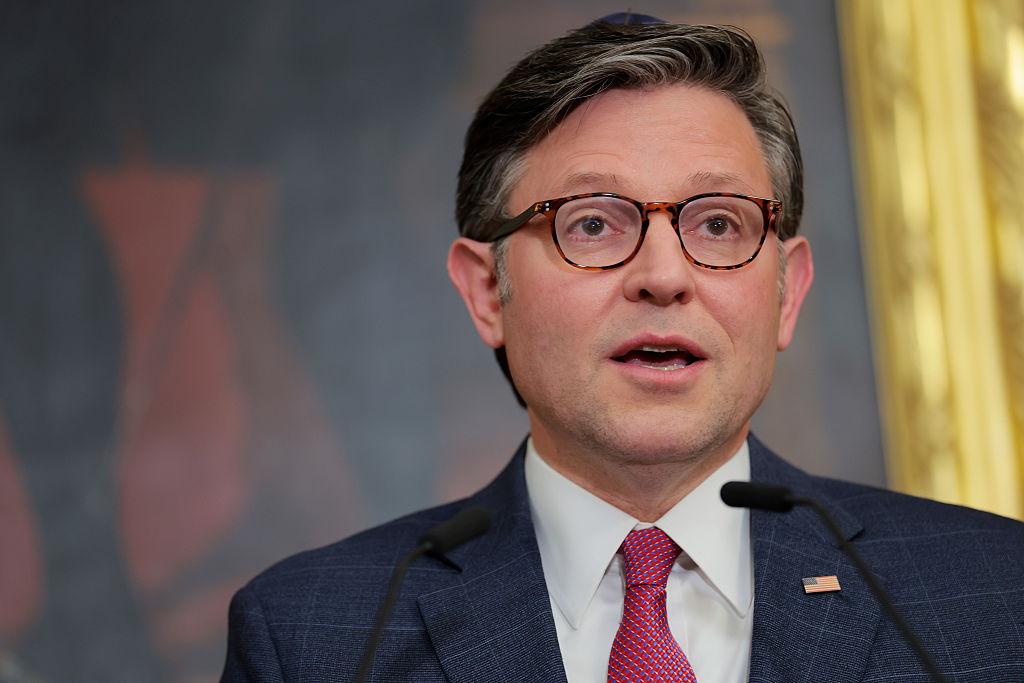
Johnson’s health bill hits snag with GOP moderate drama
Happy Monday morning.
Fifteen people are now dead in the antisemitic terror attack in Sydney, Australia. The shooters were a father and son, Australian authorities say.
This is the last scheduled week in session for the House and Senate before the Christmas recess. Lawmakers won’t be back until after Jan. 5.
It’s a big week for two reasons. The Senate will take up and pass the NDAA, the annual defense policy bill that’s been enacted every year for 64 years. The 3,000-plus page package has passed the House, so the Senate is the last stop for this train. The Senate will also clear a package of nearly 100 nominees and hold floor votes on some individual nominees.
But the main focus will be the House. Speaker Mike Johnson and House GOP leaders will move forward with the Lower Health Care Premiums for All Americans Act, their response to the Dec. 31 expiration of the enhanced Obamacare premium tax credits.
Johnson is now facing a rebellion among moderates, which could blow up his health care bill. More on that in a moment.
The big picture. With just 17 days until the Obamacare tax credits expire, we can say definitively that Congress — and the country — is going over the Obamacare cliff. Even if the House passes something, the Senate isn’t going to move anything by the deadline.
Both GOP and Democratic leaders have decided, for their own internal reasons, that doing nothing is better than having a bipartisan deal.
This may be one of the biggest moments of the 2026 election cycle. Millions of Americans could lose health insurance or face dramatically higher premiums. With the U.S. economy in a fragile state, the stakes — both personal and political — couldn’t be higher.
House Republicans are saying they’ll spend the first half of 2026 on health care policy. Since Johnson said that to us last week, hardline conservatives have latched onto the speaker’s promise.
But doing this could play into Democrats’ hands. Republicans are deeply divided on the issue, while the American public trusts Democrats more. A double negative in this case doesn’t make a Republican positive.
The GOP bill. This Republican proposal is extremely narrow, which isn’t a criticism but rather a statement of fact. The bill calls for a limited reform of pharmacy benefit managers — mostly transparency provisions, but not a broader crackdown as Republicans have previously proposed.
The bill has the cost-sharing reductions that the Senate parliamentarian knocked out during the One Big Beautiful Bill Act debate. Plus a codification of association health plans, which allows businesses to pool together to offer insurance. It also clarifies stop-loss insurance.
Yet the package has no expansion of health savings accounts, a policy the GOP has been touting for years.
Johnson, House Majority Leader Steve Scalise and Majority Whip Tom Emmer’s theory here is that the GOP is stringing together popular policies to ensure passage. All of these policies have previously been approved by the House. Republicans believe Democrats will have a tough time voting against these provisions, but we don’t really think they will.
Democrats’ policy position is quite clear: they want to extend the enhanced Obamacare premium subsidies.
Even if this Republican bill were to become law — which it won’t — it would do little if anything in the short term to help Americans who can no longer afford their health care.
Inside an amendment snafu. Last week, Johnson’s leadership team struck a deal to give Reps. Brian Fitzpatrick (R-Pa.) and Jen Kiggans (R-Va.) a vote on an amendment to extend the enhanced Obamacare subsidies.
But that process has completely broken down because of an impasse over the amendment text. There’s no longer a deal and moderates will go their own way.
Fitzpatrick, Kiggans, and Reps. Mike Lawler (R-N.Y.) and David Valadao (R-Calif.) will go to the House Rules Committee Tuesday to offer their amendment, which would extend the subsidies for two years alongside income caps and anti-fraud reforms. They expect it to be rejected. It’s unclear what the moderates will do after that. They’d effectively be free agents.
This raises major questions. Can Johnson pass his health care bill without the moderates? The leadership could try to split the group and get someone else — besides these four — to offer an amendment.
House Minority Leader Hakeem Jeffries could be the beneficiary of this GOP discord. Will the GOP moderates support the Democrats’ discharge petition — which has 214 signatures — and push it over the finish line?
Four Senate Republicans voted to advance a three-year extension of the subsidies, which is identical to Jeffries’ proposal, so the House GOP moderates would have some political cover.
Remember: There’s the aforementioned Fitzpatrick petition, which has 12 Republican signatures. And Rep. Josh Gottheimer (D-N.J.) has another petition with 11 GOP signatures and 28 Democratic signatures.
Gottheimer’s bill is slightly more straightforward. It’s a shorter, one-year Obamacare subsidies extension with income caps and a structure meant to set up a later vote on a longer extension.
But top Democrats have so far held off on backing either compromise. Rep. Richie Neal (Mass.), the top Democrat on the House Ways and Means Committee, is calling anything less than a clean three-year extension of the subsidies a “waste of time.”
Also: Despite a renewed push by Senate GOP leaders late last week, conservatives are still standing in the way of the next minibus funding package. Senate Majority Leader John Thune and GOP appropriators have been eager to hold an initial procedural vote before January, when there will be precious few legislative days before the Jan. 30 shutdown deadline.
– Jake Sherman, John Bresnahan, Laura Weiss and Andrew Desiderio
Punchbowl News is on YouTube! Subscribe to our channel today to see all the new ways we’re investing in video.


REDISTRICTING WARS
Indiana flop muddies Dem redistricting push
Top Democrats vowed to continue their aggressive redistricting campaign despite Republicans’ rejection of an Indiana remap pushed by President Donald Trump.
But the Hoosier State’s restraint is unlikely to galvanize blue states that were already hesitant to redraw.
As the redistricting wars stretch into 2026, Democrats are running out of places where they can easily respond to Republicans. The top remaining states are Virginia, Maryland and Illinois. Virginia is pressing ahead regardless of what happens elsewhere, although Democrats there must amend their state constitution via referendum first.
Legislative leaders in Maryland and Illinois, however, were closely watching Indiana as they considered their own potential redistricting.
“It was going to be a retaliatory measure,” Rep. Jonathan Jackson (D-Ill.) said, noting the urgency has lessened. “And more importantly, the people of Illinois didn’t want it.”
Contrast that with House Minority Leader Hakeem Jeffries’ declaration on Friday that Democrats would continue to explore every available option.
“The reality of the situation is that Republicans may have started this redistricting battle, we as Democrats plan to finish it,” Jeffries said.
Illinois. The Democratic-dominated Illinois legislature was reluctant to redraw and resisted doing so when it was in session this fall. Illinois Gov. JB Pritzker said that his state could be more likely to redistrict if Indiana went first.
“We can’t rule it out,” said retiring Rep. Chuy García (D-Ill.). “But I think it takes some of the pressure off. The fact that Republicans held firm in the [Indiana] Senate is a good sign and it shows, I think, the waning influence of Trump.”
Black lawmakers in Illinois, especially, have expressed concern about diluting majority-minority districts.
Democrats were hoping to draw out Rep. Darin LaHood (R-Ill.) and net one seat in an already heavily gerrymandered map. To do this, Illinois Democrats would have to move the state’s primary, which is currently set for March, and reopen the filing period. That’s a heavy lift but it doesn’t require amending the constitution.
Maryland. There’s more appetite to redistrict in Maryland. Democratic Governor Wes Moore created a redistricting advisory commission, which has been holding hearings. But the big hold up is Maryland Senate President Bill Ferguson.
Ferguson said in a statement opposing any redraw that he had spoken with his counterparts in other states. Rep. Jamie Raskin (D-Md.) suggested in a recent podcast interview that Ferguson was referring to Indiana Senate President Pro Tempore Rod Bray.
“[Ferguson] said he had spoken to the Republican president of the Indiana Senate, who said he was going to stay out,” Raskin said. “Well, if he doesn’t stay out, that is going to redouble everybody’s determination to change Bill Ferguson’s mind.”
Ferguson has stood firm in the face of a barrage of criticism. But Democrats plan to make the case to him that Indiana is only one state. Republicans are attempting to redraw in others, including Florida.
“Trump’s not going to say, ‘OK, I hear the people of Indiana have spoken, so let’s back off.’” Rep. Glenn Ivey (D-Md.) said. “So I don’t know that it’s going to impact what’s happening in Maryland.”
– Ally Mutnick

DEFENSE
Gallego launches new war powers push
News: Sen. Ruben Gallego (D-Ariz) is offering a war powers resolution to remove U.S. troops from ongoing boat strikes against alleged drug boats in the Caribbean, as lawmakers clamor to get Congress on the record before the end of the year.
Gallego’s resolution would invoke a 60-day deadline for Congress to formally authorize the deployment of military resources after the administration notifies Congress of a conflict. President Donald Trump’s administration gave that notice in early October, meaning that window has passed.
Defense Secretary Pete Hegseth and Secretary of State Marco Rubio will provide a classified briefing to all senators this week on the administration’s actions in the Caribbean, Senate Minority Leader Chuck Schumer’s office announced Sunday. The briefing is scheduled for Tuesday at 10 a.m., as we scooped yesterday.
“All senators must be allowed access to view the Sept. 2 strike video, any secrecy would raise more questions than answers,” Schumer said in a statement.
Votes possible this week. A bipartisan group of House lawmakers has offered their own war powers resolution against hostilities “within or against Venezuela,” with Rep. Jim McGovern (D-Mass.) pledging to force a vote this week on it. A bipartisan group of senators, led by Sens. Tim Kaine (D-Va.) and Rand Paul (R-Ky.), has a similar resolution that could also come up for a vote as soon as this week.
“Venezuela does not pose any type of military threat to the United States,” Sen. Jack Reed (D-R.I.), ranking member of the Armed Services Committee, said on “Fox News Sunday.” “This is a law enforcement problem.”
Another possible vote this week: A second House resolution from Democrats that would remove U.S. troops “from hostilities with any presidentially designated terrorist organization in the Western Hemisphere” without congressional authorization.
The flurry of congressional action comes as the Trump administration seized an oil tanker off the coast of Venezuela last week — prompting bipartisan concern in Congress — and continues to strike against alleged drug boats.
“If we’re going to go and topple regime after regime in South America, there’s no amount of money that could be printed to pay for that,” Paul said on NBC’s “Meet the Press.” “And I don’t think that the lives should be lost without a vote by Congress and the people approving of this.”
— Anthony Adragna
PRESENTED BY DUKE ENERGY

At Duke Energy, we’re focused on keeping prices low and supporting growing energy needs. From infrastructure investments to tech advancements, progress will not be slowed.
THE CAMPAIGN
Crow spreads the cash following Trump investigation
News: Rep. Jason Crow (D-Colo.) is contributing $150,000 to the DCCC in the wake of his President Donald Trump-fueled fundraising boom.
Crow is part of the group of Democratic national security lawmakers being investigated by the Trump administration for participating in a video reminding military personnel to ignore illegal orders. Crow is a former Army Ranger who served in Iraq and Afghanistan.
The money game: Since Trump turned his ire on the “Seditious Six” three weeks ago, Crow has raised more than $500,000.
Crow attracted over 14,000 new donors from all 50 states during this stretch. Per the campaign, the average donation amount is $32.
— Max Cohen
MINNESOTA WATCH
News: Sen. Catherine Cortez Masto (D-Nev.) is endorsing Rep. Angie Craig (D-Minn.) in her Minnesota Senate run. Cortez Masto is a Democratic moderate who leads ModSquad, an organization dedicated to electing center-left Democrats.
The Democratic primary between Craig and Minnesota Lt. Gov. Peggy Flanagan has turned into a proxy battle between the party’s centrist and progressive camps.
Sens. Bernie Sanders (I-Vt.), Elizabeth Warren (D-Mass.), Ed Markey (D-Mass.), Chris Van Hollen (D-Md.), Martin Heinrich (D-N.M.), Chris Murphy (D-Conn.) and Jeff Merkley (D-Ore.) are backing Flanagan.
Along with Cortez Masto, Sens. Andy Kim (D-N.J.), Tammy Baldwin (D-Wis.), Jacky Rosen (D-Nev.) and Ruben Gallego (D-Ariz.) are backing Craig.
Craig has outpaced Flanagan in fundraising to date.
— Max Cohen


Presented by Cencora

From accelerating innovation to powering the pharmaceutical supply chain, we reduce barriers to expand access to medications for millions of Americans at sites of care in their communities. Learn more

Crucial Capitol Hill news AM, Midday, and PM—5 times a week
Join a community of some of the most powerful people in Washington and beyond. Exclusive newsmaker events, parties, in-person and virtual briefings and more.
Subscribe to Premium
Special Projects
Explore our deep dives into the issues that matter the most today and will shape tomorrow's future, with expert reporting that goes beyond the headlines and into the heart of the Capitol.
Check it outEvery single issue of Punchbowl News published, all in one place
Visit the archive
Presented by Cencora
From accelerating innovation to powering the pharmaceutical supply chain, we reduce barriers to expand access to medications for millions of Americans at sites of care in their communities. Learn more