


Iran. Facing strong public opposition to the war in Iran, President Donald Trump all but declared victory in the U.S. campaign against the Islamic Republic, saying that American military objectives will have been met “shortly, very shortly.”
Yet Trump also said U.S. forces will continue to attack Iran over the next several weeks even as peace talks continue. And the president spoke repeatedly about the need to prevent Iran from building a nuclear weapon.
“We’re going to hit them extremely hard over the next two to three weeks,” Trump declared. “We’re going to bring them back to the stone ages where they belong.”
However, Trump neither mentioned the use of U.S. ground troops to reopen the Strait of Hormuz nor criticized NATO. This is despite negative public comments that he and other top administration officials have made about the alliance since the conflict began.
Trump said other nations — especially those purchasing oil from Persian Gulf countries — will be responsible for keeping the vital waterway open. He didn’t discuss the soaring cost of gas in the United States, saying oil prices will fall “naturally” once the war is over.
“So to those countries that can’t get fuel, many of which refused to get involved in the decapitation of Iran – we had to do it ourselves — I have a suggestion,” Trump said. “Number one, buy oil from the United States of America. We have plenty, we have so much. And number two, build up some delayed courage — should’ve done it before, should’ve done with us as we asked — go to the strait and just take it. Protect it. Use it for yourselves.”
Democrats slammed the speech as “rambling” and “divorced from reality.” Asian and European markets are down following Trump’s remarks, and oil prices rose. Financial markets want a clear timeline for ending the conflict, which Trump didn’t give.
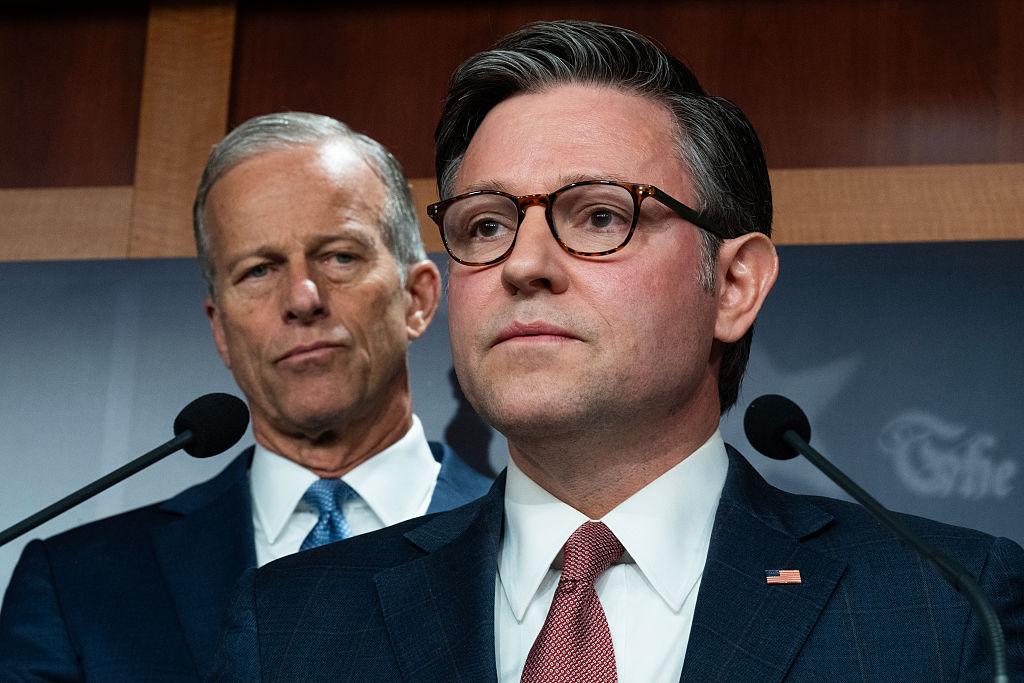
The new DHS play. It took an extra five days, but Speaker Mike Johnson finally caved to Senate Majority Leader John Thune’s plan to end the DHS shutdown.
A Truth Social post from Trump on Wednesday set the plan in motion, aligning the two top Hill Republicans after Johnson rejected the Senate-passed bill last week. This measure funds all of DHS minus ICE and CBP, which Republicans plan to address via budget reconciliation.
Thune and GOP leaders are expected to use the Senate’s 7 a.m. pro forma session today to trigger a procedural motion to send the Senate-passed DHS funding bill back to the House.
But House Republican leaders aren’t committed to bringing members back next week to vote on the Senate-passed measure. They recognize that GOP rank-and-file members hate this bill. That means GOP leaders may wait until the chamber returns on April 13 to pass it.
Yet it seems like an unsustainable position to wait another week. Plus, Johnson has to pass a FISA reauthorization by April 20, and that’s a tough vote too.
Reconciliation. Once Congress passes the Senate version of the DHS funding bill, Johnson and Thune will embark on what amounts to a risky legislative experiment: trying to pass a reconciliation bill just months before Election Day. Trump says he wants the package on his desk by June 1.
The goal here is to bypass Democrats and lock in three years of funding for ICE and CBP. The price tag will be somewhere between $45 billion and $75 billion. This would keep the agencies on autopilot until Trump’s term ends in 2029, GOP insiders say, even if Democrats win control of the House and/or Senate in November.
This is Johnson and Thune making the best of a bad hand. Democrats won’t vote for ICE and CBP spending, and it’ll only get harder for Congress to approve the agencies’ funding if the GOP loses in the midterms.
Removing ICE and CBP from the DHS spending bill also ends a decade or more of hard-fought policy riders that have limited the agencies’ operations, Republicans say.
But it won’t be easy. There are serious tension points worth keeping in mind.
The White House wants to keep this reconciliation bill limited to only funding for ICE and CBP. Republican leaders agree.
“It’s what you can get 50 for and 218 for,” Thune said after the Senate initially passed its DHS funding bill. “So this will be fairly narrowly focused in dealing mostly with [ICE and CBP].”
Yet many House and Senate Republicans will see this package as the last big bill with a chance of being signed into law before Election Day. There’s a desire within the rank-and-file to do something big politically.
For example, following the bitter Obamacare subsidies fight of last fall, Johnson promised he’d spend the first half of this year on health care. We’ve heard nothing about this for weeks, but GOP lawmakers won’t forget about it.
Plenty of Republicans will want to use the legislation to try to pass the SAVE America Act or something resembling it. While policy changes can’t be enacted in a reconciliation bill if they have no budgetary impact, Republicans can provide grants to states that follow certain election practices.
There will also be defense hawks who want to plus-up Pentagon spending amid the Iran war. And budget hawks will want steep cuts to social safety-net programs.