


May 16, 2026



THE TOP
Hill GOP’s tricky dance with Trump’s ballroom quest
Welcome to the Readback, our weekend digest featuring the best of Punchbowl News this week – a quick roundup of all our scoops, analysis and Capitol Hill insight you won’t find anywhere else. We’ve also included a few of our favorite outside reads from the week.
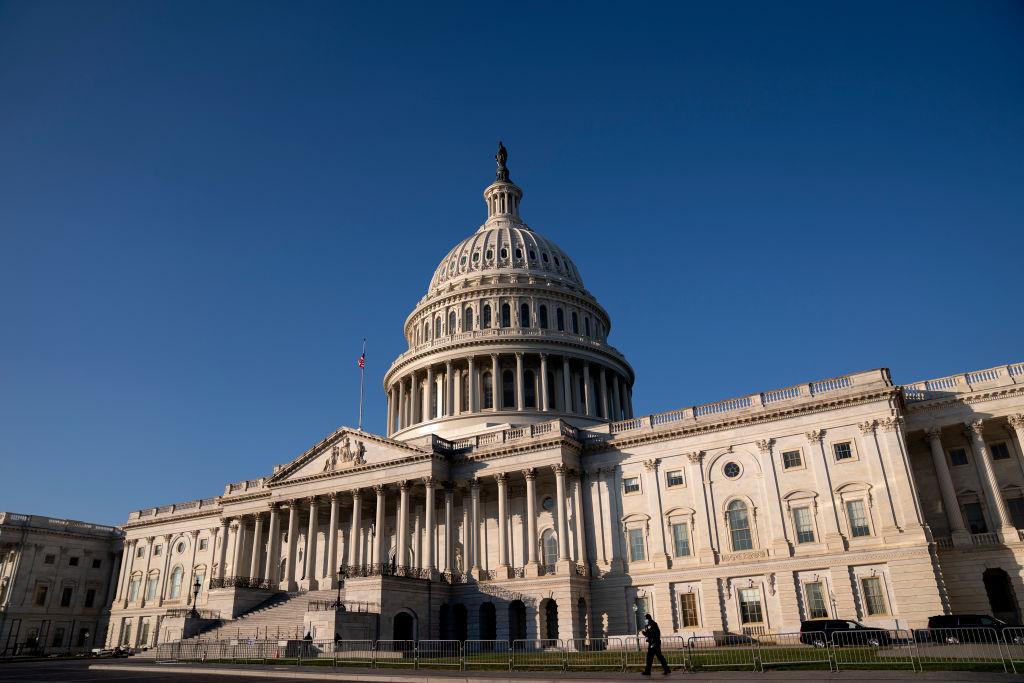
Ballroom binder. Republicans’ attempt to pass a reconciliation bill with money for ICE and Border Patrol is in full swing.
The party-line push to fund immigration enforcement agencies was going over relatively well with rank-and-file GOP lawmakers. Then, Senate Republican leaders’ text of the package dropped with a surprise $1 billion for the Secret Service and securing President Donald Trump’s controversial White House ballroom project.
The mere mention of Trump’s ballroom plan panicked moderate Republicans, who believe the vote would be politically disastrous.
Department of Homeland Security officials were on Capitol Hill for meetings this week trying to lobby GOP lawmakers on the funding and provide more details of the request. Secret Service Director Sean Curran even held a classified briefing with House Republicans at the White House to discuss the plans, as we scooped.
The problem for the Trump administration is that there’s just probably not any amount of information they can provide that would erase vulnerable Republicans’ political fears. Senate Minority Leader Chuck Schumer is already slamming GOP lawmakers as “Ballroom Republicans.”
From a reporting perspective, we’re at an interesting inflection point in the debate over the ballroom-related language.
Senate Republicans and Democrats are currently arguing over what complies with the chamber’s strict reconciliation rules as part of the Byrd Bath process. The Senate parliamentarian issues rulings, but GOP leaders can go back with tweaked language.
If the ballroom security funding falls out of the package for procedural or political reasons in the Senate, it would save House Republicans a headache. But the problem is the White House seems to really want the language. So the coming days could get messy for GOP leaders.
It’s also going to be a long, long week on the Senate floor if all goes to plan for GOP leaders. Passing the reconciliation bill will involve multiple markups and a vote-a-rama when Democrats can offer unlimited amendments and try to put the GOP in a tough political spot.
Some Republicans may also push for amendment votes, including on the SAVE America Act. The vote-a-rama is usually an all-night affair. If you’re in the Capitol halls, you’ll typically see a lot of coffee, Celsius, snacks and blankets come out. For all our Senate people, get your sleep in now!
And remember: House GOP leaders don’t want this to be the last round of reconciliation! They say they’re forging ahead with a third reconciliation bill this summer, though Senate Republican leaders are striking a much more cautious tone about that idea.
What I’m watching: The new season of “Summer House” … wild.
– Laura Weiss
You can find The Readback in your inbox every Saturday at 8 a.m. And don’t hesitate to reach out to [email protected] with feedback. Enjoy The Readback.

Fly Out Day: Clarke on redistricting impact on Black representation
Redistricting has become one of the defining political fights of the moment — and there’s a reason it keeps taking center stage.
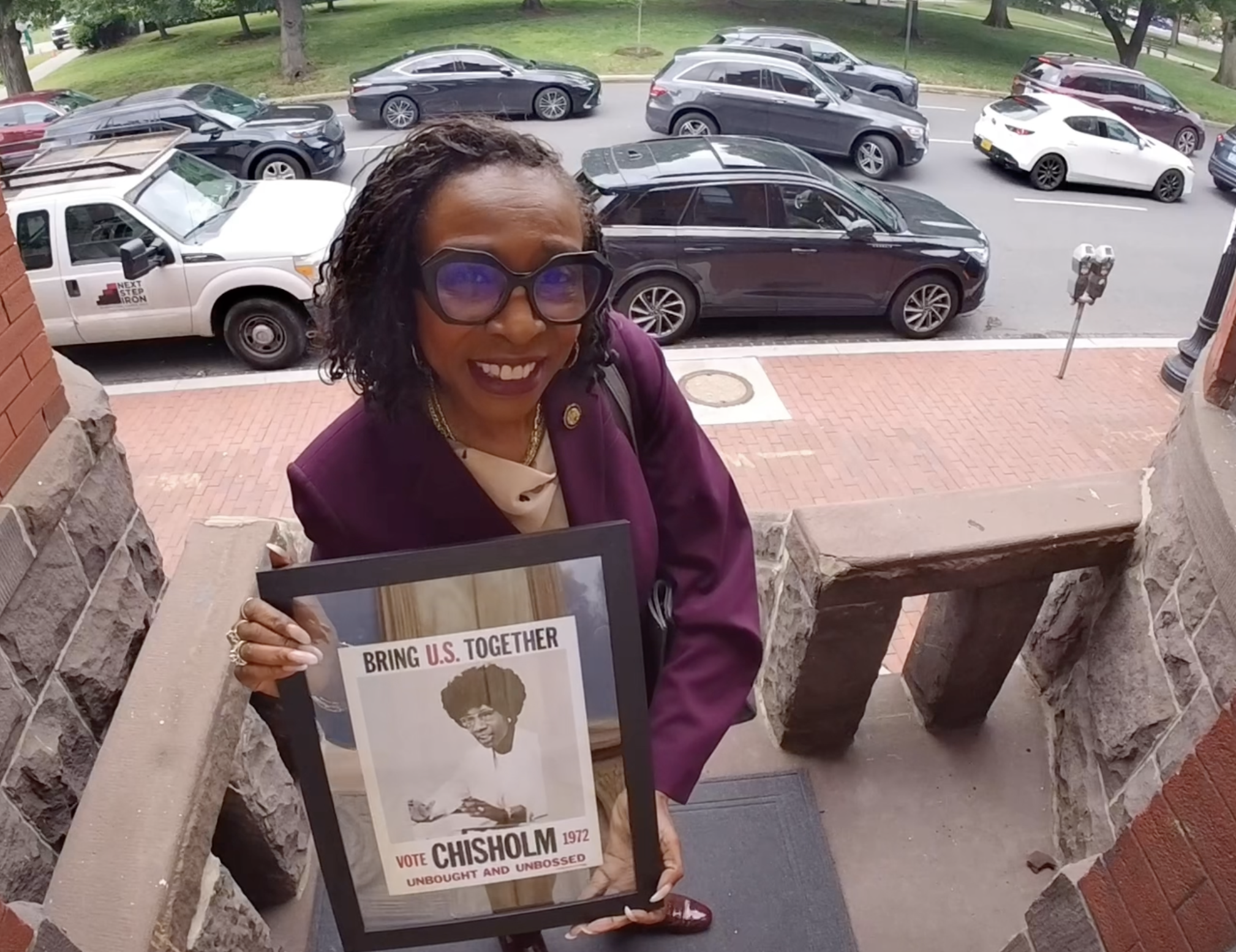
On the latest episode of Fly Out Day, Congressional Black Caucus Chair Yvette Clarke (D-N.Y.) breaks down why Black Democrats see the battle over maps and representation as critical heading into future election cycles.
Clarke began by asserting that Black power in D.C. “remains very strong.”
However, she warned that “our numbers will decrease” with ongoing redistricting efforts as Republicans across the region target roughly a half-dozen districts represented by Black lawmakers this year.
“I think that the core basis under which CBC members are elected is to make progress in the lives of the American people and to raise up the ways in which Black folks, in particular, across this country, are relying on the government to create fair, non-discriminatory pathways for their success within the United States,” Clarke said.
The Congressional Black Caucus entered this Congress with a record 62 members. That’s a dramatic increase from the group’s original 13 members when it was founded in 1971.
Now, at least six Black Democrats could lose their seats this November amid a GOP-led redistricting push and the aftermath of the Supreme Court’s decision in Louisiana v. Callais, which further weakened Section 2 of the Voting Rights Act. By 2028, as many as a dozen Black-held seats could disappear.
“We could see what was happening with Callais, and…voting rights have always been our North Star because of the history of discrimination against black voters,” Clarke said.
Clarke also brought a photo of one of her “sheros,” late Rep. Shirley Chisholm (D-N.Y.), the first Black woman elected to the U.S. Congress and the first Black person to seriously run for the U.S. presidency. Clarke noted that Chisholm was elected because of the Voting Rights Act.
Nevertheless, Clarke argued Democrats are strongly responding to a fight Republicans started in Texas, warning that unchecked GOP power threatens the balance of the country’s two-party system.
“We didn’t start this, you know, this started all in Texas, right?” Clarke said. “It’s unfortunate because it’s a disservice to the American people. There’s no ifs, ands or buts about it. But we cannot have one party rule in a two-party system and call ourselves democratic.”
Other highlights from the interview
– Clarke gets candid on NYC Mayor Zohran Mamdani.
– Clarke says anti-semitism in New York is “a problem.”
– Clarke says today’s era is “right versus wrong,” not “right versus left.”
What I’m listening to: I just discovered a new artist, Omigie, through her song “Record Player.” Sometimes, you come across incredible artists who still feel undiscovered, and you genuinely can’t understand how the rest of the world hasn’t caught on yet.
– Rachel Scully

Playing food critic for a cause

Trying new foods is one of my favorite hobbies, so I was excited to attend the March of Dimes Gourmet Gala this week.
The annual culinary competition among lawmakers across the aisle raises funds for maternal and infant health. The organization said it raised $1.6 million at this year’s gala.
At the event, we heard opening remarks on the importance of maternal health, as well as a story from a family who had struggled with the early birth of their son. The little boy spent months in the neonatal intensive care unit, with support from March of Dimes.
It was a cool experience to see so many lawmakers, alongside their spouses and staff, excited to show off their dishes in support of moms and babies.
Top contenders. There were several savory dishes and dessert options, so I had to be strategic about which to try first. As an Atlanta native, I made sure to stop by each booth featuring dishes from Georgia, which were all very tasty.
My favorite dishes of the night were Rep. Sanford Bishop’s (D-Ga.) Brunswick stew, Rep. Bobby Scott’s (D-Va.) cream of crab soup, Sen. Jim Risch’s (R-Idaho) Basque pintxos de txaka and Rep. Steven Horsford’s (D-Nev.) Trinidad curry chicken and rice.
At the gala, I talked to several congressional staffers and maternal health professionals about their favorite dishes.
The cream of crab soup seemed to be a consistent favorite, so it was no surprise to me when the plate took home the People’s Choice Award at the end of the night!
Local chefs, who have much more culinary knowledge than I do, evaluated all the recipes to honor top winners in other categories. Angus King’s (I-Maine) lobster stew won the Judge’s Choice Award, and Rep. Bob Latta’s (R-Ohio) Aunt Hilda’s Pecan Pie received the Best Presentation Award.
What listening to: I saw “Michael” in the movies a week ago, and now Michael Jackson is all I’ve been listening to! I’m stuck between “Thriller” and “Bad” as my favorite albums, and it was so cool seeing the late popstar’s own nephew, Jaafar Jackson, bring those eras to life in the movie.
– Shania Shelton

Trying the historical Senate bean soup

After three years working in the Capitol, I finally partook in a culinary tradition that has existed in the U.S. Senate for decades. I ate Senate bean soup.
I’ve heard several stories from colleagues about this mysteriously persistent menu item. But to get to the bottom of it, I reached out to Josh Howard, assistant historian at the Senate Historical Office.
According to Howard, there are several competing narratives about the soup’s origin.
Many journalists in the 1930s-50s wrote that Sen. Knute Nelson (R-Minn.) was the originator. According to Howard, the most common story is that the Minnesota Republican ordered bean soup one day in 1907 and was upset when he was told there wasn’t any.
Then, as the story goes, Nelson went to the Senate Rules Committee and secured unanimous consent to have bean soup served in the Senate Restaurant every day.
A wrinkle in that story: Nelson wasn’t on the Rules committee until 1911. Some articles reporting this story claim Nelson was the chair of the committee.
Sen. Fred Dubois (R-Idaho) also gets credit for supposedly passing a resolution requiring that bean soup be on the menu daily at the Senate Restaurant in 1899.
We may never know how this concoction found its way onto the Senate dining menu.
“Determining the ‘true’ origin is likely impossible, barring a smoking gun document found buried in an archival collection somewhere,” Howard said.
How does it taste? If you like salt, this soup is for you. I’m glad I filled up my water bottle before sitting down to eat. And it was better than I thought. To be frank, I expected it to taste bad.
If you asked me for one word to describe Senate bean soup, I’d say “beige.” There was nary a green to be seen in my little cup of thick soup.
According to the recipe, there is celery and parsley. These were not detectable to my palette.
If you are trying it for the first time, go for the small cup. And perhaps pair it with something more colorful than sweet potato fries. Perhaps a sandwich? Then take pleasure in knowing you are part of a century-long tradition of Senate dining.
What I’m watching: The penultimate season of “For All Mankind” is streaming on Apple TV, and I’m hooked. For the uninitiated, the series is set in an alternate reality in which the Soviets beat the United States to the Moon.
– Robert O’Shaughnessy

Presented by AstraZeneca

The 340B program is supposed to help vulnerable patients—but without strong safeguards, it’s siphoning away funds that could be used for free and charitable medicine. The 340B Rebate Model Pilot improves program integrity, preventing duplicate discounts and strengthening accountability. Urge HHS to implement the pilot today. Learn why it matters.

Crucial Capitol Hill news AM, Midday, and PM—5 times a week
Join a community of some of the most powerful people in Washington and beyond. Exclusive newsmaker events, parties, in-person and virtual briefings and more.
Subscribe to Premium
Special Projects
Explore our deep dives into the issues that matter the most today and will shape tomorrow's future, with expert reporting that goes beyond the headlines and into the heart of the Capitol.
Check it outEvery single issue of Punchbowl News published, all in one place
Visit the archive
Presented by AstraZeneca
The 340B program lacks transparency—making it hard to tell if it’s actually helping vulnerable patients. HHS can fix the problem by implementing the 340B Rebate Model Pilot, ensuring the program is transparent, compliant, and accountable. Learn more.