


June 3, 2026



PRESENTED BY
THE TOP
AI giants face Dem backlash
Happy Wednesday morning.
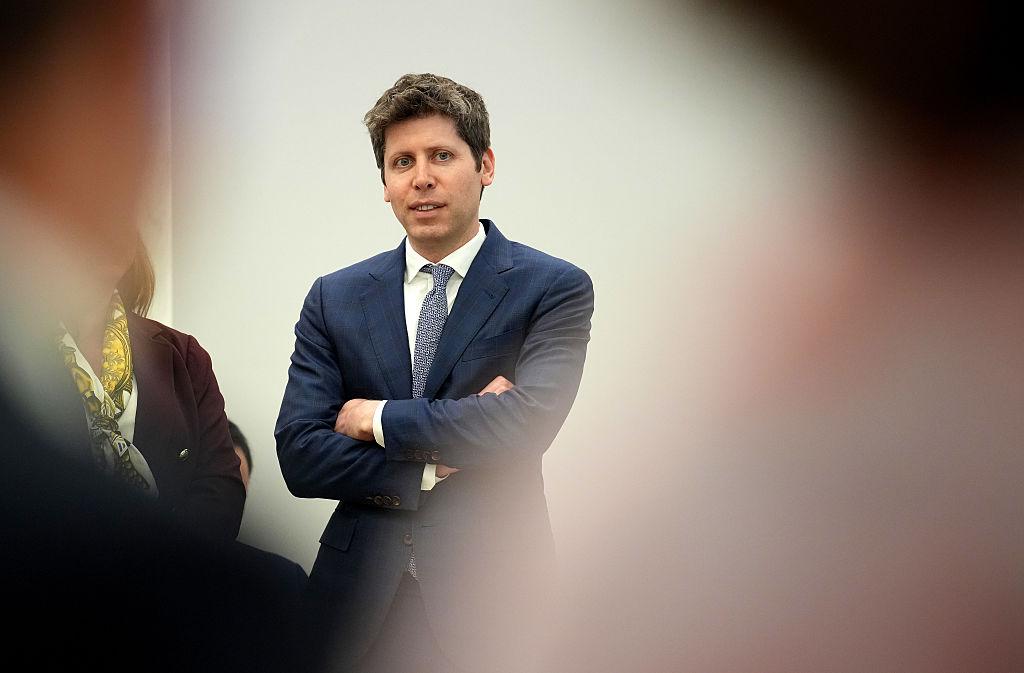
Top executives from AI giants are making regular visits to Capitol Hill. OpenAI CEO Sam Altman will be here today. The tech titans are hiring lobbyists and well-known consultants from both parties. And they’re shelling out tens of millions of dollars to shape public opinion on how their platforms are safe and beneficial to society.
Yet their message seems to have landed on deaf ears with an important constituency: top Democrats.
If Democrats take control of Congress in 2027, the nation’s leading AI companies are in for a reckoning. Consider the positions that key progressives have recently staked out.
Sen. Bernie Sanders (I-Vt.) said Monday that he’s going to introduce a bill to give taxpayers a 50% stake in the nation’s largest AI companies. The progressive firebrand is also pushing for a federal moratorium on data centers.
Last week, Rep. Greg Casar (D-Texas), chair of the Congressional Progressive Caucus, joined the chorus of Democrats pushing for an AI tax, writing in an op-ed that America needs to raise revenue from tech companies to “slow down job loss.”
Rep. Rashida Tlaib (D-Mich.) declared it was “disgusting” that Democratic Gov. Gretchen Whitmer approved the expansion of data centers in Michigan.
Carl Heastie, the New York state House speaker, said Tuesday that the Empire State legislature would enact a one-year moratorium on data center construction. New York is the latest state to look at putting the brakes on AI facilities.
Make no mistake about it — these progressive stands will become benchmarks for the rest of the Democrats, both in the midterms and the 2028 presidential race.
AI’s spectacular rise has been scrambling politics for months. The stock market has soared, with trillions embedded in an interlocking series of massive tech companies. Data center construction has boomed. Electricity prices, the cost of water and other materials are rising.
Yet voters are getting antsy about the technology, and even President Donald Trump — who quietly signed his own AI executive order Tuesday — is moving to a more hands-on approach.
The most influential voices on the left are trying to get Democrats to go much further.
The politics. Sanders’ AI gauntlet is finding fans in the upper ranks of the Senate Democratic Caucus.
Sen. Brian Schatz (D-Hawaii), who’s poised to be the next Senate Democratic whip, said he’s ready to consider public ownership of AI platforms.
“I’m intrigued,” Schatz said.
The politics are almost too easy for progressives. Many Americans aren’t interacting with AI in a meaningful way. And the left has the opportunity to shape the narrative that this could be a world-changing technology that permanently alters long-standing social contracts if it isn’t reined in quickly.
The AI message fits neatly into progressive Democrats’ preferred 2026 slogans: thanks to Trump and the GOP-Congress, billionaires have undue influence over the U.S. economy and society.
“These midterms in part will be fought over the central issue of whether the government is just a toy of the billionaires, or it’s actually a vital force that sets the rules so that working families have a real chance to build a future,” Sen. Elizabeth Warren (D-Mass.) said.
Mods. The challenge for the center of the Democratic Party is that they’re tasked with pushing back against a populist wing that appeals to voters’ greatest fears.
When Democratic Rep. Sam Liccardo from Silicon Valley rejects calls for a data center moratorium, he cites the facilities’ “internal cooling cycle systems” to note that they consume much less water than many people think. It’s a wonky message for such a visceral issue.
Meanwhile, Rep. Alexandria Ocasio-Cortez (D-N.Y.) brings jars of brown water to a hearing to make her case that data centers are poisoning communities.
“The great challenge of our age is how we can break through the noise to enable dialogue,” Liccardo said.
Rep. Josh Gottheimer (D-N.J.), who co-leads the party’s AI commission, said progressives are dominating the AI discussion because they’re pushing “incendiary things.”
“Sanders would like to put AI in a box and lock it up and make it go away. That’s not reality,” Gottheimer said.
The Trump factor. Skepticism of huge AI companies and their mega-billionaire owners is a natural fit for the politics of progressive Democrats, but some Republicans hope to harness the unease, too.
Trump took some of the first far-reaching moves on AI anxiety in January when he got major labs and cloud providers to commit to supplying energy to their own data centers.
Sen. Josh Hawley (R-Mo.), a longtime tech skeptic, has also been vocal about his willingness to work with Democrats to rein in the major platforms.
“A sovereign wealth fund is not necessarily a bad idea,” Hawley said, though he warned he wouldn’t love “the government owning AI.”
On Tuesday, Trump formalized his pivot toward greater attention to catastrophic AI risk, signing an executive order that establishes a voluntary 30-day government preview of advanced models. But the order still relies on a largely voluntary approach.
Valley view. Silicon Valley stalwarts believe they’ll be able to satisfy their skeptics and move the entire Congress to a friendlier position.
Yet they face a raft of challenges: NIMBYism, tech skepticism, energy and water issues and privacy challenges.
OpenAI’s vice president of global affairs, Chris Lehane, thanked Sanders for his idea in a LinkedIn post, noting the company’s proposals for AI taxes and what the firm has called a “Public Wealth Fund.”
“[T]he principle is right: if AI creates enormous value, Americans should share directly in that value,” Lehane wrote.
– Jake Sherman, Diego Areas Munhoz and Ben Brody
Want to make sure your whole office has the full Punchbowl News experience? We have team plans available for companies, organizations, classes, Capitol Hill offices and more. Fill out this form and find out if your team is eligible for a discount.


THE SENATE
Dems threaten FISA over Pulte
News: Senate Democrats are privately urging GOP leaders to pressure President Donald Trump to withdraw his appointment of Bill Pulte as acting director of national intelligence — and threatening to tank a bipartisan FISA deal if the president refuses.
Senate Intelligence Committee Vice Chair Mark Warner (D-Va.) asked Senate Majority Leader John Thune on Tuesday to use his influence with the White House to reverse Trump’s move to install Pulte as overseer of the nation’s 18 intelligence agencies, according to multiple sources familiar with the matter.
Warner, who’s been critical in building Democratic support for a bipartisan deal to extend FISA Section 702, made clear to Thune that all options are on the table to reverse what Democrats see as a dangerous Trump pick to lead ODNI. Pulte, who currently leads the Federal Housing Finance Agency, has no national security experience and has used his existing role to exact revenge on Trump’s political foes.
From Warner’s perspective, it’s impossible to convince enough Democrats to support a reauthorization of Section 702 when Pulte would be the one overseeing the program. Senate Minority Leader Chuck Schumer has also privately told senators that the Pulte appointment makes passing a FISA deal much more difficult.
Plus, Democrats believe they’d be doing Republicans a favor because they also see Pulte as unqualified for the job, even if few openly say it. As we scooped Tuesday, the White House had indicated to top Republicans that Aaron Lukas, whom Trump announced as the acting DNI 12 days ago, would remain in the role for an extended period. Senate Republicans felt blindsided.
Despite Republicans’ concerns about Pulte, many argued Tuesday that reauthorizing Section 702 shouldn’t be “conflated” with his appointment.
Thune regularly says the 702 program is so important for U.S. national security that “we can’t afford to go dark.” In this case, Democrats would be walking away from a bipartisan deal in hopes of somehow convincing Trump to back down.
But Democrats have leverage here. Republicans can’t pass a FISA reauthorization on their own. With a handful of GOP senators expected to oppose any FISA agreement, Thune would likely need at least a dozen Democrats to support the bill. Without a big vote in the Senate, it’ll be difficult for the House to pass it via a fast-track process ahead of the June 12 deadline. It’s safe to say that Pulte’s appointment kills any chance of the House passing FISA using the fast-track suspension process.
That’s where Warner comes in. As his party has grown more antagonistic toward the surveillance authority, the Virginia Democrat is seen by Republicans as a crucial ally who can deliver Democratic votes.
The Senate could hold an initial procedural vote on a 702 extension as soon as Thursday. This only requires a simple majority. But as the Senate moves through the floor process, 60 votes will eventually be needed to overcome a filibuster.
As we scooped, the deal includes a provision banning a central bank digital currency for three years, a concession to House conservatives. The bill also prohibits the FBI from using 702 information in prosecuting a U.S. person.
Reconciliation. Meanwhile, the Trump administration’s promise to drop the nearly $1.8 billion “anti-weaponization” fund could clear the way for the Senate to begin voting Wednesday on the $70 billion ICE and Border Patrol reconciliation bill.
But Senate GOP leaders aren’t out of the woods yet. Even if Senate Republicans can clear the first procedural hurdle, they’ll need to stick together to defeat a barrage of Democratic amendments.
— Andrew Desiderio and Laura Weiss
PRESENTED BY PCMA

Pharmacy benefit managers reduce prescription drug spending by $300 billion each year by negotiating lower drug prices and finding savings for people like you. Learn how PBMs make prescriptions more affordable.
THE CAMPAIGN
Turek wins Iowa Senate nod, plus other primary takeaways
Iowa state Rep. Josh Turek handily defeated state Sen. Zach Wahls in the Senate Democratic primary. Turek, the favored pick of Senate Minority Leader Chuck Schumer, will face Rep. Ashley Hinson (R-Iowa) in November’s general election.
The Iowa governor’s race saw a big Republican upset. Rep. Randy Feenstra (R-Iowa), who was endorsed by President Donald Trump, lost the GOP primary for governor to rival Zach Lahn by less than 1%.
Rep. Mariannette Miller-Meeks (R-Iowa) defeated a right-wing primary challenger and will face Democrat Christina Bohannan for a third straight cycle in the toss-up 1st District.
In the open 2nd District, Republican Joe Mitchell and Democrat Lindsay James will compete, and in the swingy 3rd District, it’s Rep. Zach Nunn (R-Iowa) vs. Democrat Sarah Trone Garriott.
California caveat. Most of the notable races in the Golden State remain uncalled and will for a while, given the pace at which the state counts ballots.
A couple of early results: State Sen. Scott Wiener advanced to the general election in the race to replace retiring Rep. Nancy Pelosi (D-Calif.). The race for the second spot remained uncalled.
In the 48th District, Republican Jim Desmond and Democrat Marni von Wilpert advanced to the general election.
New Jersey. Rebecca Bennett won a crowded Democratic primary in the 7th District to take on Rep. Tom Kean (R-N.J.) in a top swing seat. Bennett’s win came despite a GOP-linked super PAC spending some $650,000 to thwart her. Kean has mysteriously been missing from public sight for roughly three months, although he’s promised to return “within a matter of weeks.”
In the open 12th District, surgeon Adam Hamawy beat a host of Democrats vying to replace retiring Rep. Bonnie Watson Coleman (D-N.J.). Hamawy is backed by top progressives.
Montana. Republican Kurt Alme, the handpicked candidate of retiring Sen. Steve Daines (R-Mont.), won the GOP nod in Montana. The winner of the Democratic primary is Alani Bankhead, but many top Democrats in the state are hoping to coalesce around independent Seth Bodnar.
In the open 1st District, radio host Aaron Flint won the Republican nod with Trump’s backing. The Democratic primary was too close to call as of early Wednesday morning.
New Mexico. Marine veteran Greg Cunningham won the GOP nomination to run against Rep. Gabe Vasquez (D-N.M.). Former Interior Secretary Deb Haaland won the Democratic nomination for governor.
South Dakota. State Attorney General Marty Jackley won the Republican primary for the state’s at-large congressional seat. The incumbent, Rep. Dusty Johnson (R-S.D.), is running for governor.
— Max Cohen and Ally Mutnick


Vault: Bessent visits Hill as U.S. economy struggles
It’s another tenuous moment for the U.S. economy, and Senate Finance Committee members this morning will question one of the most influential figures in the Trump Administration: Treasury Secretary Scott Bessent.
As costs for most Americans continue to rise and the Iran war grinds on, the government’s top finance official will make a pitch for President Donald Trump’s tax cuts and tariff regime.
News: Bessent will open his visit to the Hill by touting the benefits of the One Big Beautiful Bill, Trump Accounts meant to help save money for their children, deregulation efforts and Trump’s trade wars, according to a copy of his written testimony we reviewed.
“Separately, any one of our initiatives on tariffs, tax cuts and deregulation would be substantial,” Bessent will say. “Taken together, they are transformative.”
Bessent’s mention of tariffs, in particular, is notable. Many GOP lawmakers still don’t like tariffs.
The Dem approach. Senate Democrats said Tuesday they’ll push issues such as the mounting affordability crisis and trade wars with Bessent.
Sen. Ron Wyden (Ore.), Finance’s top Democrat, said he plans to bring up cost-of-living challenges his constituents face back home and Trump’s $1.8 billion “anti-weaponization fund.”
“Obviously, this whole slush fund is just dripping with corruption,” Wyden said.
Acting Attorney General Todd Blanche said Tuesday the administration won’t move forward with the fund. But the whole settlement will still be on deck for Democrats, including Trump’s immunity from IRS audits.
Artificial intelligence is also on the docket. Sen. Mark Warner (D-Va.) signaled Tuesday night in a letter that he plans to bring up Bessent’s role in the use and deployment of the technology within the financial services sector.
– Catherine Leffert
📆
What we’re watching
News: Senate Minority Leader Chuck Schumer is convening a meeting on Wednesday to discuss Democrats’ election integrity efforts ahead of this fall’s midterms.
Schumer is convening several outside experts and Democratic leaders, including former Attorney General Eric Holder, Marc Elias, Skye Perryman, and Norm Eisen, for the second meeting of Democrats’ “Election Protection Task Force.”
House. The House Energy and Commerce Committee will hold a hearing on the panel’s GOP privacy bills.
Department of Homeland Security Secretary Markwayne Mullin is testifying in front of the House Homeland Security Committee.
The chamber will complete consideration of an Iran war powers resolution, which may pass for the first time. It will also begin consideration of a closely watched bill that provides aid to Ukraine and imposes Russian sanctions, brought to the floor under a discharge petition.
Senate. The Senate Commerce Committee has a 9 a.m. hearing on college sports, including testimony from former University of Alabama football coach Nick Saban. Commerce leaders recently clinched a deal on NIL legislation.
Rubio time. Secretary of State Marco Rubio is at the House Foreign Affairs Committee at 10 a.m. and a Senate Appropriations subcommittee at 3 p.m.
— Laura Weiss and Anthony Adragna
… AND THERE’S MORE
One Nation drops $6m in Alaska
GOP spends in Alaska. One Nation, the SLF-aligned nonprofit, is launching a $6 million ad campaign boosting Sen. Dan Sullivan (R-Alaska) over the next six weeks. The One Nation ad buy features a Navy veteran thanking Sullivan for fighting for pay raises for military families. Sullivan is locked in a competitive reelection campaign against former Rep. Mary Peltola (D-Alaska).
Ad news: Republican Main Street Partnership is spending $50,000 to boost Rep. Blake Moore (R-Utah) ahead of his primary.
Highway bill. Sen. Ed Markey (D-Mass.) is leading a letter with 15 Senate Democrats outlining their priorities for the next surface transportation reauthorization bill. The Democrats want to see guardrails preventing the Trump administration from canceling or delaying already-awarded grants.
–Max Cohen and Samantha Handler

Presented by Cencora

From accelerating innovation to powering the pharmaceutical supply chain, we reduce barriers to expand access to medications for millions of Americans at sites of care in their communities. Learn more

Crucial Capitol Hill news AM, Midday, and PM—5 times a week
Join a community of some of the most powerful people in Washington and beyond. Exclusive newsmaker events, parties, in-person and virtual briefings and more.
Subscribe to Premium
Special Projects
Explore our deep dives into the issues that matter the most today and will shape tomorrow's future, with expert reporting that goes beyond the headlines and into the heart of the Capitol.
Check it outEvery single issue of Punchbowl News published, all in one place
Visit the archive
Presented by Cencora
From accelerating innovation to powering the pharmaceutical supply chain, we reduce barriers to expand access to medications for millions of Americans at sites of care in their communities. Learn more