


January 27, 2026



PRESENTED BY

THE TOP
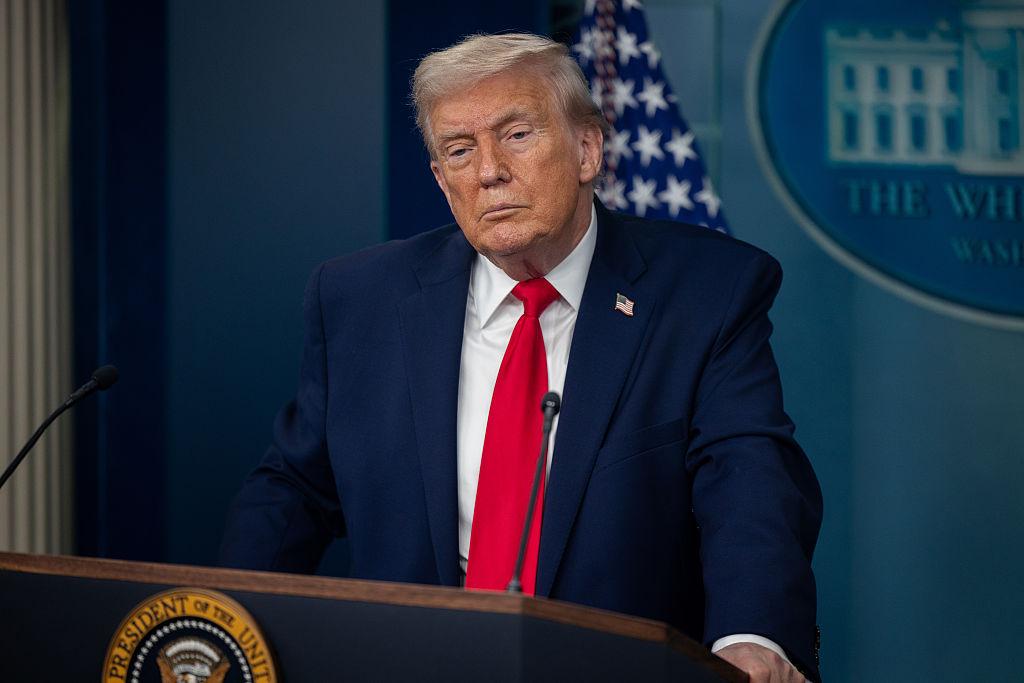
Trump in a corner over Minneapolis
Happy Tuesday morning.
President Donald Trump has his back against a wall amid an unexpected government shutdown fight — and he and his party are acting like it.
Faced with a set of difficult options to address the national uproar over two deadly shootings by federal agents in Minneapolis, Trump has adopted an unusually conciliatory posture that underscores his political vulnerability.
Top Senate Republicans followed suit. A chorus of GOP senators began speaking out Monday in ways that validated Democrats’ concerns about ICE and CBP’s hard-edged immigration crackdown under Trump.
Rather than digging their heels in as the Jan. 30 funding deadline approaches, GOP appropriators are making clear they’re searching for an escape hatch to avert a partial government shutdown.
Yet no one is certain what kind of compromise can be reached. Unlike the record-setting government shutdown last fall, key Republicans and the White House are saying at the outset that they’re willing to negotiate around Democrats’ demands. Senators have begun initial cross-aisle conversations, with Republicans floating potential offers that wouldn’t require amending the funding package.
For their part, Democrats believe the political environment is such that they can extract real concessions, citing Trump’s unmistakable shift and Hill Republicans’ uneasiness with the administration’s handling of the fallout from Saturday’s shooting.
Not so fast. Republicans are dismissing Democrats’ push to renegotiate full-year funding for DHS and ICE by splitting it off from the five other bills in the FY2026 funding package. Such a move would require a new vote in the House, which is on recess this week. There would be a short-term shutdown at a minimum — or maybe worse. We’ll get into that.
Instead, Senate Appropriations Committee Chair Susan Collins (R-Maine) and Sen. Katie Britt (R-Ala.), who helped end the last shutdown, told us Monday that the initial discussions center around actions by Trump that can be taken “outside of” the legislative process. Democrats have already said this won’t be enough.
But GOP congressional leaders and the White House are desperate to avoid a scenario in which the funding package has to go back to the House, which explains their opposition to splitting off the DHS bill.
Here’s the concern gripping the top levels of the Trump administration — the House simply can’t pass another DHS funding bill under any circumstances.
Even if Trump were to cut a deal with Democrats that can get through the Senate, House Republicans believe they can’t round up 218 votes to pass a rule to get it on the House floor. Or alternatively, find 290 lawmakers willing to pass it under suspension of the rules. Republicans just don’t believe there’s a coalition in the House that can pass another DHS bill.
That’s why Trump has been focused on “de-escalatory measures,” as one administration official told us, a first step toward placating Democrats.
The Trump administration has already kneecapped Gregory Bovino, the CBP official in charge of operations in Minneapolis. Trump has tapped Tom Homan, the border czar, to take over in Bovino’s place. Trump spoke by phone with Minnesota Gov. Tim Walz and Minneapolis Mayor Jacob Frey on Monday. Later, DHS Secretary Kristi Noem finally agreed to testify before the Senate Judiciary Committee after months of stonewalling. Noem — who has a real problem on both sides of the aisle on the Hill — and her top aide, Corey Lewandowski, met for two hours with Trump on Monday night.
Yet Democrats have made clear to us they simply won’t accept — nor do they trust — executive actions alone. There has to be some legislative fix. Some Republicans have floated a separate legislative vehicle to address ICE reforms. But this also would be met with heavy skepticism from Democrats.
Remember: There’s no deal that will get 47 Democratic votes in the Senate. ICE funding is way too controversial. Plus, even if only a limited number of Senate Democrats favor a DHS deal, it would be difficult for them to vote that way without a signoff from Senate Minority Leader Chuck Schumer.
Inside Dems’ thinking. Senate Democrats want concrete changes to the way the Trump administration conducts immigration enforcement. Some of the options they’ve discussed include forcing ICE and CBP officers to adhere to standard warrant procedures, wear body cameras, lose the face masks and be limited by use-of-force standards.
While Democrats believe they have the upper hand in this fight, there’s a question of how far they should go with their demands. Specific, targeted policy changes and reforms are likely to be taken seriously by a White House desperate to move past this chapter. Calls to “abolish ICE” won’t be treated with the same level of deference.
It’s also worth remembering that it was less than two weeks ago that Schumer met with Trump in the Oval Office — at the president’s request. Is it time for Schumer to try to talk to Trump directly again? It may be too early for that. But it could be a smart tactical move as Friday’s funding deadline gets closer.
There’s also the obvious risk for Democrats: The political fallout from triggering a partial government shutdown just a couple of months after instigating a record 43-day funding lapse. And for DHS, this would hit FEMA at a time when much of the country is dealing with the aftermath of a severe winter storm. The Coast Guard and TSA are under DHS too. Plus, ICE would be funded anyway because of the cash infusion it got from the GOP’s One Big Beautiful Bill last year.
Failing to pass the six-bill funds package by Friday means the Pentagon could run out of money, potentially impacting troop pay and other critical operations if the White House doesn’t find a workaround again. A shutdown would also impact the Labor, Transportation and HUD departments, among several other agencies.
— Andrew Desiderio and Jake Sherman


THE CAMPAIGN
How the ICE controversy has upended Senate races
As President Donald Trump’s immigration crackdown in Minnesota rages on, public outrage over the harsh tactics — including two deadly shootings by federal agents — is forcing center-left candidates to carve out more forceful positions opposing ICE.
A number of Senate Democratic candidates in battleground states are ditching moderate positions for confrontational tactics in criticizing the Department of Homeland Security. This has kicked into even higher gear following the fatal shooting of ICU nurse Alex Pretti on Saturday. Here’s a rundown:
Minnesota: Rep. Angie Craig (D-Minn.) started her Senate campaign pitching herself as an experienced legislator who could win over voters in the purple state. But when faced with the havoc that ICE is wreaking in Minneapolis, Craig is now supporting the impeachment of DHS Secretary Kristi Noem.
Lt. Gov. Peggy Flanagan, Craig’s more progressive Democratic primary opponent, is arguing that Craig’s vote for the Laken Riley Act in January 2025 makes Craig complicit in ICE’s overreach. Craig has attacked Flanagan for going after her votes instead of focusing on combating the Trump administration.
Maine: As federal immigration agents begin to carry out operations in Maine, Senate hopeful Graham Platner has called for ICE to be “dismantled.” Platner is also attacking his primary opponent, Gov. Janet Mills, for not doing enough to protect Maine from ICE operations. Over the weekend, Mills — a more moderate candidate endorsed by Democratic leadership — called for ICE to leave Maine and requested a meeting with Trump.
Michigan: Progressive candidate Abdul El-Sayed’s camp sent out a news release this weekend with this message: “Abdul El-Sayed is calling to Abolish ICE. His Opponents Won’t.” El-Sayed visited what he termed “ICE-occupied Minneapolis” last week and met with Minnesota Attorney General Keith Ellison.
Rep. Haley Stevens (D-Mich.), the center-left candidate in the primary, has called for Noem’s impeachment, in a sign that the process is being embraced by candidates across the political spectrum. State Sen. Mallory McMorrow, for her part, has demanded Congress reject DHS funding.
Georgia: Sen. Jon Ossoff (Ga.), the only Democrat up for reelection in a Trump-won state, is pressing Republicans to forcefully condemn Pretti’s death. Ossoff called out the three contenders in the GOP Senate primary and asked if any would “join other GOP leaders who are calling for a full, transparent, independent investigation” into the shooting.
Illinois: While Illinois isn’t a battleground state, the candidates in its Democratic primary have been front and center in the ICE battle. Rep. Robin Kelly (D-Ill.) grabbed headlines by introducing articles of impeachment against Noem two weeks ago. Kelly’s primary opponent, Rep. Raja Krishnamoorthi (D-Ill.), quickly signed on. The Noem impeachment resolution now has over 100 cosponsors.
The GOP: One of Ossoff’s potential opponents — Rep. Buddy Carter (R-Ga.) — is asking for more ICE agents to be sent to Georgia.
But some Senate Republicans up for reelection are taking a more measured approach. Sens. Jon Husted (R-Ohio) and Pete Ricketts (R-Neb.) both called for an independent investigation into Pretti’s death.
— Max Cohen

TEXAS
Crockett supporter hints ads attacking Talarico are coming
News: During a private donor call, a top supporter of Rep. Jasmine Crockett’s (D-Texas) Senate run said the campaign is planning to start attacking state Rep. James Talarico on the air.
Talarico and Crockett are running in a competitive Democratic primary that’s pitting two rising stars with a penchant for viral moments against each other. To date, Talarico’s campaign has dominated the airwaves and a recent public poll found him up nine points.
During the Jan. 22 Zoom call, Crockett supporter Jason Lee — speaking alongside campaign pollster Terrance Woodbury and deputy campaign manager Karrol Rimal — said the campaign is “going to begin in earnest a very robust communication strategy.”
“On the paid communication side, [Crockett is] going to have a robust program with some very strong ads that take advantage of the positive messaging, but also allow her to present some information to the electorate — some contrast information about her record and her opponent’s record,” Lee said.
Here’s more from Lee during the call:
Lee said the spending will be on broadcast television, cable television, digital social media and connected TV. Lee added YouTube ads will be a particular focus of the strategy, given “it’s where a lot of Latino voters are.”
Watch the exchange here.
When contacted about the briefing, Lee told us he has “no contractual relationship with the campaign.”
“I’m a supporter, a volunteer. I obviously talk to the congresswoman and I’ve been a part of briefings and conversations as a supporter,” Lee said.
Lee, the son of late Rep. Sheila Jackson Lee (D-Texas), was recently involved in controversy while advising Chicago Mayor Brandon Johnson. The Chicago inspector general recommended that Johnson fire Lee last October after Lee refused to participate in an IG probe.
Billionaire megadonor Karla Jurvetson was also present on the Crockett Zoom call, per video of the briefing.
Crockett and Talarico debated over the weekend with just over a month to go until Texas’ March 3 primary date. The Democrats are seeking to flip the Lone Star State blue and may benefit from a chaotic GOP primary that is likely heading to a runoff.
While both candidates face steep odds of winning the general election, some Democrats have raised concerns that Crockett’s image as a partisan fighter may hurt her electability. Crockett has brushed off those attacks.
Talarico hasn’t made a commitment to avoid going negative on Crockett. But during Saturday’s debate, Talarico said the two candidates “are all focused on the same goal, which is winning in November and stopping a Sen. Ken Paxton.”
Talarico’s TV ads so far have been positive, biographical spots.
— Max Cohen
PRESENTED BY THE ALZHEIMER’S ASSOCIATION

As many as half of the 7 million+ Americans living with Alzheimer’s are not diagnosed. Congress can support earlier detection with the ASAP Act.
REDISTRICTING WARS
Moore to testify on Maryland redistricting
Maryland Gov. Wes Moore will testify in support of the proposed new congressional map at a key committee hearing in Annapolis on Tuesday.
Moore is significantly upping pressure on the Maryland legislature to complete its mid-decade redistricting, even as the state Senate’s top Democrat stands in opposition.
This is a big test of clout for Moore, who’s widely seen as a 2028 presidential contender. The stakes are also high for House Democrats who hope to gain a congressional seat if Moore can get a new map through the legislature.
The House of Delegates’ Rules and Executive Nominations Committee is holding the hearing on Tuesday afternoon with time allotted for public testimony. The lawmakers are considering a proposed constitutional amendment that would shift Maryland from a 7D-1R map to an 8D-0R one.
After the hearing, the committee will vote to refer the amendment to the full House of Delegates, which could vote on it as soon as this week. Then it has to go to the state Senate.
Maryland Senate President Bill Ferguson opposes mid-decade redistricting and he has maintained this position despite pressure from Democrats in Maryland and DC. Ferguson has declined to commit to putting redistricting up for a vote in the state Senate.
Moore went to the Capitol last week to huddle with House Minority Leader Hakeem Jeffries. While in Washington, Moore repeatedly urged Ferguson to put the measure up for a vote and said he believed it had the support to pass.
So far, Ferguson remains unmoved.
— Ally Mutnick
THE CAMPAIGN
House Administration Committee Chair Bryan Steil (R-Wis.) raised $977,000 in the fourth quarter and will report more than $4.9 million on hand. Steil is a DCCC target who handily won his reelection in 2024.
– Jake Sherman
PRESENTED BY THE ALZHEIMER’S ASSOCIATION

Earlier dementia detection will unlock access to new treatments.

Presented by Cencora

From accelerating innovation to powering the pharmaceutical supply chain, we reduce barriers to expand access to medications for millions of Americans at sites of care in their communities. Learn more

Crucial Capitol Hill news AM, Midday, and PM—5 times a week
Join a community of some of the most powerful people in Washington and beyond. Exclusive newsmaker events, parties, in-person and virtual briefings and more.
Subscribe to Premium
Special Projects
Explore our deep dives into the issues that matter the most today and will shape tomorrow's future, with expert reporting that goes beyond the headlines and into the heart of the Capitol.
Check it outEvery single issue of Punchbowl News published, all in one place
Visit the archive
Presented by Cencora
From accelerating innovation to powering the pharmaceutical supply chain, we reduce barriers to expand access to medications for millions of Americans at sites of care in their communities. Learn more