


February 10, 2026



THE TOP
Collins goes all-in on reelection
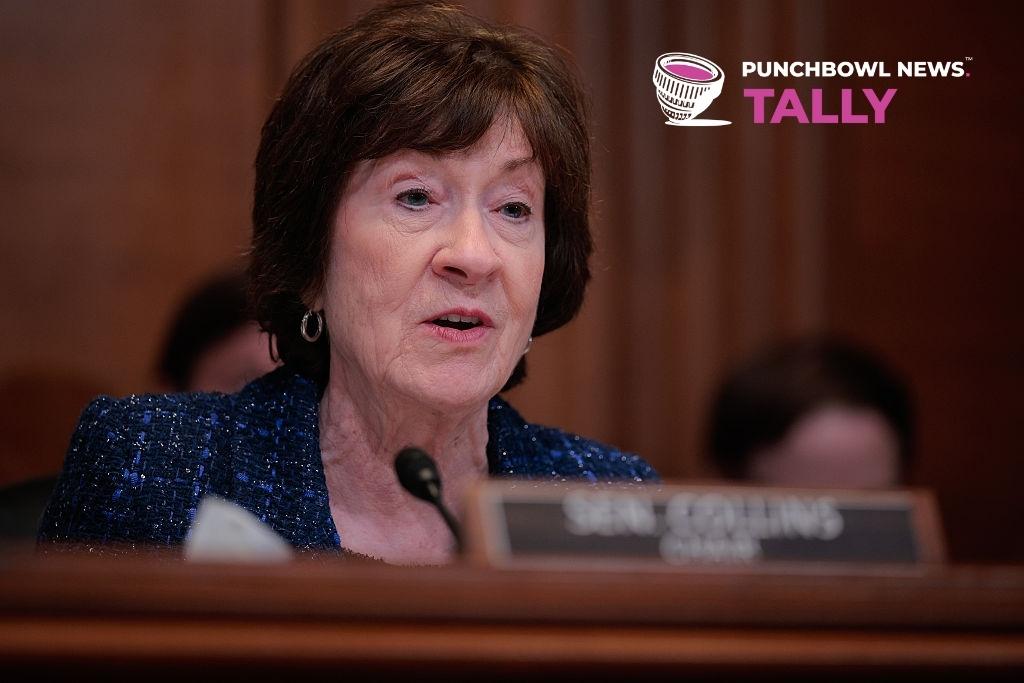
Welcome to The Tally. Our campaign and elections special edition is back now that the 2026 midterms are kicking into high gear and the balance of power in Washington is at stake.
Catching up with Collins. It was an image that surprised everyone.
There was Sen. Susan Collins (R-Maine) standing way off to one side of the Oval Office on Feb. 3, a red “America is Back!” hat in hand. President Donald Trump briefly praised her for helping push through a $1 trillion-plus package of FY2026 spending bills.
“You’re doing good,” Trump told Collins, a key player in this year’s brutal, seemingly endless government funding fight.
Yes, that’s the same Susan Collins who Trump said “should never be elected again” after she and a handful of Senate Republicans voted to limit future U.S. military operations in Venezuela without congressional approval.
The same Susan Collins who voted to convict Trump at his Senate impeachment trial following the Jan. 6 Capitol insurrection in 2021.
“It doesn’t please any president when I disagree with them,” Collins said of Trump during an interview in her Capitol Hill office. “This president in particular will be very public about our disagreements.”
Here’s the truth — not all politics is local in the Trump era. The new adage should be “all politics is transactional.”
Collins, who made her reelection bid official on Tuesday, needs Trump as much as he does her, although in vastly different ways. Collins justified her Oval Office appearance by noting it’s “just a fact” that she needs Trump’s signature for the appropriations bills.
The two are trying to coexist in a way that allows Collins to win a sixth term in November. Collins is the only Republican who can win a Senate race in Maine. Trump and the Senate GOP need to keep Maine red to protect their majority.
Tough environment. The 73-year-old Collins is clear-eyed about the challenge she faces this fall, with Democrats determined to make everything about Trump. They accuse Collins of refusing to stand up to an overly powerful president, even when it hurts Maine. Plus, as a Republican, Collins has to deal with Trump’s falling poll numbers and the midterm pressures most presidents face.
“I don’t underestimate that this is going to be a very tough race,” Collins said.
Pulling every lever. With so much at stake, Collins is using every bit of influence she’s amassed over four decades in office to help boost her reelection chances. Collins is also leaning on the Senate GOP leadership to pressure Trump and the administration when needed.
Collins secured nearly $426 million in earmarks for 156 projects this year. That huge haul is what being chair of the Senate Appropriations Committee means, and it’ll impact nearly everyone in the Pine Tree State. But that’s still not the full picture of just how much federal money Collins is steering back home.
There are hundreds of millions of dollars — potentially billions — for Bath Iron Works and Portsmouth Naval Shipyard in defense contracts and infrastructure upgrades. Collins secured $190 million for rural Maine hospitals, part of a $50 billion fund she helped add to the One Big Beautiful Bill despite voting against the measure.
“Seniority counts,” Collins told us. “Being the chair of the Appropriations Committee gets me far more influence and clout and ability to get things done for the state of Maine and for the country.”
There are other ways Collins has sought special treatment for Maine during Trump’s tariff, funding and immigration wars.
When Trump imposed new tariffs on Canada, Collins pressured the president both publicly and privately for carveouts benefiting Maine. It’s worked in some cases, but Collins also voted against Trump on the issue, earning a public rebuke from him.
Trump just announced that he’ll allow fishing in areas that former President Barack Obama originally designated as protected, an effort he says benefits Maine fishermen.
In perhaps the most controversial move, the Trump administration scaled back Immigration and Customs Enforcement operations in Maine following Collins’ complaints. Collins pressured DHS Secretary Kristi Noem and other officials on the issue after Maine Democratic Gov. Janet Mills, who’s seeking to take on Collins in November, made ICE raids the centerpiece of her first campaign ads.
In a statement, Mills described Collins as a reliable vote for Trump’s agenda, including his “extremist” Cabinet and judicial nominees.
“Seniority without backbone is just tenure,” Mills said. “In the Senate, I’ll use my vast legislative and policy experience to get results for Maine people, and I’ll fearlessly stand up to Trump — just like I have as governor.”
Graham Platner, the progressive insurgent in the Democratic primary, didn’t respond to requests for comment.
Collins won’t say whether she prefers to face Mills or Platner. Yet Collins observed that the Mills vs. Platner contest is emblematic of a broader struggle within the Democratic Party about its future.
“President Trump was elected president,” Collins said. “And I think neither of them has come to grips with that fact.”
Collins’ hurdles. One of the biggest issues facing the longtime Maine senator is the expiration of the enhanced premium Obamacare subsidies. Tens of thousands of Mainers are facing sharply higher premiums or dropping health-care coverage, a huge number in a state with only 1.4 million residents. Collins has been involved in the so-far fruitless talks to extend those subsidies.
Other affordability concerns, including inflation, food and housing, coupled with an anemic job market, are big liabilities for Collins and other vulnerable Republicans.
Despite ultimately passing nearly all of the full-year funding bills, it’s been a difficult 12-month stretch for Collins. Trump and OMB Director Russ Vought have consistently undermined Congress’ power of the purse, from DOGE cuts to pocket rescissions. Collins’ detractors say she didn’t do enough to push back on these moves.
There have been real questions about whether those circumstances, paired with the treacherous national political environment for Republicans, would lead Collins to consider retiring.
Senate Majority Leader John Thune has been caught between the competing demands of keeping Collins happy and staying in line with the White House. But Thune has also publicly stood up for Collins in the face of Trump’s attacks.
“There is one way to elect a Republican in the state of Maine, and that’s for Susan Collins to be the nominee,” Thune told us last month.
— John Bresnahan and Andrew Desiderio
CRYPTO CONNECTION
Who benefits from crypto’s 2026 warchest
The crypto super PAC network Fairshake entered this election year with nearly $200 million to spend in 2026.
The group is laser-focused on one thing: securing lawmakers who are crypto allies regardless of party. So how will Fairshake’s money affect which party controls the House and Senate after the midterms?
We did a deep dive into what the Fairshake network spent in 2024 to help us predict 2026. The network includes three distinct groups: Defend American Jobs, which spends for GOP candidates; Protect Progress, which spends for Democrats; and Fairshake, which spends for both parties.
The short answer. The network favored Republicans in key 2024 Senate races. But it split its funds nearly evenly in the House battleground.
These groups spent money in 65 races last cycle. Plenty of those were safe blue or red seats. While wins in those districts don’t shift the balance of power on Capitol Hill, they do build a more crypto-friendly Congress. What crypto needed in 2024 was friends on the Hill in both parties, and the approach helped elevate the sector’s agenda.
This cycle may be different. Fairshake and other crypto PACs are waiting to see whether market structure legislation will die in the Senate and, if so, who crypto leaders blame. A spokesperson for the Fairshake network declined to comment for this story.
Here’s more from our 2024 analysis:
Republican candidates received more money overall. The three groups in the Fairshake network spent $53 million for House and Senate GOP candidates in competitive seats, per FEC filings.
But those groups spent only $33.4 million for Democratic candidates in competitive House and Senate races.
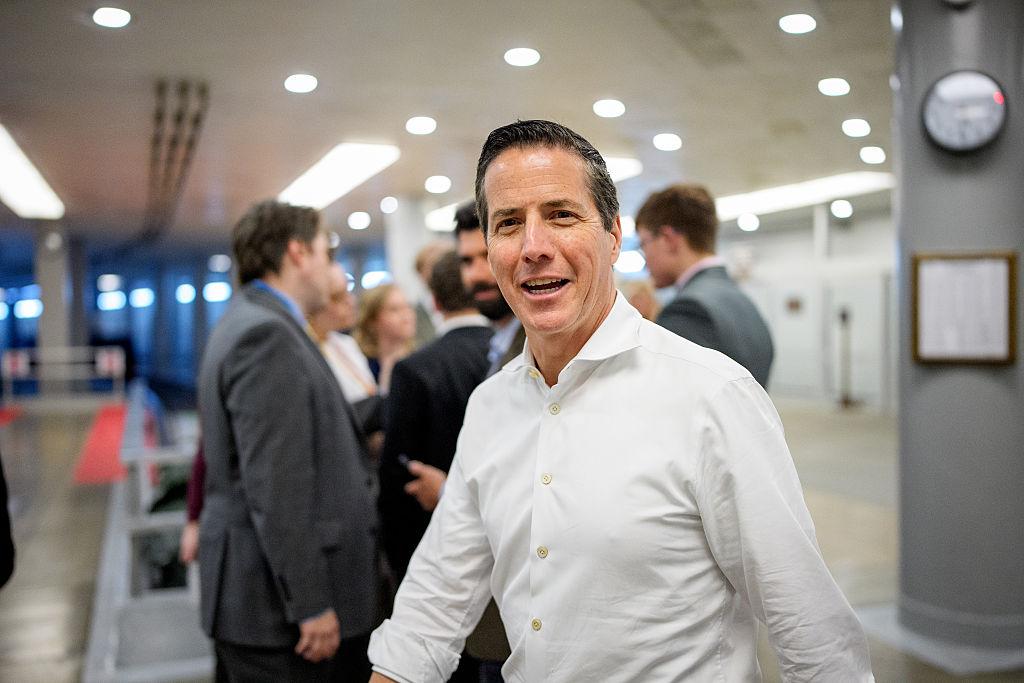
That large disparity was driven by a $40 million investment in Ohio to elect now-GOP Sen. Bernie Moreno. Moreno ousted Democrat Sherrod Brown, then chair of the Senate Banking Committee.
The Senate. Ohio was the only truly competitive Senate race that drew spending from the Fairshake network to support a Republican.
But Protect Progress spent about $20 million total to boost Senate Democratic candidates in two other purple states, Ruben Gallego in Arizona and Elissa Slotkin in Michigan.
That gave the GOP a clear edge in Fairshake money in the 2024 Senate races. And it could repeat in 2026. Brown is running again and is widely expected to be a huge crypto target. Brown is running against Sen. Jon Husted (R-Ohio), who told us recently he’d happily accept Fairshake’s support.
The House. In battleground House seats, the network was pretty evenly divided among the parties last cycle: $12.7 million for GOP candidates compared to $13.3 million for Democrats.
Should Fairshake keep the same formula for 2026, the campaign spending benefits would be split fairly evenly between Republicans and Democrats.
Going forward. The next year will be crucial. If a market structure bill is enacted this year, we could see a greater focus from the PACs on lawmakers serving on the tax committees. Tax reform is the industry’s next big lobbying push.
But a vengeful crypto sector that doesn’t get the legislation it wants in the 119th Congress may act differently with its campaign spending. If crypto blames one party or the other for that policy failure, that $193 million could be used in a more aggressive way to try to defeat the industry’s detractors.
– Ally Mutnick and Brendan Pedersen

Presented by Cencora

From accelerating innovation to powering the pharmaceutical supply chain, we reduce barriers to expand access to medications for millions of Americans at sites of care in their communities. Learn more

Crucial Capitol Hill news AM, Midday, and PM—5 times a week
Join a community of some of the most powerful people in Washington and beyond. Exclusive newsmaker events, parties, in-person and virtual briefings and more.
Subscribe to Premium
Special Projects
Explore our deep dives into the issues that matter the most today and will shape tomorrow's future, with expert reporting that goes beyond the headlines and into the heart of the Capitol.
Check it outEvery single issue of Punchbowl News published, all in one place
Visit the archive
Presented by Cencora
From accelerating innovation to powering the pharmaceutical supply chain, we reduce barriers to expand access to medications for millions of Americans at sites of care in their communities. Learn more