


February 12, 2026



PRESENTED BY

THE TOP
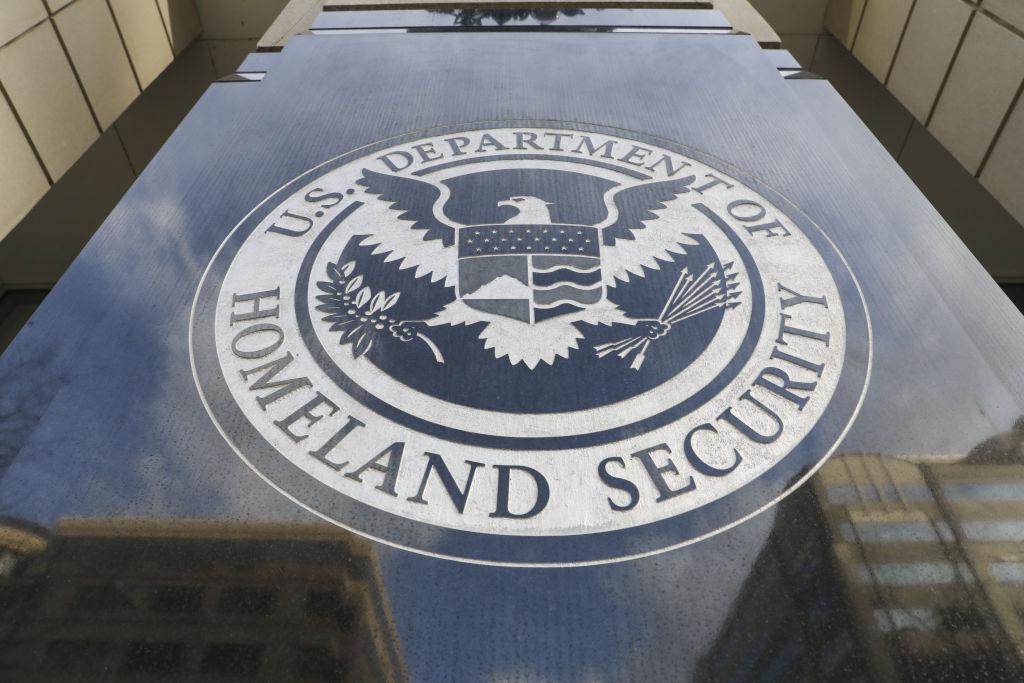
DHS shutdown near after new White House offer
Happy Thursday morning.
Breaking overnight: The White House sent Democrats text of their offer for Department of Homeland Security funding on Wednesday night, a last-minute bid to avoid a shutdown for the massive department and its 260,000 employees.
Democrats are still reviewing the White House’s proposal now that they have it in full legislative form; Trump administration officials had previously sent it as a letter. But Democratic leaders have already bashed this offer as inadequate, so it’s very unlikely the proposal will be enough to avoid a DHS shutdown on Friday.
Senate GOP leaders are planning multiple votes today in a bid to break the logjam. Senators will take a procedural vote on the House-passed DHS funding bill, which would require support from a handful of Democrats in order to move forward.
If that vote fails as expected, it’s likely Senate Republican leaders will then try to pass a stopgap funding measure for DHS. But if there’s no breakthrough in Senate Democrats’ negotiations with the White House, this is all just a futile exercise.
Here’s the bottom line: Barring some dramatic turnaround, Congress will leave town today without having funded DHS, triggering a shutdown of the department. Some agencies within DHS — ICE and CBP — have already been funded via last year’s One Big Beautiful Bill, making it unclear how this crisis will ultimately play out.
The closure of other agencies under DHS like TSA, FEMA and the Coast Guard could have wide-ranging impacts. Plus, this all comes after last fall’s record-breaking government shutdown. It’s actually the third full or partial shutdown of this Congress.
The House and Senate will each be leaving for a week-long recess. Numerous lawmakers are scheduled for travel abroad, including to the Munich Security Conference, although CODELs for House members will be canceled if there’s a DHS shutdown. Senators will be warned they may need to return if there’s a breakthrough on DHS funding.
State of talks. Senate Majority Leader John Thune has been trying to nudge negotiations along and make the case that the White House is operating in good faith. In an effort to move things along, Thune made clear on Wednesday that even with senators leaving town, he’ll hold a vote as soon as possible if there’s a deal.
“I think it’s important that the people at the negotiating table double down and sharpen their pencils and strike a deal, in which case we’ll vote on it,” Thune said.
But as of Wednesday evening, Senate Democrats said they weren’t seeing enough concessions from the White House over ICE reform to support a short-term funding patch.
“If they don’t propose something that’s strong, that reins in ICE, that ends the killing — don’t expect our votes,” Senate Minority Leader Chuck Schumer warned.
Several of the Democrats who voted to end the last shutdown are also dug in, saying the White House must be willing to do more to crack down on ICE after federal agents shot and killed two people in Minneapolis.
“All we’re proposing is that ICE abide by the same rules that police forces — state police and municipal police — abide by across the country. Pretty straight forward,” Sen. Angus King (I-Maine) said. “The fact that they won’t accept that is pretty chilling.”
The messaging war. With a DHS shutdown looking likely, the two sides are already battling over who’s to blame for the standoff.
Rep. Rosa DeLauro (Conn.), House Democrats’ top appropriator, introduced a bill to fund each agency under DHS except for ICE and CBP. DeLauro said Republicans will be at fault if funding for these agencies lapses. Senate Democrats have also pointed to their support for other pieces of the funding bill.
Yet Republicans would never go for that. Such a move would dramatically raise the likelihood of a prolonged shutdown of ICE and CBP, Republicans say.
“This is a home game for us, so if they want to keep talking about illegal immigration, I’m all for it,” Sen. Eric Schmitt (R-Mo.) said. “But they shouldn’t be shutting down FEMA and TSA in the process.”
Miller’s massive money week. GOP lobbyist Jeff Miller raised roughly $27 million for House and Senate Republicans at a pair of D.C. fundraisers this week. This is a stunning amount of money for two fundraisers in one week.
The NRCC fundraiser was Tuesday night, and the House Republican leaders attended. The event raked in $13 million. The NRSC fundraiser raised $14 million. Both fundraisers were held at the Waldorf Astoria. Several Cabinet secretaries, as well as senior staff from the Hill and White House, were in attendance. You don’t hear about too many eight-digit fundraising weeks orchestrated by one person.
Correction: An earlier version of this story said Rep. Rosa DeLauro (D-Conn.) introduced a bill to fund each agency under DHS in addition to ICE and CBP. DeLauro’s bill would fund each DHS agency except for ICE and CBP.
— Laura Weiss, John Bresnahan and Jake Sherman
Next week: Join Punchbowl News on Wednesday, Feb. 18, at 12 p.m. ET for a conversation with candidate for Georgia lieutenant governor and former state Sen. John F. Kennedy (R-Ga.) on lawsuit abuse and insurance affordability. Afterwards, we’ll sit down with Adam Blinick, head of public policy at Uber. RSVP here.


GOP DYNAMICS
Trump plays the heavy for no reason
When the only tool you have is a hammer, everything looks like a nail.
Such is life with President Donald Trump, who’s warning that Republicans will be made to suffer — either in primaries or on Election Day — for voting against his unprecedented tariff regime.
First, let’s say this: Trump is wasting his energy. He can veto any tariff termination resolution and the vast majority of Republicans would absolutely uphold his veto. These resolutions are nothing more than a bad headline for the president. But Trump doesn’t like the optics of any Republicans voting against him. Ever.
Not that Trump cares, but this broadside is particularly poor congressional politics. If Trump just left the issue alone, voting against the tariffs would be a way for vulnerable GOP lawmakers to let off some steam and perhaps help their electoral prospects back home.
However, Trump doesn’t appear terribly interested in what might be helpful to rank-and-file Republicans. Trump suggested on Tuesday that Congress was done legislating for the entirety of his term. How’s that for motivation? Speaker Mike Johnson told us that what Trump actually meant was that “We had a very productive, very successful first year of the second term.” Got it.
Johnson was with Trump on Wednesday, but the speaker wasn’t aware that the president was going to unleash a political barrage against rank-and-file GOP members in the midst of the floor vote on the tariff resolution. Trump’s declaration didn’t change the outcome, which was a clear victory for Rep. Greg Meeks (D-N.Y.) and House Democratic leaders.
A surprised Johson said the president “understands that he can veto anything that passes even through the Senate, and so it doesn’t change his policy.”
Trump’s threat didn’t impact how six Republicans voted. A half-dozen GOP lawmakers voted to cancel Trump’s emergency declaration allowing him to levy tariffs on Canada: Reps. Thomas Massie (Ky.), Don Bacon (Neb.), Brian Fitzpatrick (Pa.), Jeff Hurd (Colo.), Kevin Kiley (Calif.) and Dan Newhouse (Wash.).
Trump is already backing an expensive primary to Massie, an eight-term lawmaker, so the Kentucky Republican votes how he wants. Newhouse and Bacon are retiring. Kiley has been redistricted out of his central California seat.
That leaves Fitzpatrick, just about the only Republican who can win his suburban Philadelphia seat, and Hurd, who represents a seat that Trump won by fewer than 10 points in 2024.
Democrats will offer a flood of tariff resolutions in the coming weeks and months. Maybe Trump’s threat will have an impact.
But if Trump’s approval ratings stay where they are, Republicans may continue to buck him, betting that opposing an unpopular president is smart for the midterms.
– Jake Sherman and John Bresnahan

THE LEFT
N.J. special boosts progressives in AIPAC feud
Progressives are finally feeling hopeful about their ability to take on AIPAC after years of drowning under an avalanche of the group’s campaign spending.
The left notched a major win in a New Jersey special election this week after former Rep. Tom Malinowski (D-N.J.) conceded a still too-close-to-call election to Analilia Mejia.
AIPAC’s super PAC spent over $2 million opposing Malinowski’s comeback bid. That AIPAC spending blitz against Malinowski — combined with a surge of grassroots support — opened up a path to victory for Mejia, even though she spent a mere $110,000 on ads, per AdImpact.
Since AIPAC jumped into the super PAC game in 2021, the group has enjoyed sweeping success in boosting their preferred candidates to victory. Their tidal wave of spending has at times left progressives despondent about ever finding a way to compete with the pro-Israel lobby.
But key players on the left hope Mejia’s victory is the beginning of a sea change. And it could come at a crucial moment as AIPAC has vowed to spend big in primaries during the 2026 cycle. The pro-Israel group or its allies are already engaged in a slew of open-seat races in Illinois.
“Among Democratic primary voters, AIPAC itself is toxic,” Rep. Mark Pocan (D-Wis.) said, describing the rising death tolls in Gaza. “Now definitely people look at that money as negative. And if you have that money, then you have to start answering more questions.”
Israel’s brutal military campaign in Gaza in the wake of the deadly Oct. 7 terrorist attacks by Hamas has led to skyrocketing disapproval of Israel among Democrats, especially younger voters.
In Democratic primaries nationwide, labeling Israel’s actions in Gaza a genocide has become a new progressive litmus test. An increasing number of Democratic lawmakers are vowing to boycott any AIPAC donations, including some who had previously accepted donations from the group.
“AIPAC greatly underestimates how unpopular their policy positions have become in the country,” said Rep. Greg Casar (D-Texas), the chair of the Congressional Progressive Caucus.
AIPAC, however, remains undeterred. The group said it anticipated Mejia’s win as a possible outcome of trying to defeat Malinowksi. AIPAC said it’s closely monitoring the June primary in the 11th District and may back a candidate who can serve a full term in the next Congress.
AIPAC spokesperson Deryn Sousa said the group will be “very active” this cycle supporting Democrats and Republicans “who strengthen the U.S.-Israel partnership and opposing those — of either party — who may seek to undermine it.”
Reality check. Mejia won a special primary election for a safely Democratic seat in North Jersey that Mikie Sherrill vacated when she won the governorship. The election was on a tightly condensed timeline and held on a Thursday. There are plenty of reasons why it’s risky to draw broad conclusions from the strange set of circumstances.
There were a bevy of Democratic candidates in the race, making it hard to predict who would benefit most from votes knocked away from Malinowski by AIPAC. Mejia had endorsements from Reps. Alexandria Ocasio-Cortez (D-N.Y.) and Sen. Bernie Sanders (I-Vt.), but she greatly trailed other candidates in spending.
AIPAC used the race to draw a clear red line. The group had supported Malinowski in the past but said they opposed him because he expressed a willingness to condition aid to Israel.
Mejia has taken positions the group opposes far more. She indicated that she believes Israel is committing genocide in Gaza.
The AIPAC-funded ads attacking Malinowski, however, centered on ICE, not Israel.
Rep. Maxwell Frost (D-Fla.) noted those ads “show that progressive messaging works.”
“They spent $2 million on an ad talking about ICE, not about any other issues. I think that even further pushes our point,” Frost said. “We’ll be using this race as a prime example to go out and raise more money to elect more progressives.”
– Ally Mutnick and Max Cohen
PRESENTED BY COMCAST

Comcast delivers the biggest events in sports – the Olympic and Paralympic Winter Games Milano Cortina 2026, Super Bowl LX, and the NBA All-Star Game. Learn more

Vault: Housing reform won’t get easier from here
Capitol Hill’s effort to address the housing crisis notched a major milestone this week after the House passed a landmark, bipartisan package of reforms.
But the political obstacles to housing reform aren’t in the House. They’re not exactly in the Senate, either. It’s that mysterious third space between the two chambers where the problems lie. And bicameralism is not currently flourishing between the Senate Banking Committee and House Financial Services Committee.
Both panels still harbor a grudge about how housing politics played out in December, when the Senate tried and failed to get its ROAD to Housing Act included in the NDAA.
“We could have had a housing bill in place for months now starting to make a difference at a local level,” Sen. Elizabeth Warren (D-Mass.) said. “And yet House Republicans have held it up, and Donald Trump hasn’t lifted a finger to move it forward.”
Baggage. The House product — the Housing for the 21st Century Act — is a response to the Senate’s bill. But there are significant differences between the two. The committees haven’t begun to reconcile the products yet or even had initial conversations about the two bills.
The House effort, led by Reps. French Hill (R-Ark.) and Maxine Waters (D-Calif.), includes notable community banking policy changes. Some Senate Democrats might support those provisions, but not all.
“The House bill provisions that lengthen the time between bank examinations will not help us build a single additional home,” Warren said. “Holding housing legislation hostage to change timing on bank exams makes no sense at all. None.”
Incoming. There’s another housing policy push that isn’t covered by either housing bill so far: the effort to ban large institutional investors from purchasing single-family homes. This is a prominent priority for the White House, and the Trump administration lightly dinged the House product on Tuesday for lacking that policy.
Sen. Bernie Moreno (R-Ohio) has said he wants to see ROAD pass the Senate “with my institutional investor ban added to it.” Moreno has promised to introduce his own legislation on that soon.
But senior Republican lawmakers aren’t convinced. Hill declined to tell reporters whether he supported the institutional investor ban on Wednesday, saying he was “going to wait and see” the results of a Treasury Department report required by a White House executive order last month.
After that, Hill said he’d “see what members have proposed, and we’ll just look through those ideas and see what we think.”
– Brendan Pedersen, Laura Weiss and John Bresnahan
…AND THERE’S MORE
Texas Senate news: Democrat James Talarico raised $7.4 million so far in the first quarter of 2026, bringing his amount raised for the cycle up to $20 million.
Scoop: Former Rep. Colin Allred’s (D-Texas) latest ad takes aim at Rep. Julie Johnson (D-Texas) in the Democratic primary for Texas’ 33rd District.
The spot, which is running on broadcast TV, cable and digital streaming, knocks Johnson for buying stock in Palantir, which has partnered with ICE. It accuses her of “making thousands from the company ICE uses to track and detain our neighbors.”
Allred and Johnson are facing off in a March 3 primary that has turned increasingly contentious. There are a handful of other candidates in the race, meaning it could extend to a May runoff if no one clears 50%.
Money moves. Rep. Frank Pallone (D-N.J.), the ranking member on the House Energy and Commerce Committee, helped bring in more than $1.3 million for the DCCC at a Wednesday night fundraiser.
Pallone gave a $100,000 donation. In attendance: E&C members, House Minority Leader Hakeem Jeffries, DCCC Chair Suzan DelBene and House Democratic Caucus Chair Pete Aguilar.
Endorsement watch. Rep. Raja Krishnamoorthi (D-Ill.) announced 32 current and former members were backing his Illinois Senate bid. Among the names: Reps. Joaquin Castro (D-Texas), Pat Ryan (D-N.Y.) and Marcy Kaptur (D-Ohio). Check out the full list here.
Donation watch. Sen. Jon Husted (R-Ohio) has a lengthy history of accepting donations from the former CEO of Victoria Secret parent-company, L Brands, Leslie Wexner. Wexner is also a former Jeffrey Epstein associate whose name appears repeatedly in FBI files on the disgraced financier. Wexner’s most recent $3,500 donation to Husted came in July 2025.
Husted’s campaign committees have directly received a total of $79,900 from Wexner dating back to 2001. Wexner also donated $10,000 to Husted and Ohio GOP Gov. Mike DeWine’s transition fund, in addition to $27,000 to DeWine’s campaign after Husted was named his lieutenant governor.
An FBI document from 2019, recently released as part of the Epstein files, listed Wexner as a co-conspirator for Epstein. Wexner’s legal team has insisted Wexner was “neither a co-conspirator nor target in any respect” to the Epstein probe. Wexner hired Epstein to manage his personal finances in the 1980s. Wexner cut ties with Epstein following Epstein’s 2007 Florida indictment.
Wexner is a prominent GOP megadonor who’s given to scores of Ohio pols over the years. Husted’s team didn’t respond to a request for comment and hasn’t previously commented on the Wexner donations.
— Ally Mutnick, John Bresnahan and Max Cohen


Presented by Cencora

From accelerating innovation to powering the pharmaceutical supply chain, we reduce barriers to expand access to medications for millions of Americans at sites of care in their communities. Learn more

Crucial Capitol Hill news AM, Midday, and PM—5 times a week
Join a community of some of the most powerful people in Washington and beyond. Exclusive newsmaker events, parties, in-person and virtual briefings and more.
Subscribe to Premium
Special Projects
Explore our deep dives into the issues that matter the most today and will shape tomorrow's future, with expert reporting that goes beyond the headlines and into the heart of the Capitol.
Check it outEvery single issue of Punchbowl News published, all in one place
Visit the archive
Presented by Cencora
From accelerating innovation to powering the pharmaceutical supply chain, we reduce barriers to expand access to medications for millions of Americans at sites of care in their communities. Learn more