


April 20, 2026



PRESENTED BY

THE TOP
Republicans face the legislative gauntlet
Happy Monday morning.
Iran remains the biggest crisis facing President Donald Trump — diplomatically, politically and economically.
U.S. forces fired on and seized an Iranian cargo ship on Sunday, sparking fears of renewed fighting. The Strait of Hormuz remains closed, and oil prices are nearing $100 per barrel again. Plus, Trump is threatening to attack Iran’s infrastructure unless a peace agreement is reached.
Vice President JD Vance, Jared Kushner and Steve Witkoff are headed to Islamabad, Pakistan, for another negotiating session with the Iranians. While Trump has hinted that a deal isn’t far off, he’s said that repeatedly, so it’s fair to be skeptical.
Remember that Hill Republicans are eager to better understand the end game in Iran — although they don’t vote that way.
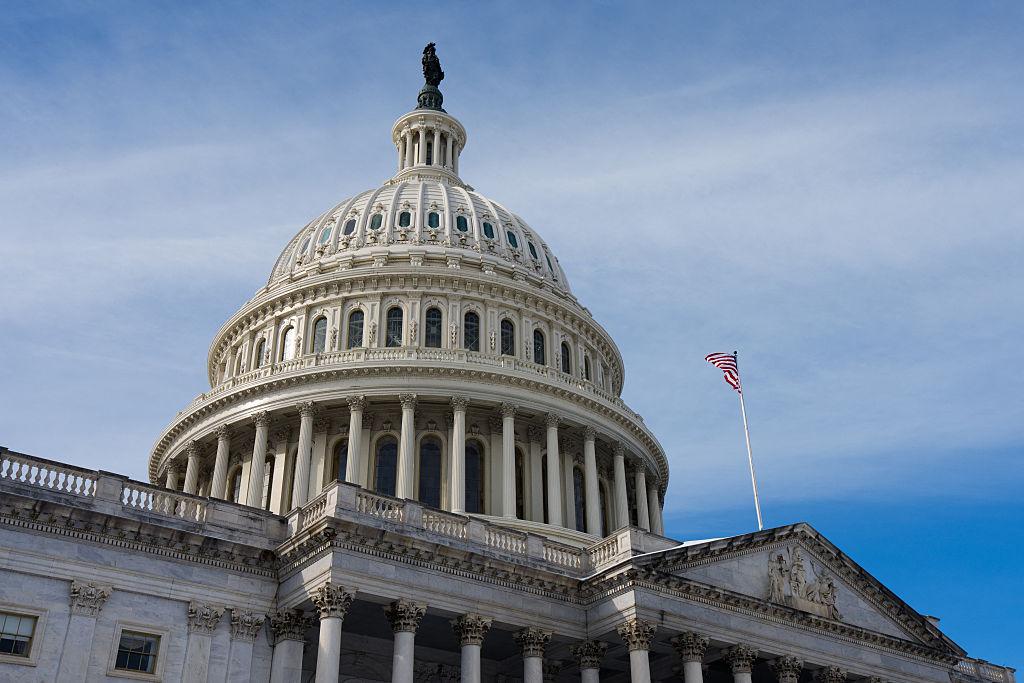
On the home front. Back on Capitol Hill, Republican leaders are entering yet another legislative gauntlet, with just a couple of weeks to pass a pair of high-profile bills despite a badly divided House Republican Conference, frustrated GOP senators and an itchy White House. The House and Senate are in for the next two weeks and then lawmakers leave town for a 10-day recess.
Top of the GOP agenda is finding some way to extend FISA Section 702, which expires April 30. Late Thursday night, House Republicans embarrassingly rejected a five-year FISA extension with reforms and an 18-month clean reauthorization that Trump and Speaker Mike Johnson were pushing. Now, Johnson and Senate Majority Leader John Thune have to find a way out of this GOP impasse.
Below, we’ll discuss in detail the 65-day Department of Homeland Security shutdown, as well as the budget reconciliation process for ICE and Border Patrol.
Let’s talk about FISA. Johnson, House Majority Leader Steve Scalise and House Majority Whip Tom Emmer are in a terrible spot following last week’s FISA debacle.
When House Republicans rejected both a GOP-leadership-backed FISA Section 702 deal and a clean 18-month extension, it wasn’t just a legislative blunder of epic proportions. It also weakened House Republicans’ negotiating position as members tried to exert their influence to overhaul the surveillance law.
Thune has made it clear that the Senate is prepared to take over the process of reaching a bipartisan FISA deal. On Friday, after the Senate passed the House’s 10-day extension, Thune took an initial procedural step on a three-year clean extension of the 702 program. This essentially gives the Senate a vehicle to use.
That doesn’t mean it’ll be easy for the Senate, however. There are privacy hawks and civil libertarians in both parties demanding reforms to a program that’s long drawn bipartisan scrutiny.
“A lot of promises have been made, that it’s fixed, and there’s nothing to see here and we need to move on,” Sen. John Kennedy (R-La.) said. “There’s been a lot of abuse over there, and if you trust the government, you failed history class.”
On the left, privacy hawks like Sen. Ron Wyden (D-Ore.) are as emboldened as ever. Wyden last week begrudgingly allowed the Senate to pass the House’s 10-day extension by unanimous consent. But the Oregon Democrat, a longtime Intelligence Committee member, vowed that he and his allies would “go to the mat” on their proposals to rein in the program.
And if the Senate passes a FISA deal, can Johnson put it on the floor? Johnson wants to extend FISA, but he understands the limitations within his conference.
Additionally, some of the 12 House Republicans who voted down the Johnson plan have quietly begun to work with Democrats on a possible 18-month bipartisan FISA compromise.
Reps. Brian Fitzpatrick (R-Pa.) and Darin LaHood (R-Ill.), among others, have initiated talks with Democratic Rep. Jim Himes (Conn.) and Jamie Raskin (Md.), the ranking members of the Intelligence and Judiciary panels respectively. There’s no deal yet, but the (maybe longshot) goal is to win over a couple dozen Democrats who could vote for a FISA rule on the floor. Then a bipartisan package could pass.
This is both a problem and an opportunity for Johnson. If Fitzpatrick, LaHood and other moderates are ready to pair up with Democrats, that means they’re tired of House GOP leaders catering to the House Freedom Caucus. Then again, Johnson may have to take any FISA deal he can get depending on the situation. Plus, if it passes the House, it’ll pass the Senate.
It’s not entirely clear what an eventual FISA compromise will look like. But the Trump administration has already all-but agreed to a five-year agreement that levies enhanced criminal penalties for abuses of the FISA query process, plus requires federal agencies to obtain a warrant while searching FISA Section 702 data for information related to a U.S. citizen.
No SAVE America Act. When the Senate begins voting this week on the budget resolution for ICE and Border Patrol, the SAVE America Act will no longer be the pending business. Another procedural vote will be needed to restart the floor debate on the bill. This will continue to be a challenging issue for Thune to navigate amid unrelenting pressure from conservatives, despite the almost-zero chance the bill can pass.
— Jake Sherman, Andrew Desiderio and John Bresnahan
TOMORROW: We’ll sit down with Rep. Julie Fedorchak (R-N.D.) at 8:30 a.m. ET to discuss the news of the day and American leadership in wireless, spectrum and AI. RSVP now to save your seat!


DHS SHUTDOWN
It’s reconciliation week for Senate GOP
News: Trump administration officials told us Congress needs to pass the Senate’s Department of Homeland Security funding bill by the end of April.
This coming pay period, which ends Friday, is the last that the administration feels it can handle with its executive authority. Remember, President Donald Trump has been paying DHS employees by executive order.
Senate Republicans are expected to take the first step this week toward passage of a party-line reconciliation bill funding ICE and Border Patrol, a crucial part of their effort to convince House Republicans to end the more than two-month-long DHS shutdown.
The Senate Budget Committee is expected to release a budget resolution by Tuesday that instructs the Judiciary and Homeland Security committees to draw up plans to fund the agencies.
The instructions are likely to include high ceilings for funding, which would give Senate Republicans flexibility in writing the bill. But GOP senators expect the price tag to be in the $65 billion to $75 billion range.
The Senate could hold the first vote on the budget resolution as soon as Tuesday. That kicks off 50 hours of debate, equally divided between the two parties. With Republicans expected to yield back most of their time, the vote-a-rama that precedes final passage of the budget resolution could begin as soon as Wednesday night.
Bumpy road ahead. There are Republicans in both chambers who want to expand the reconciliation package beyond ICE and Border Patrol. These GOP lawmakers argue they’ll have few, if any, opportunities to address affordability and cost-of-living concerns before November.
“I just don’t want to see us miss the opportunity because I think this is the last train leaving the station,” Sen. John Kennedy (R-La.) said, casting doubt on a third reconciliation bill.
Conservatives are pushing for Republicans to unite around one or two ideas that address cost of living issues. These senators could try to amend the budget resolution. There’s also still interest in offsets from some GOP spending hawks in both chambers.
Yet most Senate Republicans agree with GOP leaders that expanding the bill would make it too hard to pass.
“People want to do a lot more. They view reconciliation as a vehicle to do a lot of stuff,” Senate Majority Leader John Thune said. “But in this circumstance, it’s oriented around making sure we’re getting these agencies funded in the future.”
DHS shutdown. As reconciliation moves forward, there still seems to be a fundamental misunderstanding among Hill Republicans and the White House about DHS funding at-large.
When Thune and Speaker Mike Johnson announced their “two-track” plan to fund DHS, they said this would be done “in the coming days.”
That was almost three weeks ago, however. Johnson hasn’t made a move to pass the Senate’s bipartisan DHS funding bill yet — which includes everything but ICE and Border Patrol — due to an uproar from the House GOP rank-and-file.
Senate Republican leaders see Johnson as going back on his word and, in the process, disarming the GOP in the political messaging fight. Senate Republicans have also wanted Trump to get involved.
Johnson’s team rejects the suggestion that they’ve gone back on their word. They say that they plan to condition the passage of DHS funding on what the Senate does on reconciliation. But you should expect more pressure on the House in the coming days.
— Laura Weiss, Andrew Desiderio and Jake Sherman
PRESENTED BY AMERICAN BEVERAGE

America’s beverage companies are making it easier than ever to find clear information about the ingredients in your favorite beverages. Learn more at GoodToKnowFacts.org.
KEYSTONE WATCH
No love for Fetterman among Pennsylvania Dems
Want a sense of how tenuous Sen. John Fetterman’s (D-Pa.) position is with Pennsylvania Democrats? Not a single Pennsylvania House Democrat in the delegation will say Fetterman should run for reelection as a Democrat.
Fetterman isn’t up for reelection until 2028. But Fetterman’s tendency to vote for President Donald Trump’s Cabinet picks, publicly criticize his fellow Democrats and appear non-stop on Fox News has led to speculation that the incumbent could switch parties or leave the Democratic Party.
Fetterman has repeatedly denied that he would become a Republican. But the Pennsylvania state GOP chair raised eyebrows this month when he said he was tracking whether Fetterman may switch to the GOP.
Inside the delegation. We wondered whether Pennsylvania Democrats on Capitol Hill would offer support for Fetterman’s reelection as a Democrat. No one would.
“My focus right now is on 2026, but I would just say I’d be very surprised if he ran in the Democratic primary for the U.S. Senate,” Rep. Brendan Boyle (D-Pa.), who’s been rumored to be eyeing a Senate bid in 2028, said.
Rep. Chris Deluzio (D-Pa.) is another lawmaker reportedly looking at a 2028 Senate run. Deluzio noted he and Fetterman have “serious disagreements” about the war in Iran, before adding “2028 is still a way off.”
“We’ll see what comes after ‘26,” DeLuzio said.
“That’s up to him,” Rep. Summer Lee (D-Pa.) told us when asked if Fetterman should run for reelection as a Democrat. “At his own peril,” Lee added.
“My concern is entirely about him and his health, and I’ll let 2028 take care of itself,” Rep. Madeleine Dean (D-Pa.) said. “I disagree with many of his votes.”
“It’s no secret that I’ve been disappointed with some of his votes and that I’m confused by it,” Rep. Chrissy Houlahan (D-Pa.) added. ”But I’m not responsible for deciding whether he runs again.”
“I’m getting through 2026 first. I am not weighing 2028 now,” Rep. Mary Gay Scanlon (D-Pa.) said. “I’ll hold my tongue so I don’t get in trouble.”
“The voters will decide that,” Rep. Dwight Evans (D-Pa.) said about Fetterman’s future.
GOP appeal. Per a February Quinnipiac University poll, 46% of Pennsylvania voters approve of Fetterman’s performance, with 40% disapproving. The party breakdown is fascinating: Fetterman is up 73%-18% among Republicans, while underwater 22%-62% among Democrats.
Fetterman told Chris Cuomo in March that these numbers are “confusing” because he opposes the GOP reconciliation act and largely votes with Democrats in the Senate.
Fetterman’s team didn’t respond to our request for comment.
— Max Cohen

📆
What we’re watching
It’s a massive moment in President Donald Trump’s quest for new leadership at the Federal Reserve.
Trump’s Fed Chair nominee Kevin Warsh will take questions from Senate Banking Committee members on interest rates, Fed independence and much more on Tuesday at 10 a.m.
Sen. Thom Tillis (R-N.C.) is blocking Warsh’s bid over the criminal investigation into Fed Chair Jay Powell. It remains unclear if or when the Trump administration will resolve that fight. But there’s a lot more to pay attention to when Warsh testifies, as we told you in Sunday’s Vault. The markets will be watching — as will we.
On the floor: Senate GOP leaders are planning to put the budget resolution for a reconciliation bill funding ICE and Border Patrol on the floor this week. The initial vote on the budget resolution could be held as soon as Tuesday, followed by a vote-a-rama later in the week.
The House will consider a number of environmental bills, such as a rewrite of the Endangered Species Act and a geothermal energy bill. The American Broadband Deployment Act of 2025 and the Reliable Federal Infrastructure Act are also on the agenda.
Speaker Mike Johnson will swear in Rep.-elect Analilia Mejia (D-N.J.) this evening.
Around Washington:
— Monday. The House and Senate return. The House Rules Committee meets at 4 p.m.
Interior Secretary Doug Burgum testifies in front of a House Appropriations subcommittee at 3:30 p.m.
— Tuesday. Energy Secretary Chris Wright testifies before the Senate Energy and Natural Resources Committee at 9:30 a.m.
Health and Human Services Secretary Robert F. Kennedy Jr. begins a marathon two days of hearings in the Capitol. He’ll sit before the House Energy and Commerce Committee at 10 a.m. and a Senate Appropriations subcommittee at 2:30 p.m.
The House Appropriations Committee begins its markup of two FY2027 spending bills at 11 a.m.
The House Ethics Committee will hold a public hearing to announce what sanctions the panel will recommend against Rep. Sheila Cherfilus-McCormick (D-Fla.). Last month, a special Ethics subcommittee found Cherfilus-McCormick guilty of over 26 violations. Expulsion is a real possibility here.
Virginia voters will decide whether a Democratic plan to redraw the state’s House map will move forward. The proposal would create a 10-1 map that favors Democrats. We are expecting a close vote as important figures in both parties have campaigned in Virginia during the closing stretch.
— Laura Weiss and Max Cohen
THE AI INNOVATORS
How AI is changing health care, education, cybersecurity, the economy

ICYMI: We wrapped up our four-part series, The Innovators, last week with our final segment focusing on how artificial intelligence is impacting the economy.
AI is here to stay and is already playing an increasingly significant role in business, government, education and everyday lives.
At the same time, legislation has remained elusive as Congress considers how to appropriately regulate the evolving technology. That’s why we spent the last several weeks — in partnership with Google — exploring how different sectors are adapting AI tools, the way Congress is responding and the outlook for each sector.
As a reminder, here is what we covered in the series:
Health care: AI is transforming the way the health sector conducts several functions, including developing drugs, diagnosing diseases and enhancing the way providers interact with patients. More than 80% of health care executives say AI will be invaluable across different operations in the industry this year.
Education: AI is creating innovative educational tools that are transforming academic instruction and the workforce. In classrooms, instructors are using AI to personalize lesson plans and handle administrative tasks. Educational institutions are also incorporating the technology into the skills they teach students. And older or displaced workers are using it to gain new competitive abilities.
Cybersecurity: AI has advanced cyber defenses so that they can anticipate and respond to threats in a fraction of the time. However, the technology also complicates cybersecurity efforts by creating new tools for malicious actors to try to outmaneuver defense systems.
The Economy: Major tech innovators are pouring billions of dollars into the economy by spending on infrastructure like data centers. They are hiring new workers to plan, research and build for an AI-driven future.
Look out for the accompanying podcast for each issue at The Daily Punch, wherever you get your podcasts.
— Elvina Nawaguna

Presented by Cencora

From accelerating innovation to powering the pharmaceutical supply chain, we reduce barriers to expand access to medications for millions of Americans at sites of care in their communities. Learn more

Crucial Capitol Hill news AM, Midday, and PM—5 times a week
Join a community of some of the most powerful people in Washington and beyond. Exclusive newsmaker events, parties, in-person and virtual briefings and more.
Subscribe to Premium
Special Projects
Explore our deep dives into the issues that matter the most today and will shape tomorrow's future, with expert reporting that goes beyond the headlines and into the heart of the Capitol.
Check it outEvery single issue of Punchbowl News published, all in one place
Visit the archive
Presented by Cencora
From accelerating innovation to powering the pharmaceutical supply chain, we reduce barriers to expand access to medications for millions of Americans at sites of care in their communities. Learn more