

The crypto super PAC network Fairshake entered this election year with nearly $200 million to spend in 2026.
The group is laser-focused on one thing: securing lawmakers who are crypto allies regardless of party. So how will Fairshake’s money affect which party controls the House and Senate after the midterms?
We did a deep dive into what the Fairshake network spent in 2024 to help us predict 2026. The network includes three distinct groups: Defend American Jobs, which spends for GOP candidates; Protect Progress, which spends for Democrats; and Fairshake, which spends for both parties.
The short answer. The network favored Republicans in key 2024 Senate races. But it split its funds nearly evenly in the House battleground.
These groups spent money in 65 races last cycle. Plenty of those were safe blue or red seats. While wins in those districts don’t shift the balance of power on Capitol Hill, they do build a more crypto-friendly Congress. What crypto needed in 2024 was friends on the Hill in both parties, and the approach helped elevate the sector’s agenda.
This cycle may be different. Fairshake and other crypto PACs are waiting to see whether market structure legislation will die in the Senate and, if so, who crypto leaders blame. A spokesperson for the Fairshake network declined to comment for this story.
Here’s more from our 2024 analysis:
Republican candidates received more money overall. The three groups in the Fairshake network spent $53 million for House and Senate GOP candidates in competitive seats, per FEC filings.
But those groups spent only $33.4 million for Democratic candidates in competitive House and Senate races.
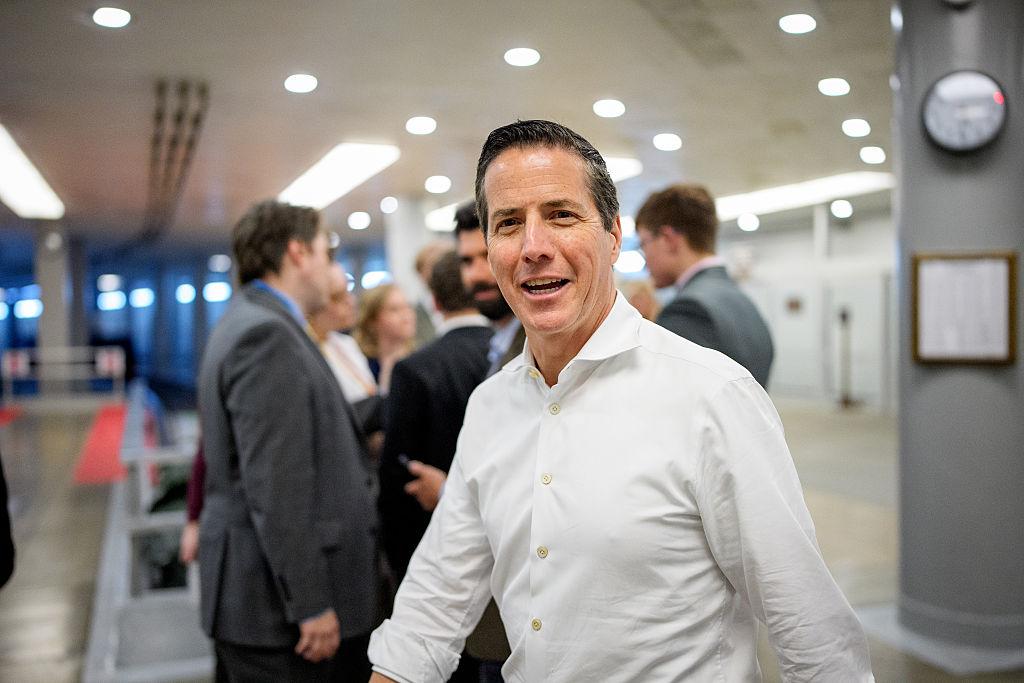
That large disparity was driven by a $40 million investment in Ohio to elect now-GOP Sen. Bernie Moreno. Moreno ousted Democrat Sherrod Brown, then chair of the Senate Banking Committee.
The Senate. Ohio was the only truly competitive Senate race that drew spending from the Fairshake network to support a Republican.
But Protect Progress spent about $20 million total to boost Senate Democratic candidates in two other purple states, Ruben Gallego in Arizona and Elissa Slotkin in Michigan.
That gave the GOP a clear edge in Fairshake money in the 2024 Senate races. And it could repeat in 2026. Brown is running again and is widely expected to be a huge crypto target. Brown is running against Sen. Jon Husted (R-Ohio), who told us recently he’d happily accept Fairshake’s support.
The House. In battleground House seats, the network was pretty evenly divided among the parties last cycle: $12.7 million for GOP candidates compared to $13.3 million for Democrats.
Should Fairshake keep the same formula for 2026, the campaign spending benefits would be split fairly evenly between Republicans and Democrats.
Going forward. The next year will be crucial. If a market structure bill is enacted this year, we could see a greater focus from the PACs on lawmakers serving on the tax committees. Tax reform is the industry’s next big lobbying push.
But a vengeful crypto sector that doesn’t get the legislation it wants in the 119th Congress may act differently with its campaign spending. If crypto blames one party or the other for that policy failure, that $193 million could be used in a more aggressive way to try to defeat the industry’s detractors.