


Congress is on the cusp of repealing crippling economic sanctions on Syria, a rare alignment between Democrats and the Trump administration on foreign policy.
But lawmakers first need to settle this and other key hang-ups as part of the annual defense policy bill. While the Senate’s version of the National Defense Authorization Act includes a repeal of the Caesar Act — the 2019 law that imposed the sanctions — the House’s version does not.
Those U.S. sanctions are now seen as an impediment to regional peace and stability. The penalties have prevented U.S. security partners from making desperately-needed foreign investments to help rebuild Syria’s economy and infrastructure after a brutal civil war and the sudden fall of Bashar al-Assad’s regime last year.
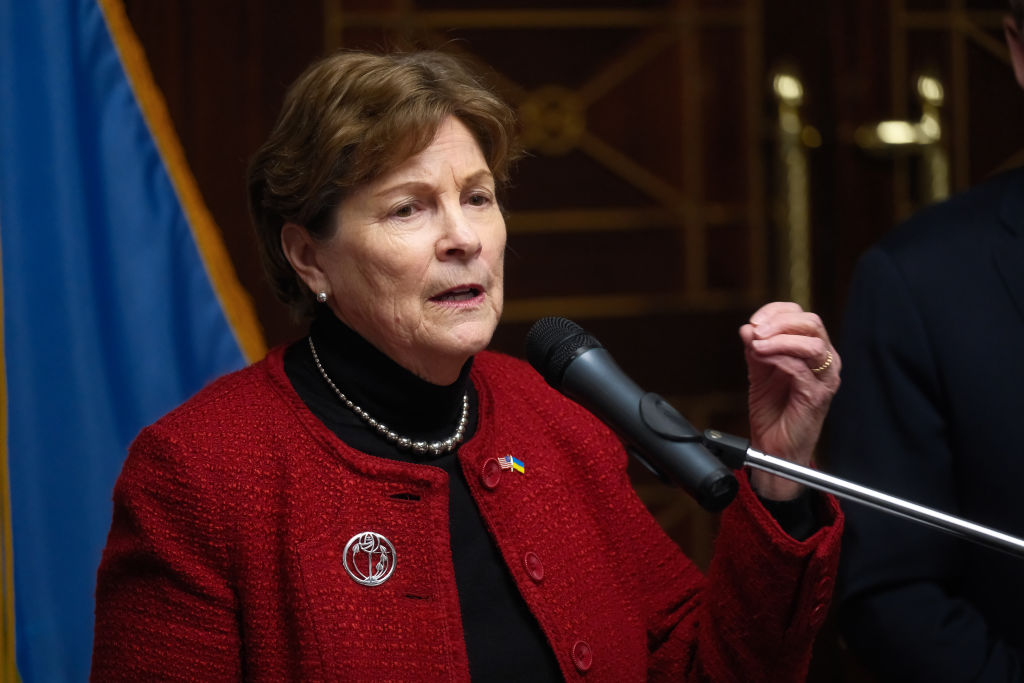
“Iran has basically been pushed out of Syria, and that was their road to Lebanon to arm Hezbollah… And Russia’s influence is vastly diminished,” Sen. Jeanne Shaheen (D-N.H.), who traveled to Syria last month, said in an interview. “So it’s really a two-fer for us: Get rid of Iran and Russia if we help Syria get where it needs to go.”
President Donald Trump has embraced a repeal of the Caesar Act and met earlier this year with Syria’s new president, Ahmed al-Sharaa. There’s some skepticism about whether al-Sharaa, a former al Qaeda member who’s since renounced any terrorist ties, will follow through on his commitments for a stable Syria.
Shaheen, who met with al-Sharaa for two hours in Damascus, said he committed to help end Iran’s arms trafficking into Lebanon, for example, but acknowledged trust needs to be built.
“[Sharaa] says all the right things, he’s made a number of positive moves. But it’s a huge challenge,” Shaheen added, hailing the recent developments as an opportunity for stability “that hasn’t existed in decades.”
Banks and chips. Another NDAA issue both chambers will have to iron out with the White House is Sen. Jim Banks’ (R-Ind.) “America First” export-control proposal.
The GAIN AI Act, included in the Senate’s NDAA, would create a new process for chipmakers looking to export artificial intelligence chips to China and other “countries of concern.” To get an export license, the companies would have to ensure American customers get first dibs on those chips.
Banks’ proposal reflects a desire from Congress to take a more active role in the control of AI chips going abroad. But the industry says it’s too complex and could undermine U.S. AI leadership.
We scooped yesterday that White House AI Czar David Sacks called Banks. It’s not clear whether the Trump administration supports this. The House’s NDAA doesn’t have the language.
Scoop: Shaheen and Sen. Thom Tillis (R-N.C.) are out with a joint statement slamming the Trump administration for halting key security assistance for Eastern European nations as Vladimir Putin “escalates” his assault on Ukraine.
“The message this sends is dangerous: that the United States is pulling back just as the stakes in Ukraine and for NATO’s security are at their highest,” Shaheen and Tillis said, calling for swift passage of the long-stalled Russia sanctions package.