Senate Commerce Committee leaders are having “positive” talks with their House counterparts about formalizing a key Commerce Department AI initiative by the end of the year.
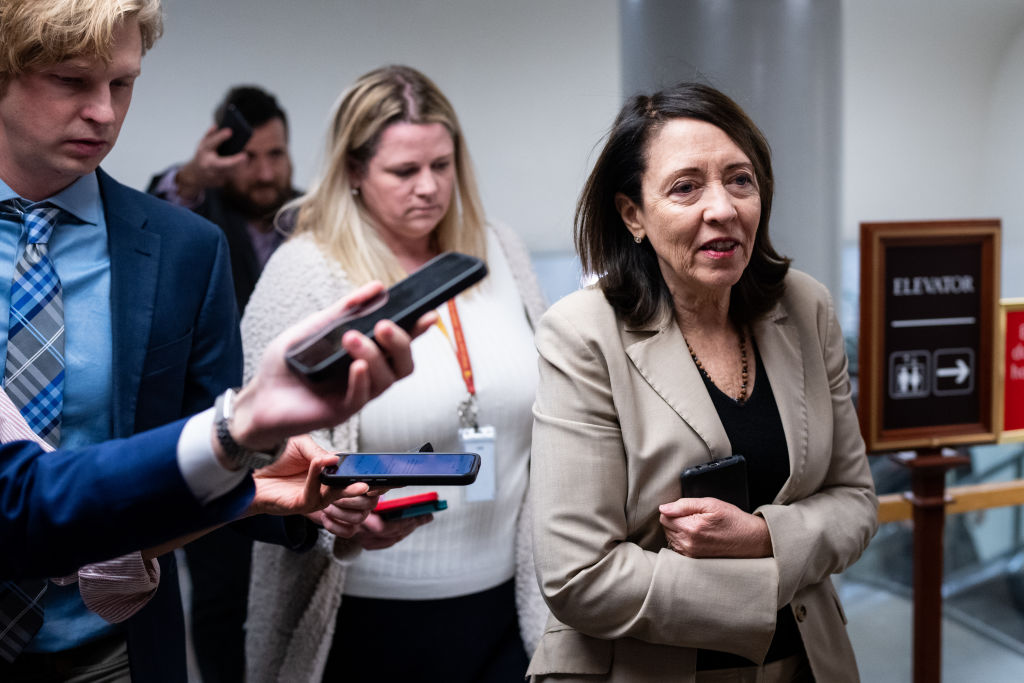
Included in these discussions is the Future of Artificial Intelligence Act from Sens. Maria Cantwell (D-Wash.), who chairs the committee, and Todd Young (R-Ind.). The measure would formalize the AI Safety Institute at Commerce’s National Institute of Standards and Technology, which has already been operating as a Biden administration effort.
“There is real enthusiasm for working out an AI package to be included in any end-of-year bill,” Tricia Enright, communications director for the majority, said in an email.
The potential to make AISI permanent in the lame-duck session is a top lame-duck priority for the industry.
“Chair Cantwell’s team has been having positive conversations with House Science Committee staff about the bills passed by both committees,” Enright added.
Tech views AISI as developing formal approaches to AI safety and security that will make for smarter regulation down the road. There’s also concern that former President Donald Trump would undo President Joe Biden’s approach to AI, including AISI, if he’s elected.
Of course, nothing is ever guaranteed to move in the precious few legislative days of late November and December. Still, an AI package means AISI isn’t the only topic under discussion.
In addition to AISI, the Commerce panel has advanced several AI bills, including legislation that would direct the National Science Foundation to award more grants and scholarships to study AI and quantum computing.
In the House, the Republican-controlled Science Committee has pushed for guidance for small businesses on using algorithms, AI education in schools and research funding.