


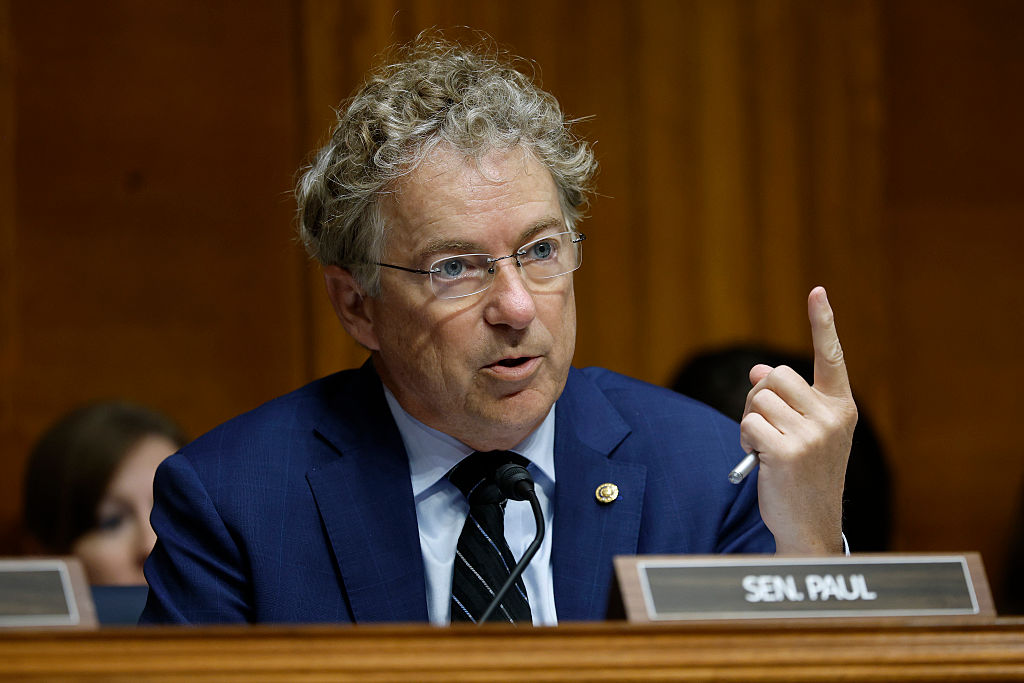
Senate Homeland Security Committee Chair Rand Paul (R-Ky.) said he’d block any attempt by Senate leaders to reauthorize a liability shield that companies rely on when sharing cyberthreat data with the government.
The promise to gum up any reauthorization effort came after Senate Majority Leader John Thune quietly maneuvered a bill designed to resume the legal protections onto the chamber’s calendar.
“We will object at every stage of the way,” Paul assured us this week.
A wide swath of companies, from big tech firms to other large corporations that might hold data at risk from hackers, are desperate to restart the Cybersecurity Information Sharing Act after it lapsed on Sept. 30.
But Paul has repeatedly objected to unanimous consent requests from his committee’s ranking member, Sen. Gary Peters (D-Mich.), to pass a reauthorization of the liability protections.
Paul has been adamant that the legislation should limit the Cybersecurity and Infrastructure Security Agency’s ability to have information online taken down, saying it stifles free speech. The agency is largely unconnected to the liability shield, but the two share the acronym CISA.
However, Thune used Rule XIV of the Senate on Oct. 8 to place a new Peters CISA bill on the calendar. With the action, Thune will be allowed to call up the bill for consideration on the floor, circumventing Paul’s committee.
Placing a bill on the calendar doesn’t automatically mean it will receive a floor vote soon. Paul’s commitment to block unanimous consent requests means Thune would have to burn a lot of floor time to advance the bill.
“It’s not always that easy to pass stuff,” Paul said. “It takes time and effort.”
Paul didn’t mention Thune by name and didn’t answer when asked if he viewed the GOP leader’s actions as teaming up with a Democrat to go around a Republican committee chair.
The other CISA. We also asked if Paul had any updates on Sean Plankey, President Donald Trump’s nominee to serve as CISA (the agency) administrator.
Paul’s committee advanced Plankey’s nomination in July, but there’s been no action since then despite Thune moving a massive backlog of nominees. The chair said he had no update on the timeline.