The world economy is still digesting the risks and implications of the wide-ranging U.S.-Israeli war with Iran. Financial markets are unnerved, to put it mildly, while Democrats are apoplectic.
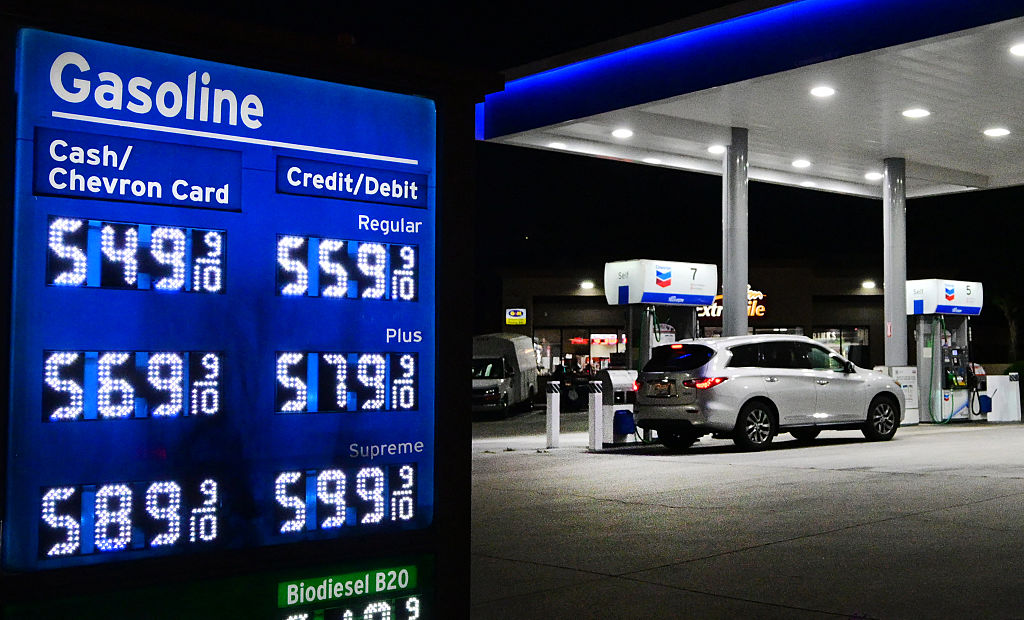
But Hill Republicans remain resolute, disputing the economic risks of war with Iran even while oil prices briefly crossed the $100-dollar-per-barrel mark. Oil was trading at roughly $88 per barrel overnight. That’s still up sharply from before the Iran crisis.
“The prices will come down as quickly as they went up. You saw it today, after the president’s comments,” Sen. John Kennedy (R-La.) said, echoing a line the White House has pushed to GOP lawmakers and allies.
For Democrats, rising energy prices are just one more strike against a Trump administration that seems to run headlong into price increases at every opportunity.
“You couple that with the tariffs tax that Trump has already played on people’s everyday budget, you see how this could lead to stagflation and make a bad economy even worse,” Sen. Raphael Warnock (D-Ga.) said.
The market. Worldwide concern about the Strait of Hormuz — specifically, the likelihood that oil-carrying freighters traveling through will continue to eat missiles — drove the price of oil up as much as 31% in a 24-hour period.
Oil prices came down in no small part thanks to comments from President Donald Trump Monday afternoon that the war would be over “very soon.” There’s good reason to be skeptical, of course.
Still, that ebb and flow gave plenty of GOP lawmakers some comfort, along with the general hope that the conflict in Iran will wind down soon.
“I think you’ll find that the markets will respond positively, long-term,” Sen. Mike Rounds (R-S.D.) said.
Democrats don’t buy it. Democrats’ position has been buoyed by plenty of market analysts who have stressed just how unprecedented the closure of the Strait of Hormuz has been, along with how difficult it may be to get commerce flowing at previous levels.
Plenty of Democrats say there’s a real risk of a situation that echoes the COVID-19 pandemic’s supply chain disruptions.
Here’s how Sen. Elizabeth Warren (D-Mass.) laid out the danger:
“The shocks that will come from an increase in energy prices, and then the increases that will work their way through the system — because the cost of fertilizer goes up, which will increase the cost of food, and the cost of trucking goods from one side of the country to the other goes up, because of the fuel costs — will put a lot more stress on families that have got no more room to give.”
Is that damage already built in?
“They could stop bombing, and that would help a lot,” Warren said.