

It’s Day 36 of the government shutdown. This is now the longest shutdown in U.S. history.
There was finally some momentum on Monday and Tuesday toward a bipartisan deal to end the standoff.
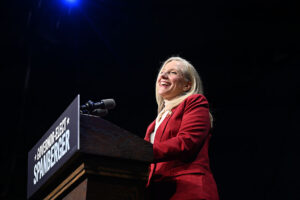
But Senate Democrats who want to keep up the fight are pointing to Tuesday’s election results as evidence that the public is with them — and that they shouldn’t cave now.
Sen. Chris Murphy (D-Conn.) said their victories should “give Democrats confidence that the American people have our back as we engage in the fight to protect people’s health care and save our democracy.”
What’s more, President Donald Trump’s late-night Truth Social post suggesting that the shutdown hurt Republicans in Tuesday’s elections could be seen as a sign that the president wants to cut a deal to end the shutdown quickly. Or it could supercharge his push for Republicans to end the filibuster. More on that in a bit.
It’s too early to say whether all of this will sway the handful of Democratic senators leading bipartisan talks to end the shutdown.
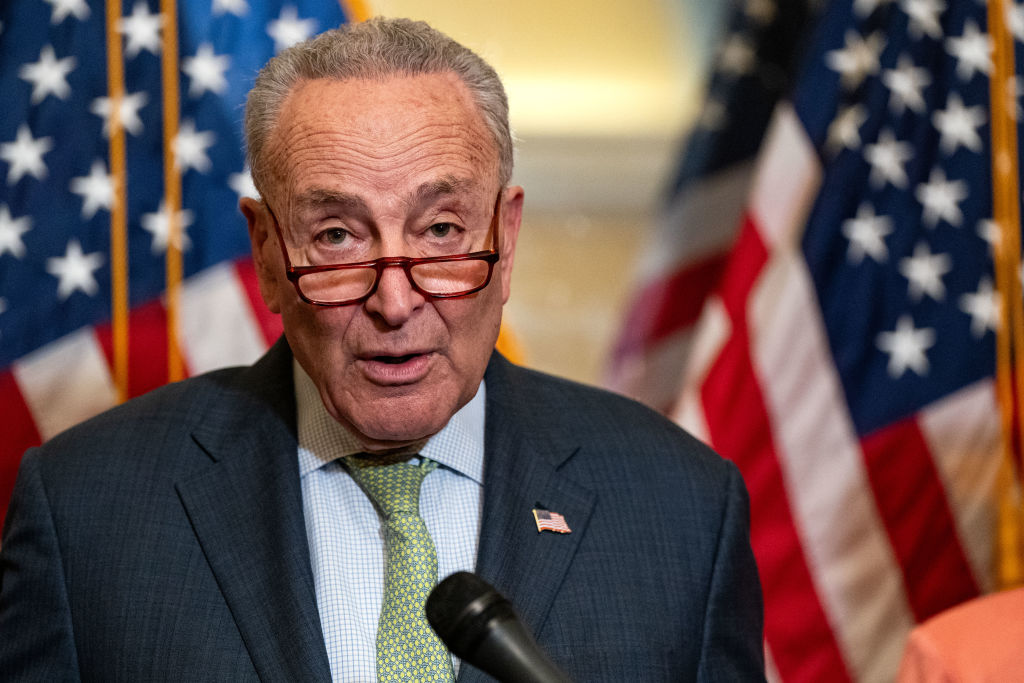
Here’s news: Senate Minority Leader Chuck Schumer and Sens. Elizabeth Warren (D-Mass.) and Ron Wyden (D-Ore.) are leading 25 fellow Senate Democrats in a new letter to the Trump administration that slams the GOP for refusing to negotiate a deal to reopen the government that concretely addresses health care. It lists rising health care costs, including spiking Obamacare premiums, and says voters want Congress and the president to act.
The letter shows that Senate Democrats are still trying to pressure Republicans for health care concessions even with a possible deal in sight.
We scooped in Tuesday’s PM edition that around a dozen Senate Democrats are engaging with Republicans on the contours of an agreement to reopen the government, chart a course on passing full-year FY2026 appropriations bills and set up votes on enhanced Obamacare subsidies.
Both sides still have to resolve internal differences on key elements of the proposal. The Senate could require multiple days to process any funding bill to reopen the government without an agreement to speed up the votes. But top GOP and Democratic aides suggested there’s a chance the Senate could vote on a deal this weekend. We’re skeptical.
Senate Republicans are heading to the White House for breakfast later this morning with Trump, as we scooped. Trump has been on a tear against the filibuster, urging GOP senators non-stop to get rid of the 60-vote threshold for legislation. This is a chance for Trump to take his case directly to them.
Trump will argue that Senate Republicans should end the filibuster and then jam through a CR on party-line vote in order to reopen the government. Congress could work on FY2026 spending bills and extending the Obamacare subsidies, but on GOP terms.
Yet Senate Majority Leader John Thune has made clear to Trump that eliminating the filibuster isn’t in the cards. The votes simply aren’t there. But that hasn’t stopped Trump from opening a rift with Senate Republicans at a time when they feel as if they’ve won the shutdown fight and Democrats are caving.
Obamacare debate reopens. If the current construct to end the shutdown holds — a very big “if” — Democrats would be folding without extracting anything resembling what they initially demanded in September.
So Democrats are now trying to figure out the best way to capitalize on what they’d get: A vote by a date-certain on a bill to extend the Obamacare enhanced premium tax credits.
Sens. Jeanne Shaheen (D-N.H.), Angus King (I-Maine), Maggie Hassan (D-N.H.) and Gary Peters (D-Mich.), among others, will be heavily involved in plotting that strategy.
These Democratic senators want to avoid a “show” vote on Obamacare. They firmly believe there’s enough interest from Republicans to craft a narrow, bipartisan extension of the ACA subsides with reforms — even though many Democrats insisted for weeks that they needed the leverage of a shutdown to get Republicans to the table.
Yet GOP senators aren’t entirely on board with Thune’s idea to offer Democrats a straight vote on the subsidies.
During Republicans’ lunch meeting on Tuesday, Sen. Dan Sullivan (R-Alaska) said he wants to be able to vote on a GOP-authored Obamacare bill, too. The mechanism for this would be a “side-by-side” vote whereby senators could vote for one but not the other.
It’s a sign that there’s some concern among Republicans about the politics of rejecting a Democratic-drafted bill, even a bipartisan one.
Another problem for Democrats is that they don’t really have a way to force House Republicans to take up an Obamacare subsidies bill. Speaker Mike Johnson has said repeatedly that he can’t guarantee an outcome. It’s not clear the House Republican leadership could or would want to pass an extension of Obamacare subsidies, certainly not without Trump’s involvement. And they definitely don’t want to be jammed with a bipartisan Senate bill.