

More than $21 million.
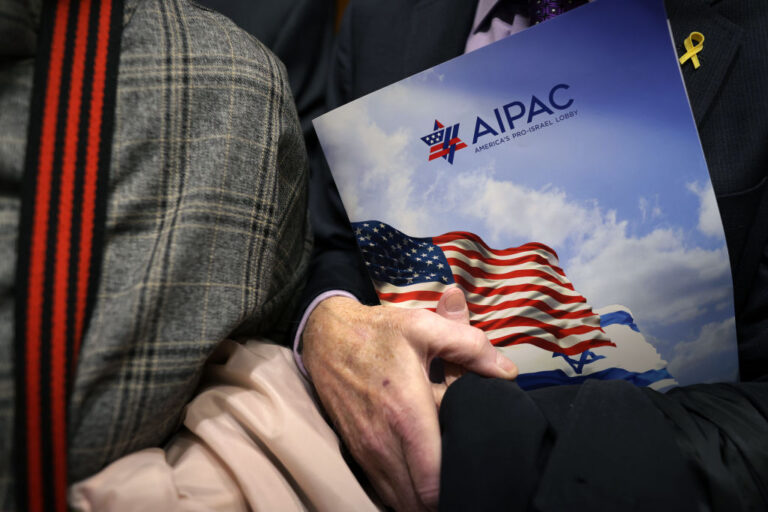
That’s what AIPAC and a cadre of affiliated groups have pumped into four open Illinois congressional races with the hopes of installing a slew of pro-Israel Democrats in safe blue seats.
Tonight we’ll see just what that money bought.
AIPAC faces a reckoning in Democratic primaries on Tuesday. The nation’s largest pro-Israel organization is scrambling to regain its footing with a bloc of voters that has grown wary of Israeli Prime Minister Benjamin Netanyahu and Israel’s actions in Gaza.
This is the high-profile group’s first chance to pivot after its botched strategy in the special election in New Jersey’s 11th District. In that case, AIPAC’s super PAC opened up a path to victory for a candidate strongly critical of Israel.
In Illinois, AIPAC formed new outside groups with anodyne names to temper any potential backlash and obscure their intentions from rivals, according to sources familiar with the group’s plans.
Yet AIPAC could very well end up electing just one of its four preferred candidates today. Plus, it’s had to be willing to course correct. When AIPAC and its allies couldn’t propel a preferred candidate to victory in an Illinois race, it changed strategy and settled for blocking the candidates it preferred least, per a source close to the group.
Ground Zero. Illinois’ 9th District is the perfect encapsulation of the limits of AIPAC’s financial muscle.
Elect Chicago Women, a new super PAC tied to AIPAC, started out trying to boost state Sen. Laura Fine and bash Evanston, Ill., Mayor Daniel Biss.
But then polling showed Fine trailing far behind Biss as Kat Abughazaleh, a Palestinian American far more critical of Israel, surged in support. At that point, another AIPAC affiliate, Chicago Progressive Partnership, began to attack Abughazaleh.
”They’re panicking because they realized that they didn’t learn a lesson from New Jersey 11,” Abughazaleh told us. “It’s backfired on them because AIPAC is now so unpopular that people don’t want to even be involved with it.”
AIPAC is now signaling they’re OK with Biss’ candidacy, even after spending $1.4 million to oppose him, if the alternative is Abughazaleh.
“I think that AIPAC finds someone like me really scary,” Biss said. “Someone who’s Jewish, someone whose mother is Israeli, someone whose grandparents survived the Holocaust and who is willing to stand up and say, ‘Listen, the conduct of the national government in Gaza has been a horror.’”
The other fields. In the 2nd District seat, vacated by Democratic Rep. Robin Kelly, Affordable Chicago Now — a group with ties to AIPAC — is spending $4.4 million to elevate Donna Miller. Miller, a Cook County commissioner, initially won the support of Rep. Jan Schakowsky (D-Ill.). But Schakowsky, put off by the AIPAC spending, withdrew her endorsement.
The wild card here is Jesse Jackson Jr., a former House Democrat who’s backed by the artificial intelligence industry. Jackson Jr. was catapulted back into national headlines by the recent death of his father, a legendary civil rights icon with the same name.
A longtime House member, Jackson pleaded guilty in 2013 to illegally diverting $750,000 in campaign funds for personal use. Jackson Jr. spent nearly two years in federal prison before being released in 2015.
In the 7th District, United Democracy Project, AIPAC’s super PAC, spent $5 million helping Chicago Treasurer Melissa Conyears-Ervin and $60,000 hitting Jason Friedman, a onetime AIPAC ally.
The retiring incumbent, Rep. Danny Davis (D-Ill.), is backing state Rep. La Shawn Ford, who could very well win. Ford has weathered an avalanche of negative advertising from crypto.
And in the 8th District, the front-runner is former Rep. Melissa Bean (D-Ill.), who has support from Elect Chicago Women, the AIPAC-aligned group, as well pro-crypto and pro-AI super PACs.
But AIPAC can also turbocharge the campaigns of those it’s opposing. The AIPAC-affiliated Chicago Progressive Partnership spent nearly $664,000 in recent weeks opposing Junaid Ahmed, who calls Israel’s actions in Gaza a “genocide.”
Ahmed has weaponized AIPAC’s support of Bean and earned endorsements from Rep. Alexandria Ocasio-Cortez (D-N.Y.) and Sen. Bernie Sanders (I-Vt.) in the closing weeks of the campaign, dramatically raising his profile.
“All of that, to be very honest, adds lots of legitimacy for a candidate like me who hasn’t held office before,” Ahmed told us.
What’s next? AIPAC burst into the super PAC space in the 2022 cycle, funneling millions of dollars into races with resounding success. That pattern continued into 2024. But it’s a new political reality as Israel’s long, brutal retaliatory campaign against the Palestinians in Gaza enters its third year.
An NBC News poll released Monday showed that 67% of registered Democrats sympathized more with Palestinians, compared to 17% who sympathized more with Israelis. This is a stunning reversal of Israel’s standing with Democrats even a decade ago.
A source close to AIPAC said its focus is now “preventing the six potential Squad members” from winning in the Illinois primaries. That includes Abughazaleh, Ahmed and four other progressive Democrats in the open Illinois seats.
Most of those candidates don’t have a chance of winning. Abughazaleh’s surge could very well have been caused by the negative spending against Biss from the AIPAC-aligned group. If Abughazaleh wins tonight, expect a new round of soul searching for pro-Israel Democrats.
Regardless, AIPAC says it will continue to be heavily involved in Democratic primaries.
“There’s a lot of pro-Israel Democrats, many of them progressive, that want to participate in the Democratic primary process, through votes, through donations, through making sure their voice is not silenced,” said Patrick Dorton, a spokesperson for United Democracy Project, the AIPAC super PAC.