


December 20, 2025



PRESENTED BY

THE TOP
The House’s health care rebellion

We can’t believe it’s the last Readback of 2025! Our weekend digest features the best of Punchbowl News this week, including a roundup of our scoops, analysis and Capitol Hill insight you won’t find anywhere else. We’ve also included a few of our favorite outside reads from the week.
As you read on, we hope you have a happy and restful holiday season. We’ll see you back here on Jan. 3, 2026, with a special Readback edition marking Punchbowl News’ fifth anniversary!
Moderates’ rebellion. You’ve probably heard plenty over the last few years about House Republicans rebelling against their leadership. But what unfolded over the last few weeks was something new: a revolt from the middle.
To recap, House GOP moderates have grown more and more alarmed in recent months over the Dec. 31 expiration of enhanced premium tax credits for ACA health insurance plans. Many of them represent the country’s top swing districts. And they began to view the cliff as a moral and political crisis.
The moderates struck a tentative deal with Speaker Mike Johnson for an amendment vote on a bipartisan plan for extending the ACA subsidies. But those efforts cratered early this week — falling apart because of a dispute over if and how to offset the amendment.
The moderates really only had two choices left if they wanted to do something before Dec. 31. Two discharge petitions for compromise ACA extensions had stalled.
That brings us to Wednesday morning. I got to Capitol Hill early because we believed there was a high chance a group of GOP centrists would sign onto House Minority Leader Hakeem Jeffries’ discharge petition for a three-year clean extension of the credits.
At 9 a.m., I went to the speaker’s lobby, a room attached to the House floor where reporters can go to interview members and keep an eye on what’s happening on the floor.
Johnson was on the floor, which caught my attention. Then I spotted Rep. Brian Fitzpatrick (R-Pa.), a leader of moderates’ ACA fight and the one who would lead the charge if Republicans broke ranks and signed Jeffries’ petition.
Fitzpatrick walked up to the desk where members can sign discharge petitions and grabbed a pen. He was chatting with Rep. Tom Suozzi (D-N.Y.), his cochair of the Problem Solvers Caucus and a colead of bipartisan ACA talks. I knew it was over.
Fitzpatrick signed. Within just an hour, three other Republicans had too: Reps. Mike Lawler (N.Y.), Rob Bresnahan (Pa.) and Ryan Mackenzie (Pa.).
That means when Congress returns in January, the House will vote on Jeffries’ ACA bill. It was a stunning defeat for Johnson, and a huge win for Jeffries and the moderates.
Johnson will start off the new year dealing with a huge problem. Most of the House GOP conference doesn’t want to vote on an ACA extension. No Republicans are truly happy the situation ended up giving Democrats a vote on their bill. The moderates don’t intend to let up.
After all this went down, I interviewed Bresnahan and Mackenzie about their decision for Friday’s AM edition. I wanted to talk with the two Pennsylvania Republicans because, as freshmen, breaking with Johnson publicly like this is a very difficult move to make.
“I think it’s really important to represent your district and the people that elected you to Congress and in 2024, the main topic that we talked about on the campaign trail was affordability,” Mackenzie told us.
What I’m watching. I just started the new season of Emily in Paris.
– Laura Weiss
You can find The Readback in your inbox every Saturday at 8 a.m. And don’t hesitate to reach out to [email protected] with feedback. Enjoy The Readback.

Unpacking AI election money in the Tech Quarterly
We love putting our quarterly editions out despite all the work it takes.
So, I would be remiss if I didn’t ask you to go check out the latest Punchbowl News Tech Quarterly newsletter that my colleague Ben Brody and I published on Tuesday. It’s free!
As the name suggests, we publish these about every three months and they go out to all Punchbowl News subscribers. We love putting it together because it’s a way to get more readers to see our tech coverage.
Our quarterly newsletters are a lot of work because we always want to deliver our very best product. On weeks like the last one, we produce our regularly scheduled Sunday Punchbowl News Tech newsletter, work on the quarterly, plus break some news on our weekday newsletters.
But we’re pretty proud of this latest edition. In it, we unpack the role artificial intelligence will play in next year’s midterms.
AI companies are trying to replicate the crypto industry’s 2024 winning playbook by spending a lot of cash in the midterm congressional elections. A new super PAC called Leading the Future, helmed and funded by a lot of the same people behind crypto’s Fairshake group, is promising to spend as much as $100 million next year.
The group will be supporting candidates who want more AI “innovation” and less regulation. Which means they want the technology to be regulated on the federal level (hopefully with a lot of their input), and not by state houses.
But here’s the challenge the techies didn’t really face in 2024: there’s going to be a lot of cash spent to stop them this time.
Former Reps. Brad Carson (D-Okla.) and Chris Stewart (R-Utah) are leading their own pro-regulation PACs to counter LTF, expecting to raise $50 million.
That’s a lot of cash, which promises fierce proxy fights in House and Senate races all across the country.
This will perhaps be the first election where AI will actually play a more leading role in the results. And not just because of all the money coming from the industry and its foes. AI is top of mind for a lot of voters.
You are probably going to hear these two messages in 2026:
Folks are worried about AI displacing jobs and the costs that data centers could bring to their communities. But, there’s a lot of hope that AI will be a positively transformative technology that also creates a lot of jobs in the energy and construction sectors.
These two mega PACs and the candidates they support will try to convince voters which of these two narratives should win.
What I’m watching. I’ve been an Ethan Hawke fan for a long time, from the “Before” Trilogy to his work as an author. So I’m having a lot of fun with his latest show, “The Lowdown.” Hawke plays an eccentric reporter down in Tulsa, Okla., investigating a powerful family. It’s worth the watch.
– Diego Areas Munhoz

That’s a wrap on the 2025 Fly Out Day season
Fly Out Day 2025 is in the books — and it packed a serious news punch.
The show has taken off, igniting lively discussions on the House floor, in newsrooms and even in your living room. But the sideline conversations in the Pink Room are where the other half of my love for the show lives.
I didn’t start helping produce Fly Out Day until episode five, but my love for the Pink Room kicked in well before my first day.
As a social media guru, I have a special place in my heart for short-form video — and maybe doomscrolling too. (Shout out to all my fellow high-screen-time friends.) So walking into a fully built-out social media studio complete with mini mics and a ring light made me feel like a kid on Christmas morning.
My favorite part? As congressional reporter and Pink Room host Max Cohen likes to say, the serious questions are for Punchbowl News Founders Anna Palmer and Jake Sherman. In the Pink Room, we get to see “the personality behind the power players.”
After policy-heavy conversations with Anna and Jake, getting guests to open up about personal topics can be a challenge. How many of us can go from work mode to fun mode in just a few minutes? However, Max has a natural interviewing style that encourages guests to show a relaxed and perhaps more authentic side of themselves.
A few of the recent interviews stuck with me, whether they made me laugh or revealed a more personal side of the guest sitting in front of me.
Max asked Sen. Bill Cassidy (R-La.), a gastroenterologist and one of the few physicians in Congress, why he chose politics over medicine.
“I’m a gastroenterologist, so for 20 years I woke up and the first thing I did was colonoscopies and I just got tired of the view,” he quipped.
I had to physically turn away from the camera so the mic would not pick up my giggling. Then, almost immediately, he opened up about falling out of love with his profession, something I think many people experience at some point in their lives. Happy to see someone destigmatize that decision.
I was dying when Max asked Sen. Chris Murphy (D-Conn.) why he was sporting a new beard. I saw a flash of surprise creep across his face before he started laughing. Max, who also has a pretty fresh beard, said he obviously supports it.
“I couldn’t grow a beard like this or like that when I was your age, so when you get to be my age…hair starts to grow in places you don’t want it,” he said.
Last but certainly not least, in the spirit of the holiday season, Max asked Rep. Elise Stefanik (R-N.Y.) about her traditions and she immediately beamed with joy while talking about her son.
“Well, Sam loves the holidays just like his mom does,” she chuckled. She added that her son has a tiny Christmas tree in his room, just like she did as a kid. Funny enough, so did I.
It’s moments like those that pull me out of work mode and into the present — brief flashes of pure joy, shared through stories about real life.
Watch our most recent and final episode of the year here with Rep. Mike Lawler (R-N.Y.).
What I’m reading. I’m on the second book of the Dungeon Crawler Carl series, “Carl’s Doomsday Scenario.” Carl and his cat, Donut, are attempting to survive deadly dungeons for a galactic TV show. Fun fact: “Family Guy” creator Seth McFarlane’s production company, Fuzzy Door, acquired the rights to the book, which means a TV adaptation is on the way!
– Rachel Scully
PRESENTED BY L’ORÉAL GROUPE

Susana is an Industrial Quality Chemist at the L’Oréal North Little Rock plant. Her role, like every US role at L’Oréal Groupe, supports 11 additional jobs in supply chains and local businesses across the country. That’s the beauty business at work – bringing together research, manufacturing, and retail to make and distribute the products America loves.
Learn more about how the beauty made here keeps America working.

Breaking down the 2026 retirements
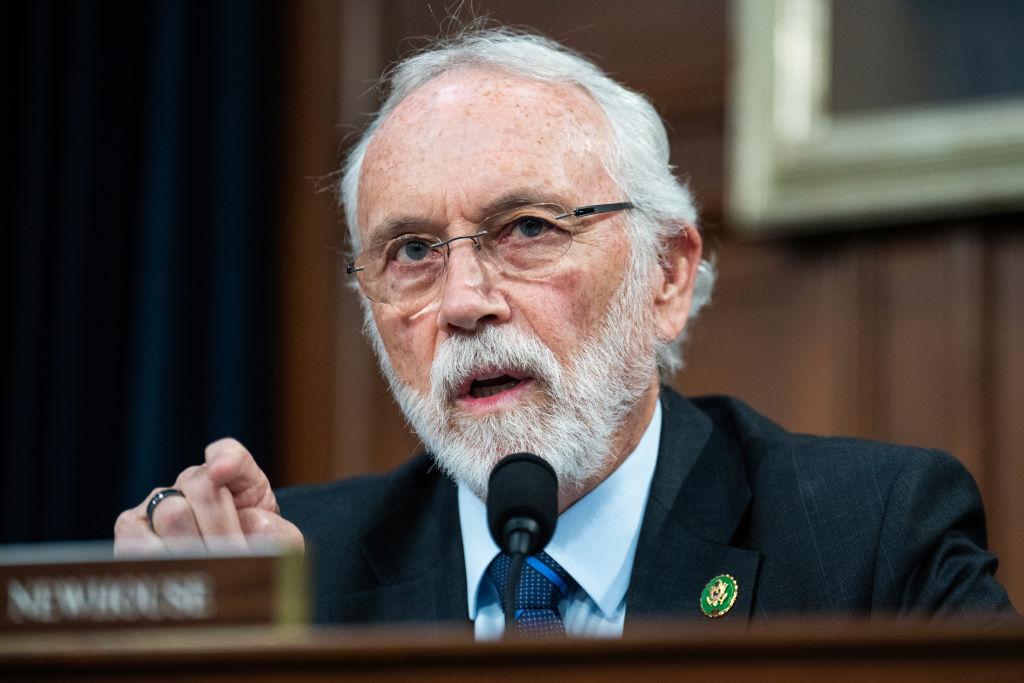
Retirement watch season has arrived.
Lawmakers have fled town to spend the December recess back home and contemplate a life outside of Washington. Party leaders are bracing for a fresh wave of retirements in the new year.
This is an especially poignant fear for House Republicans as 2026 is shaping up to be a tough midterm for them. This week Rep. Dan Newhouse (R-Wash.), one of the last two surviving Republicans who voted to impeach President Donald Trump, announced he was done serving in Congress.
The good news for the GOP is that the vast majority of these departures so far come from members in safe seats, though Reps. Don Bacon (R-Neb.) and David Schweikert (R-Ariz.) are two notable exceptions.
The bad news is that the conference is on track for a historic number of retirements.
The spate of retirements got me wondering how this cycle compares to the past. I decided to dive into the wonderful collection of data at Ballotpedia.
The most recent high water mark was 2018, the last midterm in a Trump presidency. As a Democratic wave crested, nearly four dozen Republicans retired or resigned from the House. By this point in that cycle, December 2017, a total of 23 Republicans had resigned or announced plans to retire.
How does 2026 compare? As of Dec. 19, 27 House Republicans plan to retire or have resigned. Although, many are running for higher office, in an attempt to leave the House, not politics writ large.
If the GOP retirements continue at this pace, it’s possible that 2026 could rival or even surpass the 2018 cycle.
What I’m reading. I just finished “Tomorrow, and Tomorrow, and Tomorrow” by Gabrielle Zevin. I’m not a big fiction reader or a gamer but I was intrigued because this book got a lot of hype a few years ago. It does not disappoint!
I am also very pleased to share that this was book 50 of my 2025 book challenge. It’s been a long journey but I finished with some time to spare and I may go for 51!
– Ally Mutnick

Presented by AstraZeneca

The 340B program is supposed to help vulnerable patients—but without strong safeguards, it’s siphoning away funds that could be used for free and charitable medicine. The 340B Rebate Model Pilot improves program integrity, preventing duplicate discounts and strengthening accountability. Urge HHS to implement the pilot today. Learn why it matters.

Crucial Capitol Hill news AM, Midday, and PM—5 times a week
Join a community of some of the most powerful people in Washington and beyond. Exclusive newsmaker events, parties, in-person and virtual briefings and more.
Subscribe to Premium
Special Projects
Explore our deep dives into the issues that matter the most today and will shape tomorrow's future, with expert reporting that goes beyond the headlines and into the heart of the Capitol.
Check it outEvery single issue of Punchbowl News published, all in one place
Visit the archive
Presented by AstraZeneca
The 340B program lacks transparency—making it hard to tell if it’s actually helping vulnerable patients. HHS can fix the problem by implementing the 340B Rebate Model Pilot, ensuring the program is transparent, compliant, and accountable. Learn more.