


December 4, 2025



PRESENTED BY

THE TOP
The Obamacare cliff’s leadership vacuum
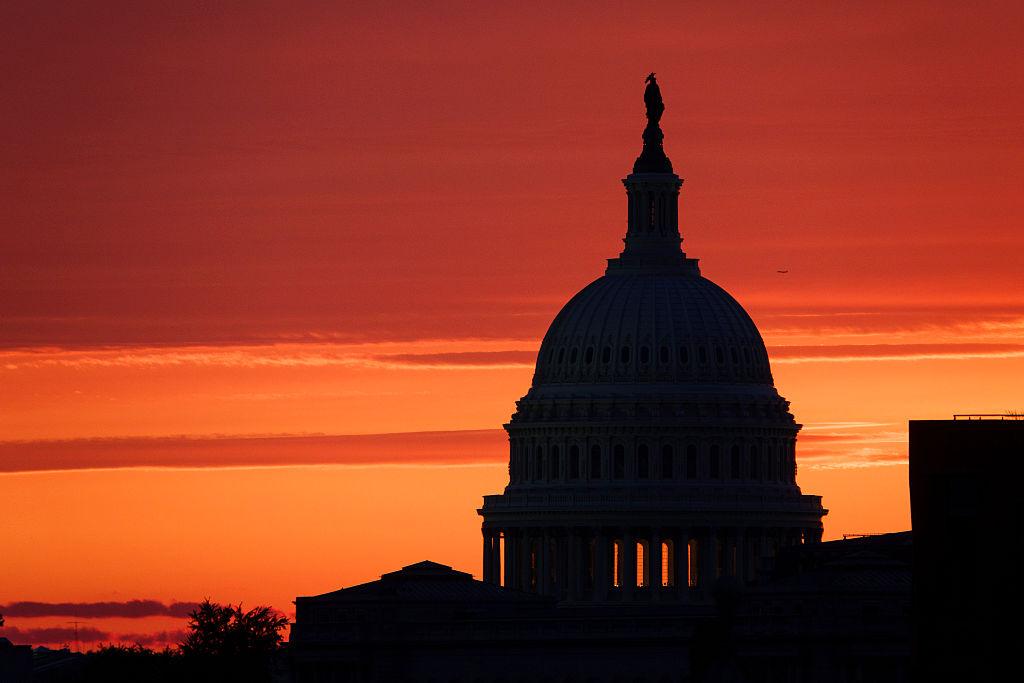
Happy Thursday morning.
The deadline to extend Obamacare premium subsidies is just three weeks away. And Congress is nowhere on this issue.
There’s been no real push from party leaders on either side to secure a deal, leaving moderates and vulnerable Republicans scrambling.
As the chances for a deal hover near zero, the fingerpointing has only intensified ahead of “show” votes in the Senate next week. Senate Republican leaders are dealing with an absent White House while they struggle to coalesce around a messaging bill to counter Democrats’ unity on a subsidy extension.
“Obviously, there are consultations going on all the time with the White House. But I think at this point the question is, are the Democrats serious about actually solving the issue?” said Senate Majority Leader John Thune.
Democrats have a dramatically different view of the case, however.
“We want a clean extension. By the way, we can take it from there on our side,” said Rep. Richie Neal (Mass.), the ranking Democrat on the House Ways and Means Committee. “Right now, the argument certainly leans in our direction.”
In reality, it’s Republicans who have the most to lose politically. More than four million Americans could lose coverage, with millions more facing huge premium hikes. And this will hit small businesses too.
House Republican leaders say that Democrats should be to blame because they voted against the GOP reconciliation package, which, at one time, included cost-sharing reductions. This later fell out of the bill in the Senate.
Republican dysfunction. Many House and Senate Republicans don’t want to do anything about the looming Obamacare cliff, saying the program is rife with fraud and abuse. They blame Democrats for not extending the premiums permanently during the Biden administration.
House Republican leaders seem nowhere close to an agreement on a broader health care package, although Speaker Mike Johnson promises a plan is coming soon. He’s just not sure when, even as the Dec. 31 deadline looms larger.
In the Senate, Republicans are trying to figure out whether to even offer their own alternative to a planned vote next week on Democrats’ bid to extend the subsidies for three years.
Senate Republicans lack consensus on any bill. And since these will be partisan exercises anyway, many GOP senators don’t see the point of voting on something that’ll only divide their party.
The GOP resistance to doing anything about the Obamacare cliff puts Democratic leaders in a corner somewhat. It doesn’t make political sense for Democrats to offer concessions if they don’t think Republicans or President Donald Trump can actually pass anything.
This plays directly into their 2026 argument that Republicans – who control all of Washington – can’t or won’t govern effectively, especially on affordability issues.
There’s also a feeling among key Democrats that changes to the program for 2026 are unworkable at this point. Democrats say there needs to be a clean Obamacare credit extension for next year because time is so short. That’s a dealbreaker for most Republicans.
Yet that bare-knuckled approach by Democrats also doesn’t do anything for the millions of Americans about to be hit with a big price hike.
House mods’ options. Moderates in both parties are desperate for a deal. But even they can’t agree on the path forward.
Reps. Josh Gottheimer (D-N.J.) and Jen Kiggans (R-Va.) are leading a bipartisan House group unveiling a new framework this morning.
It’s expected to call for a one-year extension of the enhanced premium tax credits with several changes, including to crack down on fraud. It also includes a second year of aid for premiums with larger-scale reforms. Plus, they outline pay-for options as well.
House members have met with several senators about their pitch, including Sens. Bill Cassidy (R-La.), Susan Collins (R-Maine), Lisa Murkowski (R-Alaska) and Maggie Hassan (D-N.H.), according to a source familiar with the efforts.
Meanwhile, Rep. Brian Fitzpatrick (R-Pa.) is on the verge of dropping his own compromise bill for a two-year credit extension meant to reflect White House, Senate and House feedback.
House Republican centrists, in particular, feel pressure to show they’re fighting for something after Democrats’ overwhelming momentum in recent elections.
The problems for dealmakers. First of all, things have already gone sideways in the Senate, which was ACA credit backers’ best hope for momentum.
As of this moment, there isn’t a proposal that can get 60 votes. Without Trump’s help, that’s not achievable. Next week’s votes, which Thune promised as part of the shutdown-ending deal, won’t accomplish much more than political posturing.
To counteract Democrats, some Republicans are discussing a vote that would pair Sen. Rick Scott’s (R-Fla.) bill on health savings accounts with a clean, year-long extension of the Obamacare subsidies. Sen. Josh Hawley (R-Mo.) also has a bill allowing people to deduct medical expenses from their taxes. But there’s no clear path for either of these.
“There are those of us who want to do something and recognize we cannot allow premiums to skyrocket,” Hawley said. “I’m open to any proposals.”
The last-ditch option for House moderates is a discharge petition. A compromise effort would likely need most — if not all — House Democrats on board. But their backing isn’t guaranteed, especially if House Republicans can’t show some real buy-in on their side.
Republican moderates are betting Democrats would take progress over perfection. But a lack of time, trust and consensus are huge problems.
“Eighty percent of something or 100% of nothing is going to be their choice, right?” Fitzpatrick said. “I would sure hope that they would not want the whole program to go away over differences over provisions.”
Two more things:
– House Republicans shelved their effort to pass the SCORE Act, landmark legislation regulating college sports. The bill was supposed to be on the floor Wednesday. House GOP leadership said they may take it up Thursday, but they have now put it off indefinitely.
– Rep. Elise Stefanik (R-N.Y.) will be our guest on Fly Out Day today. Subscribe to our YouTube channel.
— Laura Weiss, Andrew Desiderio and John Bresnahan
Today at 9 a.m. ET, Punchbowl News Senior Congressional Reporter Andrew Desiderio will sit down with Senate Appropriations Committee Chair Susan Collins (R-Maine). They’ll discuss the news of the day and the future of Alzheimer’s disease diagnosis and treatment. There’s still time to RSVP!
Don’t miss: The final Vault Quarterly of 2025 comes out today. We sit down with Senate Banking Committee Chair Tim Scott (R-S.C.) to talk about what happened in financial services policy this year and what’s to come for 2026. Plus, the trade agenda could be landing on Congress’ doorstep next year. Check your inboxes and our website later this morning for more.


THE SENATE
Senate GOP approaching danger zone on approps
Tensions between Senate GOP appropriators and fiscal hawks are nearing a fever pitch, renewing fears of another government shutdown or a year-long spending patch ahead of the Jan. 30 deadline.
GOP conservatives are once again standing in the way as Republican leaders try to advance a five-bill FY2026 funding package and begin negotiations with the House. This group has a mix of concerns about the effort, from earmarks to high spending levels.
Meanwhile, Republican appropriators have been pushing hard for quick floor action. But the Senate will leave town today without holding an initial procedural vote as many had hoped. That leaves just two weeks until the holiday recess – and a weighty to-do list that includes the annual must-pass defense policy bill.
“We need to move forward. Jan. 30 is just around the corner,” Sen. Katie Britt (R-Ala.) told us.
The brutal 43-day government shutdown unified Republicans, but that only belied the lingering hostility between the appropriators and fiscal hawks, from closed-door shouting matches to sexism allegations.
Thune’s headache. It’s a continuation of the Senate GOP Conference’s long-running tensions over the tactics that leaders in both parties have employed over the years to jam through thousand-page government spending bills.
Senate Majority Leader John Thune won his job in part by promising to make that a thing of the past. Conservatives cheered him on. But the reality of actually passing appropriations bills is starting to bite.
“If you’re somebody who’s a fiscal conservative, it makes sense to actually move appropriations bills because I think you’re going to get a better spending number and one that better reflects our priorities,” Thune said.
That argument isn’t quite resonating with the conservative holdouts, who are staying mum publicly.
Grouping the five bills into one package requires unanimous consent, which gives conservatives a ton of leverage. Thune and Senate Majority Whip John Barrasso have been working through the objections and have cleared some by offering amendment votes. Some appropriators are privately grumbling that the leadership isn’t doing enough.
But the problem is that the fiscal hawks — Sens. Rick Scott (R-Fla.), Mike Lee (R-Utah), Ron Johnson (R-Wis.) and others — are making demands that the GOP leadership almost certainly cannot accommodate.
Thune huddled with conservatives in his office late Wednesday. The South Dakota Republican declined to divulge details about the meeting, but said it’d be difficult to accede to conservatives’ demand on earmarks.
“The Appropriations Committee has done a lot of work already, and it’s hard to unwind that,” Thune said.
Senate Appropriations Committee Chair Susan Collins (R-Maine) would also never go for this. Collins’ ability to deliver funding for her home state will be huge for her reelection bid. More than half the GOP Conference requested earmarks, too.
Fiscal hawks also want to separate the Labor-HHS bill from the other four — Defense, Transportation-HUD, Commerce-Justice-Science and Interior. But pairing Defense with Labor-HHS has historically been key to securing Democrats’ support.
Arm-twisting. If Congress had to resort to a yearlong CR, Thune says that would only continue spending levels and other initiatives that were enacted under President Joe Biden and a Democratic-controlled Senate.
“I don’t think any of us want that,” added Sen. Shelley Moore Capito (R-W.Va.), an appropriator.
Thune technically has a “break-glass” option that could break the logjam: Moving to suspend the chamber’s rules governing appropriations bills, which requires 67 votes. But that would only ratchet up the intra-party friction — and Thune is effectively ruling it out.
“We’re trying to do this, as much as we can, through regular order and making sure that everybody has an opportunity to make their voices heard,” Thune told us.
— Andrew Desiderio, Samantha Handler and Max Cohen

THE MIDTERMS
Republicans on edge about 2026
Republicans were already antsy about the midterms. Then the Tennessee special election happened.
Republican Matt Van Epps beat Democrat Aftyn Behn by nine points in a seat Trump won overwhelmingly in 2024, stoking fears that the GOP may be in for a brutal 2026. The worst-case scenario next year: sky-high Democratic turnout combined with MAGA voters staying home since President Donald Trump isn’t on the ballot.
“Trump won in that district by 22%. We won by nine and we poured a lot of money in there,” Sen. Jim Justice (R-W.Va.) said. “We’ve got to realize that there’s too many indicators that the midterms are coming and we should all be concerned for the Republican side.”
The Trump drop-off? Republicans are also coming to terms with a post-Trump political landscape where the party can no longer rely on the president’s coattails to win majorities.
Memories of 2018 and 2022 are still fresh in Republicans’ minds. In those years, low-propensity Trump voters stayed home and Democratic turnout skyrocketed.
“[Trump’s] not going to be on the ballot in the midterm for 2026, so that ought to be of concern for a lot of Republicans,” said Sen. John Cornyn (R-Texas), who is up for reelection next year.
Conservative commentator Tim Carney articulated this argument in a recent op-ed that attracted the attention of top Senate GOP offices. “When Trump isn’t on the ballot, the Trump era is a story of GOP loss,” Carney wrote.
Messaging whiplash. While most Republicans we spoke to maintained that a win is a win when it comes to the Tennessee special, it’s clear the party isn’t yet aligned on a 2026 midterm message despite the Democratic beatdown in November.
Senate Majority Leader John Thune said we shouldn’t “read too much” into the House special but added Republicans “have to sharpen our message.”
“[We need to] make sure that we’re giving people a reason to vote for us in the midterms next year,” Thune said.
Trump’s approval rating is sinking, in part due to voters being upset over rising costs. Senate Republicans up for reelection in 2026 are taking note.
“What I’m focused on is affordability. I’m doing everything I can to bring the cost of health care down,” Sen. Roger Marshall (R-Kan.) said. “We need to bring down the cost of housing… Childcare is a big issue.”
Trump, meanwhile, said “the word affordability is a con job by the Democrats” during a Cabinet meeting this week.
— Max Cohen
PRESENTED BY WALMART

Over two-thirds of the products Walmart buys, like healthy dried fruit from The Ugly Co., are made, grown, or assembled in America. Learn more.
WASHINGTON X THE WORLD
Russia sanctions effort has a tariff problem
A push from defense hawks to slap new sanctions on Russia has run into another politically toxic snag: tariffs.
President Donald Trump has been reluctant to bless a congressional effort on sanctions, which has overwhelming bipartisan support. The White House has already forced revisions that would expand the president’s tariff authority. This is now threatening Democratic support.
“We can do things that target Russia,” Rep. Gregory Meeks (D-N.Y.), ranking member of the House Foreign Affairs Committee, told us. “Tariffs turn out to really just be a tax [on] the American people.”
The tariff changes set off alarms for key House and Senate Democrats, who oppose the administration’s trade wars and don’t want to give any ammunition to the White House’s Supreme Court case.
Meeks and Reps. Brian Fitzpatrick (R-Pa.) and Steny Hoyer (D-Md.) met Wednesday and are likely to strip out all of the tariff language from the House bill and boost the sanctions portion instead. The group expects to settle on consensus language this morning and use it to get moving on a discharge petition.
But Sen. Lindsey Graham (R-S.C.), who is leading the Russia sanctions effort in the Senate, isn’t backing down.
Since first introducing the bipartisan sanctions bill, Graham has beefed up authorities for the administration to levy tariffs on third-party countries that buy Russian oil.
Now Graham wants to keep the tariff language, according to sources familiar with the discussions. This leaves the push in a fragile spot. And it means that even if Trump comes around, the proposal still may not be able to win congressional approval and reach his desk.
— Laura Weiss, Briana Reilly and Andrew Desiderio
AND THERE’S MORE
News: More than two dozen Senate Democrats in a new letter sent Wednesday night slammed Education Secretary Linda McMahon for giving away many of the Education Department’s major responsibilities to other agencies.
Senate Minority Leader Chuck Schumer, top Senate Appropriations Democrat Patty Murray (Wash.), Senate HELP ranking member Bernie Sanders (I-Vt.) and Sen. Tammy Baldwin (D-Wis.) led the letter, saying McMahon’s actions are illegal and improperly dismantle the department.
Downtown Download: Tucker Knott, Sen. Ted Budd’s (R-N.C.) former chief of staff, is joining Ballard Partners. Knott will also be joining the board of Stronger Nation Fund, Inc., the 501(c)(4) that will be backing Budd’s 2028 reelection race. Jason Thielman, former NRSC executive director, is spearheading Stronger Nation.
– Samantha Handler and Max Cohen


Presented by AstraZeneca

The 340B program is supposed to help vulnerable patients—but without strong safeguards, it’s siphoning away funds that could be used for free and charitable medicine. The 340B Rebate Model Pilot improves program integrity, preventing duplicate discounts and strengthening accountability. Urge HHS to implement the pilot today. Learn why it matters.

Crucial Capitol Hill news AM, Midday, and PM—5 times a week
Join a community of some of the most powerful people in Washington and beyond. Exclusive newsmaker events, parties, in-person and virtual briefings and more.
Subscribe to Premium
Special Projects
Explore our deep dives into the issues that matter the most today and will shape tomorrow's future, with expert reporting that goes beyond the headlines and into the heart of the Capitol.
Check it outEvery single issue of Punchbowl News published, all in one place
Visit the archive
Presented by AstraZeneca
The 340B program lacks transparency—making it hard to tell if it’s actually helping vulnerable patients. HHS can fix the problem by implementing the 340B Rebate Model Pilot, ensuring the program is transparent, compliant, and accountable. Learn more.