


April 23, 2026



PRESENTED BY
THE TOP
The House GOP’s $153M fall ad blitz
Happy Thursday morning.
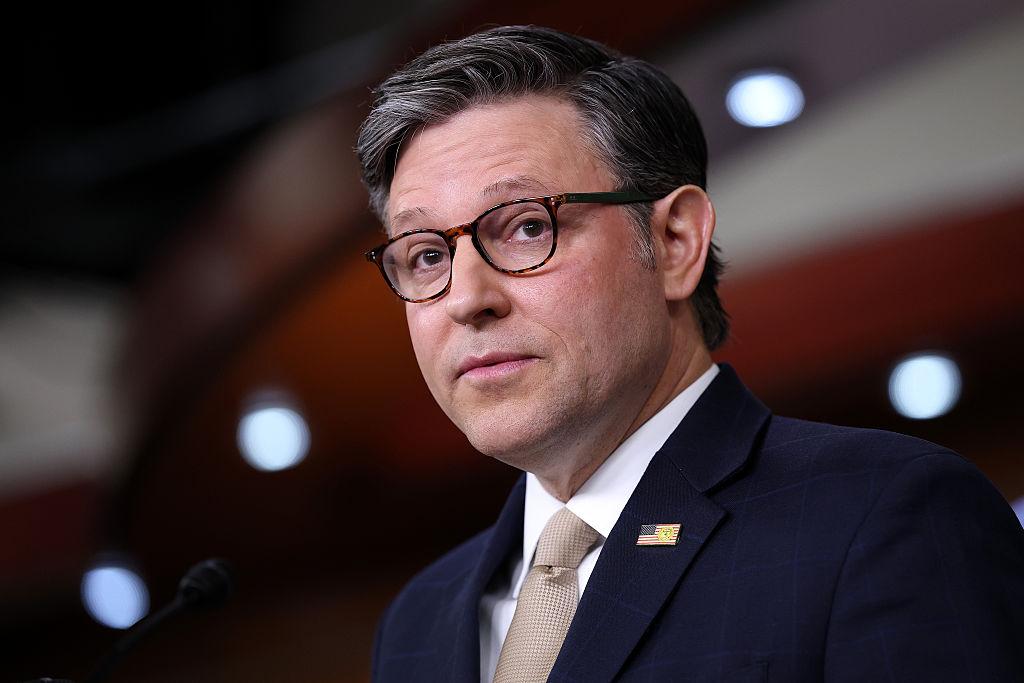
News: The Congressional Leadership Fund, a Speaker Mike Johnson-aligned super PAC, is booking $153 million-plus in its first wave of fall ad buys, a massive investment as House Republicans seek to save their endangered majority.
This is CLF’s largest-ever initial reservation. It will span 38 media markets across broadcast, cable, streaming and digital.
The planned reservations sketch out a roadmap of how top House Republicans see the House battleground with 194 days to go until Election Day. Which incumbents need the most protection? Which Democratic targets are the easiest to knock out?
The biggest spends: $13.9 million in South Texas; $20.4 million in Michigan; $18.6 million in New York City; and $12.6 million in Central California.
These early reservations lock in lower rates before the airwaves get crowded with candidates, committees and other advertisers. They’re also subject to change. CLF will make additional rounds of ad buys as more seats come into play and will likely slash some from this first round.
“This initial reserve reflects the reality that this cycle, again, will be fought on a narrow map,” CLF President Chris Winkelman said.
House Majority PAC, the Democratic super PAC, is reserving a whopping $272 million in ads, the Wall Street Journal reported this morning. Roughly 80% of HMP’s buy is offensive, the WSJ reported.
One big takeaway. The list of GOP reservations is roughly evenly split between offensive and defensive, with a tad more defense.
In some places, it’s hard to know exactly which members the buys are intended to target. The New York City media market, for example, covers the districts of Reps. Mike Lawler (R-N.Y.), Tom Kean Jr. (R-N.J.), Laura Gillen (D-N.Y.), Tom Suozzi (D-N.Y.) and Nellie Pou (D-N.J.).
In others, it’s easy to see what’s happening. The $2.9 million set aside for Harrisburg, Pa., can only be for Rep. Scott Perry (R-Pa.).
Democrats need to flip just a few seats to take control of the House after four years out of power. But the battlefield is growing smaller. It’ll be crucial for Republicans to play some offense if they have any hope of holding the gavel. As we told you after Tuesday night’s redistricting win in Virginia, the path to the majority is right there for Democrats unless Republicans can turn things around.
We estimate the CLF buys cover roughly 30 districts. Let’s run through them.
Offense. A whopping $11.9 million is reserved across two markets that cover the Texas 34th District of Democratic Rep. Vicente Gonzalez. Gonzalez’s Gulf Coast seat got tougher for him following GOP-controlled redistricting last year.
— Another $2 million is slotted in Laredo, Texas, home of Democratic Rep. Henry Cuellar, another top GOP target.
— A $7.3 million reservation across two North Carolina markets could be used to go after Rep. Don Davis, another Democrat drawn into a red district during mid-decade redistricting. There’s also a $2.5 million buy in Norfolk that could target Davis or boost Rep. Jen Kiggans (R-Va.). Kiggans’ seat is now in danger following Tuesday’s Virginia vote.
— $5.3 million across three markets in Maine’s open 2nd District. Democratic Rep. Jared Golden’s retirement has made this seat a top GOP pickup target.
— $5.3 million in the Las Vegas market, home to Democratic Reps. Susie Lee and Dina Titus. And there’s $4.6 million across several markets in upstate New York that could be aimed at Democratic Rep. Josh Riley.
— $5.7 million in Oregon and Washington markets where Democratic Rep. Marie Gluesenkamp Perez is seeking reelection in a Trump-won seat.
— $4 million in Cincinnati where Democratic Rep. Greg Landsman is and $3.6 million in the Toledo market where Democratic Rep. Marcy Kaptur is.
— $3.8 million across two markets in the district of Democratic Rep. Gabe Vasquez and $2.5 million in Flint, Mich. which covers the district of Democratic Rep. Kristen McDonald Rivet.
Defense. The biggest defensive buy comes in Michigan with $12.6 million in Detroit and $5.3 million in Lansing. These cover the seats of GOP Reps. John James, who is running for governor, and Tom Barrett.
— Some of the $12.6 million in California’s Central Valley will defend GOP Rep. David Valadao — who always faces tough races — but it’ll also likely target Democratic Rep. Adam Gray.
— $7.6 million in Philadelphia can protect Reps. Ryan Mackenzie and Brian Fitzpatrick, while the $3 million in Wilkes Barre, Pa., could support Rep. Rob Bresnahan.
— $10.9 million across Iowa would boost Reps. Mariannette Miller-Meeks and Zach Nunn.
— $5.8 million in Phoenix could help Republicans hold retiring Rep. David Schweikert’s seat while $4.3 million in Tucson would protect Rep. Juan Ciscomani.
— There’s $3.3 million in Wisconsin that would help Rep. Derrick Van Orden and $2.2 million in Omaha for an open seat there.
What’s missing? There’s no Florida reservations on CLF’s list. The Sunshine State map is in flux pending redistricting, which is slated to kick off next week.
We’ll also note there’s no reservations in Southern California, where Democrats are defending Rep. Derek Tran and looking to flip the seat that GOP Rep. Darrell Issa is leaving vacant as he retires.
Also missing: a Cleveland reservation that could target Democratic Rep. Emilia Sykes.
A pending Supreme Court case on coordination limits that will significantly change TV advertising could alter this reservation map as well. If the high court allows party committees and candidates to coordinate more freely on ads, super PACs will have to reconsider how they best fit into the advertising ecosystem.
— Ally Mutnick
Coming Soon: Beginning next week, we’re enhancing our text alerts for Premium+ and Portal subscribers.
Premium+ text subscribers will receive real-time alerts as stories take shape with a link to the full story in order to make informed decisions and stay ahead of the curve, often before the story appears in newsletters. Portal subscribers can now opt in to texts directly from Jake and the leadership team with up-to-the-minute intel on what’s in motion at the Capitol.
Check out all of the benefits of a Premium+ or Portal subscription here and schedule a call with our team to learn more.


RECONCILIATION
Senate ups DHS pressure on Johnson
Breaking overnight: After a six-hour vote-a-rama, the Senate adopted a budget resolution early Thursday morning allowing Republicans to use the party-line reconciliation process to fund ICE and Border Patrol for the next three-plus years.
The final vote was 50-48, with GOP Sens. Lisa Murkowski (Alaska) and Rand Paul (Ky.) joining all Democrats in opposing the measure. Sens. Chuck Grassley (R-Iowa) and Mark Warner (D-Va.) didn’t vote as both are out for personal reasons.
The GOP measure now heads to the House, where its future is far from certain amid an intense Republican push to expand the bill’s scope beyond immigration enforcement.
This is news. Senate Majority Leader John Thune told us he doesn’t have assurances from Speaker Mike Johnson that the House will take up the resolution in its current form. But Thune argued that Senate Republicans’ action Thursday morning should push House GOP leaders to finally take up the broader DHS funding bill.
“It didn’t seem like this should be that heavy a left,” Thune lamented. “But nothing is easy these days.”
Thune has been reluctant to directly criticize Johnson and House GOP leaders. But Thune expressed frustration with Johnson’s posture toward DHS funding, most notably the speaker’s refusal to quickly pass the DHS funding bill even as the White House warns the department is running out of money.
“That seemed like a plan that would be pretty easy to execute, but obviously proved not to be in the House,” Thune said. “We sent it over there twice, and the last time with the understanding — the White House, everybody — that they were going to move it.”
House GOP leaders have said they won’t reopen DHS until the reconciliation bill is nearing final passage. Thune said he wants the White House to get more engaged in ensuring the House passes the budget resolution and DHS funding bill.
More from Thune:
Vote-a-rama. Vulnerable GOP senators voted for several Democratic amendments, most of which focused on cost-of-living issues.
Sens. Susan Collins (R-Maine) and Dan Sullivan (R-Alaska) backed amendments designed to lower the cost of health care, groceries and electricity; prevent insurance companies from denying coverage; and increase funding for school meal programs.
Collins also voted for amendments calling for boosted child care funding and measures to address price hikes associated with tariffs and the Iran war.
Senate Minority Leader Chuck Schumer told us this shows that Collins and Sullivan are “very nervous and they’re very worried.”
The House. Johnson now has a tricky situation on his hands. Do he and House GOP leaders put the Senate-approved budget resolution on the floor, or listen to the increasingly loud voices in his conference who want to expand the reconciliation bill?
Key House Republicans — most importantly Judiciary Committee Chair Jim Jordan (R-Ohio), Budget Committee Chair Jodey Arrington (R-Texas) and Ways and Means Committee Chair Jason Smith (R-Mo.) — have been advocating for the latter.
Smith previously told us the bill needs sweeteners, warning ICE and Border Patrol funding alone isn’t popular with Americans. Arrington will back whatever the House GOP leadership ultimately decides, but he has made the case for Republicans to go bigger on reconciliation.
This flies directly in the face of what the White House has been advocating for — a narrow bill that only funds ICE and Border Patrol. The DHS shutdown is now in its 68th day, and Trump administration officials want the crisis to finally be resolved.
Yet House Republicans have been increasingly ignoring Trump. They rejected his 18-month FISA extension, too. Thune has filed cloture on a three-year FISA Section 702 extension with the program scheduled to expire next week.
There are a lot of good strategic reasons for keeping reconciliation 2.0 narrow. Additional provisions would complicate passage and open up new committee jurisdictions that Democrats could exploit. There’d also be calls for spending cuts from fiscal hawks. This could set off alarm bells for GOP moderates.
New York GOP Rep. Andrew Garbarino, the House Homeland Security chair, has warned privately about the political peril of enacting spending cuts. Garbarino cautioned it would look like Republicans are making cuts in order to fund ICE — even if that’s not what they’re trying to do.
Because of these cross-currents, it’s not entirely clear to many in the House Republican leadership whether Johnson will put the budget resolution on the floor next week.
— Andrew Desiderio, Laura Weiss and Jake Sherman
PRESENTED BY AMERICAN BEVERAGE

We deliver $324 billion for the U.S. economy and support more than 4.5 million jobs nationwide. WeDeliverForAmerica.org.
MIDEAST CAMPAIGN
GOP keeps punting on Iran
Republicans on the Hill are grasping for any reason to delay asserting Congress’ war-making powers over President Donald Trump’s war on Iran.
Some argue 60 days of hostilities is the timeline for Congress to act. Other GOP lawmakers say the ongoing ceasefire talks have paused that clock. And still other Republicans say they’re open to an eventual formal war authorization — even as they’re showing no urgency toward drafting one.
“We’re not there. We’ve had some internal conversations,” House Majority Leader Steve Scalise said. “We support the president’s effort to get this resolved.”
Many GOP lawmakers have pointed to May 1 — roughly the 60-day mark since the start of hostilities — as a key inflection point where some Republicans might peel off and support a war powers resolution.
But others have begun citing language in the War Powers Resolution of 1973 enabling Trump to continue hostilities for an additional 30 days.
“I think 90 days will be the more decisive point,” Rep. Warren Davidson (R-Ohio) said. “Sixty you can at least show you’re trying to get there, but 90 is very clear.”
Asked about the looming 60-day deadline, Senate Majority Leader John Thune noted: “The president does have, under the law, another 30 days that he can unilaterally extend it.”
A number of Republicans say they’re open to an authorization for use of military force, but only when asked. It’s been nearly a month since Sen. Lisa Murkowski (R-Alaska) first indicated she was drafting an AUMF, but she has yet to release it.
Murkowski said Wednesday she’s been having “some good conversations” around her push and expects those talks will continue.
AUMF to come? House Foreign Affairs Committee Chair Brian Mast (R-Fla.) predicted a House AUMF would come after 60 days elapsed. Mast doesn’t personally think one is needed for Iran but said the seriousness of any AUMF would “entirely depend on how it’s worded.”
“I have no doubt that it will come up,” Mast said. “There’s legislative and administrative branch coordination on this but not settled.”
War powers votes are going to continue in both the House and Senate — but there’s been little change in the vote tallies since the war’s start.
Another Pentagon firing. Defense Secretary Pete Hegseth has pushed out another top Pentagon official amid the war in Iran. Navy Secretary John Phelan was sacked on Wednesday, weeks after the departure of Gen. Randy George, the Army chief of staff.
Phelan’s abrupt firing comes as the U.S. is enforcing a naval blockade in the Strait of Hormuz.
When asked about the firings late Wednesday night, Thune told us: “Stability is a good thing, especially in times of conflict. So we’ll try to get some answers, but I don’t have any.”
Thune noted that the Senate has a “full plate” and that “confirming new people is going to take a while,” meaning Acting Navy Secretary Hung Cao will likely have an extended stint in the role.
— Anthony Adragna, Briana Reilly and Andrew Desiderio
PRESENTED BY AMERICAN BEVERAGE

Making American products with American workers in America’s hometowns. WeDeliverForAmerica.org.
VAULT
Vault: Give us crypto markup or give us death
First in the Vault. A large coalition of crypto companies and trade associations urged the Senate Banking Committee to “swiftly” schedule a markup of legislation that would overhaul the market structure of the financial system.
Led by the Crypto Council for Innovation and the Blockchain Association, the groups wrote to “respectfully urge the Senate Banking Committee to notice and proceed towards a markup,” according to a letter sent this morning to Banking Chair Tim Scott (R-S.C.) and Sens. Elizabeth Warren (D-Mass.), Cynthia Lummis (R-Wyo.) and Ruben Gallego (D-Ariz.).
“The digital asset industry recognizes that this is a critical moment,” the groups wrote. “Our organizations and members stand ready to support your efforts.”
The Senate Banking Committee has spent a long time trying to get this landmark crypto bill through the panel. Since January, the major obstacle to that goal has been a fight with the banking sector over restrictions on stablecoin yield.
A final compromise continues to evade negotiators. As we reported Monday, Sen. Thom Tillis (R-N.C.) told Scott the committee should mark up this legislation no sooner than May, pointing to outstanding problems in the talks he’s been leading with Sen. Angela Alsobrooks (D-Md.). Bank opposition to a draft developed in mid-April is the latest reason for delay.
– Brendan Pedersen
📆
What we’re watching
House. The House is voting in the morning before leaving for the week.
Democratic members of the House Armed Services Committee will meet at 9 a.m. to discuss their strategy for Defense Secretary Pete Hegseth’s budget hearing next week.
House Minority Leader Hakeem Jeffries will hold his weekly press conference at 11 a.m.
Senate. The Senate is out following a marathon overnight session during which Republicans pushed through a budget resolution for an ICE and Border Patrol funding bill.
The Senate Finance Committee is scheduled to hear testimony from U.S. Trade Representative Jamieson Greer at 10 a.m. But it’s unclear if this hearing will still happen following the vote-a-rama.
Washington. President Donald Trump will participate in a 3 p.m. health care affordability event at the White House.
— Laura Weiss, Briana Reilly and Max Cohen

Presented by Cencora

From accelerating innovation to powering the pharmaceutical supply chain, we reduce barriers to expand access to medications for millions of Americans at sites of care in their communities. Learn more

Crucial Capitol Hill news AM, Midday, and PM—5 times a week
Join a community of some of the most powerful people in Washington and beyond. Exclusive newsmaker events, parties, in-person and virtual briefings and more.
Subscribe to Premium
Special Projects
Explore our deep dives into the issues that matter the most today and will shape tomorrow's future, with expert reporting that goes beyond the headlines and into the heart of the Capitol.
Check it outEvery single issue of Punchbowl News published, all in one place
Visit the archive
Presented by Cencora
From accelerating innovation to powering the pharmaceutical supply chain, we reduce barriers to expand access to medications for millions of Americans at sites of care in their communities. Learn more