


May 21, 2026



PRESENTED BY

THE TOP
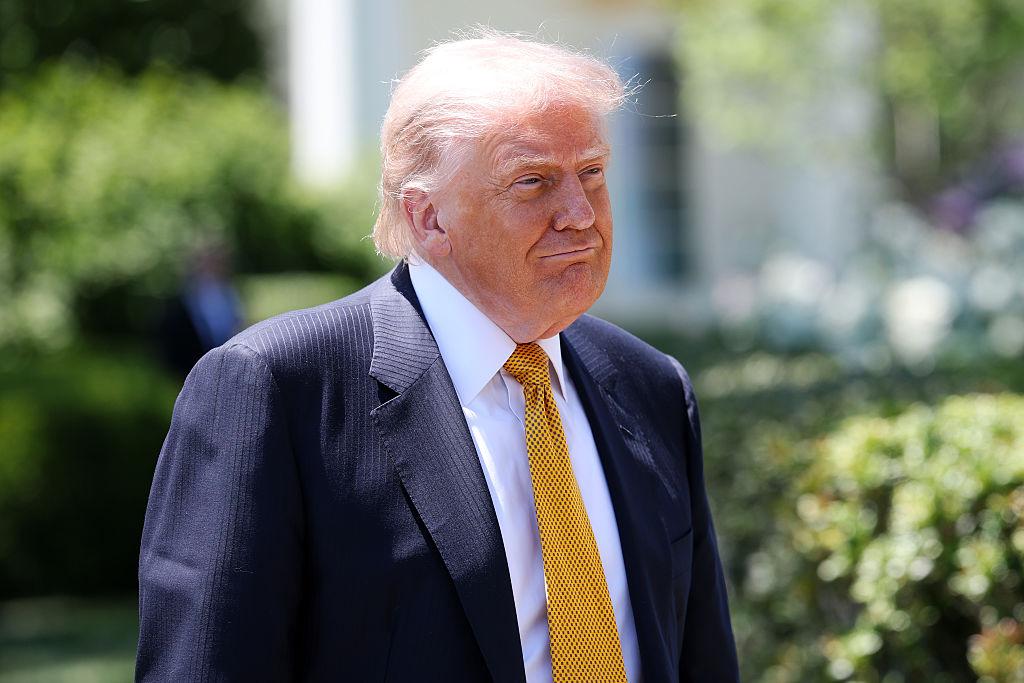
Senate GOP gets ready to buck Trump
Happy Thursday morning.
Senate Republicans are preparing to buck President Donald Trump on two of his long-running obsessions: the White House ballroom project and the “weaponization” of federal agencies against his allies.
It’s a risky gambit, taking on an emboldened president who’s busier settling scores against members of his own party than he is in taking on Democrats.
But Republican leaders are making clear they’d rather risk a Trump outburst than participate in what they see as a campaign of political self-sabotage.
That means scrapping plans to fund security for Trump’s controversial East Wing ballroom. Senate Republicans are also using the reconciliation bill to restrict Trump’s new $1.776 billion “anti-weaponization” fund to compensate people who believe they were unfairly targeted by the feds.
Both are politically toxic for vulnerable Republicans in a midterm year defined by affordability issues and high costs.
In most cases, the only Republicans who are publicly speaking out against these initiatives are the victims of Trump’s revenge tour or otherwise not seeking reelection. But GOP leaders’ decisions on both the ballroom and weaponization fund make clear that they feel the same way.
“People are concerned about paying their mortgage or rent, affording groceries and paying for gas, not about putting together a $1.8 billion fund for the president and his allies to pay whomever they wish with no legal precedent or accountability,” said Sen. Bill Cassidy (R-La.), who just lost his primary to a Trump-backed challenger.
“Imagine that — a fund that is set up to compensate people who assaulted Capitol Police officers,” added Sen. Thom Tillis (R-N.C.), who isn’t running for reelection. “How absurd does that sound coming out of my mouth?”
Republicans had hoped to use their $70 billion-plus ICE and Border Patrol reconciliation bill to highlight Democrats’ refusal to fund federal immigration operations. Instead, the effort is only serving to highlight the deep misalignment of priorities between Trump and GOP congressional leaders, who are struggling to save their majorities.
Get ready for a marathon. Senate Republican leaders are aiming to hold an initial procedural vote today and begin the vote-a-rama on the reconciliation tonight. But they haven’t even released the updated legislative text yet. Plus, Senate Majority Leader John Thune can’t move to kick off the floor process until he has 50 votes locked down.
There’s also 20 hours of debate equally divided between both parties, so Democrats could delay the start of the vote-a-rama if the first procedural vote occurs late enough in the day.
The ballroom funding, part of a proposed $1 billion for the Secret Service, was dropped from the bill because of insufficient GOP support. It also faced roadblocks from the Senate’s parliamentarian, who advised that there were jurisdictional issues in funding the project via reconciliation.
But it’s unclear how Republicans plan to impose eligibility restrictions on the “weaponization” fund. They’re especially concerned about potential taxpayer-funded payouts to Jan. 6 rioters convicted of violence against cops, as well as the overall political optics of the fund. This was a big discussion point at the Republicans’ lunch meeting on Wednesday.
Thune told us as he was leaving the Capitol on Wednesday that GOP senators want to place conditions on who’s eligible for fund payments, but he said it was “a work in progress.” Thune has said he doesn’t personally see a need for the fund.
As we scooped, Senate Republicans are weighing several strategies to make those changes, including adding a provision to the bill’s base text. Republicans could also craft an amendment for the vote-a-rama to counter a near-certain Democratic attempt to force a vote on their own proposal.
Vote-a-rama preview. Senate Minority Leader Chuck Schumer’s strategy for the vote-a-rama is pretty simple. Schumer wants to use the unlimited vote series to argue that Republicans are focusing on immigration enforcement and Trump’s ballroom while neglecting the rising cost of living.
Senate Democrats are also considering a bunch of amendments on the “weaponization” fund, forcing votes to block it outright and to ban any payments to rioters who assaulted police officers on Jan. 6. As we noted, Republicans might try to get ahead of this with a proposal to give their vulnerable senators some political cover. Depending on how each is written, some could require 60 votes.
Even with the ballroom security money out of the bill, Democrats are likely to target it. There could be votes to block funds from going directly to the project and to stop the Trump administration from diverting other funding for the ballroom.
The prospect of Democratic amendments on the settlement fund and the ballroom have already spooked Senate Republicans. These could be very interesting votes.
The House. Once the bill comes over from the Senate, House GOP leaders will need several hours to get it through their chamber. Speaker Mike Johnson has to take the bill to the Rules Committee, where Democrats will offer several amendments. Republicans are certain to rule those amendments out of order.
Once the Rules Committee is done, House Republicans have to get the rule and the bill to the floor. Both are subject to debate and recorded votes.
But the real concern for both parties is attendance before a holiday weekend leading into a recess. If the House gets the bill on Friday, Republicans are worried about lawmakers not showing up. And there’s practically no chance that GOP leadership will be able to hold lawmakers here over the weekend.
“We just gotta stay to get our job done,” House Majority Leader Steve Scalise told us. “It would be nice if the Senate moved expeditiously.”
Note: Trump and EPA Administrator Lee Zeldin will make an announcement at 11 a.m. from the Oval Office.
— Andrew Desiderio, Laura Weiss, Jake Sherman and John Bresnahan
ICYMI: We held a conversation on Wednesday with Reps. Vern Buchanan (R-Fla.) and Paul Tonko (D-N.Y.) on early and accurate dementia diagnosis. The lawmakers urged Congress to pass the Alzheimer’s Screening and Prevention Act, a bipartisan bill that promotes research and early detection of the disease. Read all about it here. You can also watch the full video here.


TRAINS AND AUTOMOBILES
The GOP’s highway bill has a rail problem
News. Top members of the House Republican leadership are concerned that the White House’s push for a rail-safety provision in the highway bill could complicate passage of the high-profile package.
The House Transportation and Infrastructure Committee will mark up the five-year reauthorization of major highway, transit and infrastructure programs today. The panel is likely to adopt an amendment to add the Rail Safety Act to the package. The measure, a priority for President Donald Trump and Vice President JD Vance, is opposed by conservatives and the railroad industry.
The language would be a huge win for unions by mandating that two people operate freight trains. Unions have failed to secure that requirement through collective bargaining, and a Biden administration two-person crew rule is being challenged in federal court.
But top House Republicans aren’t hot on the provision.
“There’s definitely a lot of members that have expressed concern about it, so you know it’s one of a few items that makes the bill more complicated to pass,” House Majority Leader Steve Scalise told us Wednesday.
Asked if he personally supported the provision, Scalise said this: “I have not had a chance to read the whole thing. I’m concerned about some of the things I’ve seen.”
Speaker Mike Johnson added that he’s “heard feedback” from several members with “different perspectives on it.”
“I know it’s a big priority of the White House, so, you know, we’ll work through that, but I don’t know yet how it’s going to land,” Johnson said.
Could this provision sink the bill? Probably not. Many conservatives say it gives away too much to unions. But Trump and Vance are pushing hard for it. And the White House says they are going to keep up their campaign to have the language included in the bill. That’s usually enough to win over Republicans.
The White House sent this fact sheet to GOP lawmakers, part of their push on the amendment.
The history. Vance led a similar bill when he was in the Senate in response to the February 2023 East Palestine, Ohio, train derailment, which cost more than $2 billion to clean up. GOP transportation committee leaders in both chambers were against those measures at the time.
Rep. Troy Nehls (R-Texas) will offer the amendment during today’s markup, along with Democratic Reps. Dina Titus (Nev.) and Chris Deluzio (Pa.). The National Transportation Safety Board endorsed the language on Wednesday. Rep. David Rouzer (R-N.C.) predicted that the panel will adopt the amendment.
“It’s an amendment that divides the Republican side of the conference,” Rouzer said Wednesday. “It’s going to be a big win for labor, and that may serve as a reason for some on our side to vote no, but it’s even more of a reason for Democrats to support the package, even though there’s a lot of things in the package that many of them don’t like.”
But the railroad industry and some Republicans have been against the measure, arguing that requiring an extra crew member doesn’t necessarily boost safety. The Association of American Railroads has long fought the mandate and has urged the committee to reject Rail Safety Act amendments.
“I don’t think it gives too much to unions. The two-men work rule is the big sticking point,” Nehls said. “Not all my friends on the right side are going to agree with this, but it’s the right thing to do.”
Multiple Transportation and Infrastructure Republicans said they’re still reviewing the measure. Reps. Tom Barrett (R-Mich.) and Pete Stauber (R-Minn.) both said Wednesday evening they hadn’t made decisions on how they’ll vote.
– Samantha Handler and Jake Sherman
PRESENTED BY ROLLS-ROYCE

The Name You Know. The Work You Don’t.
MONEY MATTERS
What party committees raised in April
The House and Senate Democratic campaign committees narrowly outraised their GOP counterparts last month. But Republicans ended April with more money in the bank.
Overall, both parties’ committees are largely keeping pace with each other as the midterms near.
Let’s go through the numbers.
The House. The DCCC raised $10.7 million in April, spent $7.8 million and had $72.9 million banked by May.
Notable donors: Rory Gates, son of Bill Gates; LinkedIn Co-Founder Reid Hoffman and Irwin Jacobs, the Qualcomm co-founder and grandfather of Rep. Sara Jacobs (D-Calif.).
The NRCC raised $10.4 million, spent $7.3 million and had $81.4 million on hand at the end of the month.
Notable names in the NRCC filing: Elizabeth Uihlein and Coinbase CEO Brian Armstrong.
The Senate. The DSCC raised $8.1 million, spent $7.4 million and had $37.3 million in cash on hand.
Notable donors: George Soros and financier Stephen Schuler.
The NRSC raised $7.3 million, spent $4.4 million and had $45.9 million in the bank.
Notable names in the filing: real estate developer Harlan Crow and Cleveland Browns’ owners Jimmy and Dee Haslam.
The national committees. The RNC raised $18.6 million and ended April with a whopping $123.9 million in the bank.
The DNC raised $11 million but had a paltry $14.4 million in the bank.
The cash disparity between the two committees — nearly $110 million — is both mind-blowing and a big problem for Democrats. The DNC will have to take on significant debt to compete with the RNC.
The super PACs. Most of the big super PACs are on a quarterly filing schedule. But House Majority PAC, the outside group aligned with Democratic leadership, files monthly.
HMP raised $3 million in April and had $64.9 million on hand. Notable donors: hedge fund manager Henry Laufer and his wife, Marsha, each gave $495,000.
– Ally Mutnick
PRESENTED BY ROLLS-ROYCE

The Name You Know. The Work You Don’t.
DEFENSE
The looming defense spending train wreck
The defense funding process is officially off the rails.
Three developments this week underscored the herculean battle Congress faces to deliver on vast swaths of President Donald Trump’s $1.5 trillion defense spending push.
Supplemental uncertainty. Hill appropriators have been practically begging for more information so they can begin considering tens of billions of dollars in supplemental spending to backfill military stockpiles drawn down by the Iran war.
The Pentagon is only months away from running out of funding for Iran operations, House Appropriations Committee Chair Tom Cole (R-Okla.) said Wednesday. Despite that looming financial deadline, the Trump administration still hasn’t sent over its funding request to cover the Iran war.
That’s irked leading lawmakers, including Rep. Ken Calvert (R-Calif.), the chair of the House Defense Appropriations Subcommittee.
“I’m looking forward to seeing a supplemental here soon, and I’m sure that the [Defense Department] obviously needs it and they’re working on it, so I’m anxious to get it — hopefully, like, any day now,” Calvert told us this week.
Vast topline gulf. The two parties are in vastly different places on the FY2027 topline defense spending figure. Senate Republican and Democratic appropriators couldn’t even begin topline spending negotiations this week because they’re so far apart on defense dollars.
“I don’t have a deal between the administration and the legislative leadership of both chambers,” said Cole. “I don’t have a deal between House and Senate Republicans, and I don’t have a congressional budget resolution.”
Reconciliation siren warnings. Senior GOP lawmakers are warning in very stark terms that they may not be able to process a third reconciliation package, which the Pentagon is relying on for nearly a quarter of its $1.5 trillion request.
Lawmakers have said the lack of adequate details and DOD’s reliance on the uncertain partyline process to fund key priorities makes their task even harder.
“There’s important stuff in it,” Sen. Lisa Murkowski (R-Alaska) said of the reconciliation request Tuesday. “Helping us understand our role here on the Appropriations Committee and how this maps forward is important.”
— Anthony Adragna and Briana Reilly
AND THERE’S MORE
Endorsement news. Rep. Delia Ramirez (D-Ill.) is endorsing Abdul El-Sayed’s Michigan Senate bid, the latest prominent progressive to do so. Ramirez is the fifth House member to endorse El-Sayed’s campaign, joining Reps. Ro Khanna (D-Calif.), Rashida Tlaib (D-Mich.), Pramila Jayapal (D-Wash.) and Summer Lee (D-Pa.).
Ad news. Democrat Adrian Boafo’s campaign is going up with an initial $185,000 ad buy touting Boafo’s big-name endorsers. In the new ad, Rep. Steny Hoyer (D-Md.), Sen. Angela Alsobrooks (D-Md.) and Gov. Wes Moore hail Boafo as the leader Maryland’s 5th District needs.
In Iowa, VoteVets is pouring in another $800,000 for an ad buy boosting Democratic state Rep. Josh Turek.
In Montana’s 1st District, Democrat Sam Forstag’s campaign is airing a $45,000 buy promoting the endorsements of Sen. Bernie Sanders (I-Vt.) and Rep. Alexandria Ocasio-Cortez (D-N.Y.).
Tech liability. More than 80 outside groups seeking to curb online sexual exploitation of kids are pushing every member of Congress to pass the STOP CSAM Act. The bill would allow victims to sue tech companies that “intentionally, knowingly, or recklessly facilitate their exploitation,” in the words of the groups’ letter.
AI. The Trump administration is launching the ExportAI Initiative. It’ll revamp financing for the export of artificial intelligence technology abroad.
— Max Cohen and Ben Brody

Presented by AstraZeneca

The 340B program is supposed to help vulnerable patients—but without strong safeguards, it’s siphoning away funds that could be used for free and charitable medicine. The 340B Rebate Model Pilot improves program integrity, preventing duplicate discounts and strengthening accountability. Urge HHS to implement the pilot today. Learn why it matters.

Crucial Capitol Hill news AM, Midday, and PM—5 times a week
Join a community of some of the most powerful people in Washington and beyond. Exclusive newsmaker events, parties, in-person and virtual briefings and more.
Subscribe to Premium
Special Projects
Explore our deep dives into the issues that matter the most today and will shape tomorrow's future, with expert reporting that goes beyond the headlines and into the heart of the Capitol.
Check it outEvery single issue of Punchbowl News published, all in one place
Visit the archive
Presented by AstraZeneca
The 340B program lacks transparency—making it hard to tell if it’s actually helping vulnerable patients. HHS can fix the problem by implementing the 340B Rebate Model Pilot, ensuring the program is transparent, compliant, and accountable. Learn more.