


May 22, 2026



PRESENTED BY

THE TOP
Senate Republicans’ Trump breaking point
Happy Friday morning.
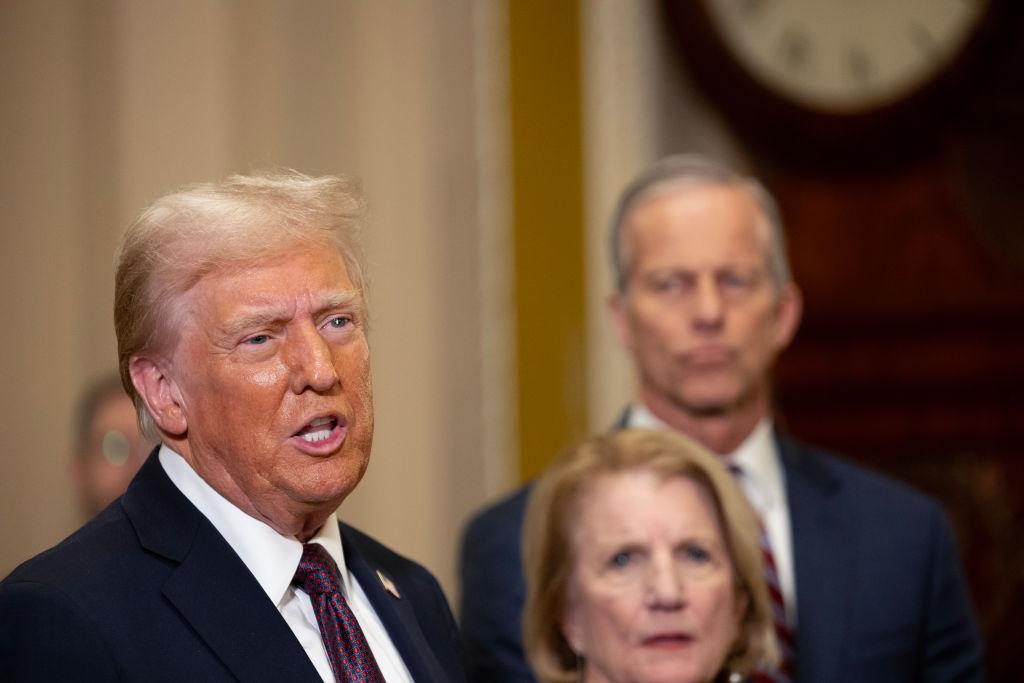
Eventually, Senate Republicans were going to prioritize their own political survival over President Donald Trump’s wants and needs.
They have. But it just might be too late.
Despite the headwinds they knew they’d face in a midterm year, Republicans were confident their Senate majority wasn’t in real trouble. The 2026 Senate map is favorable to the GOP, and they’re starting with 53 seats. Losing the majority was once inconceivable.
Yet less than six months from Election Day, Trump’s approval numbers are historically bad. Many Republicans fear Trump is determined to bring them down with him — along with their shared legislative agenda.
Senate Republican leaders are now coming to grips with the reality that advancing Trump’s priorities may be in conflict with their efforts to retain the majority. Plus, Trump’s recent successes in ousting GOP incumbents have made it even harder for Republicans to steer him away from ideas they see as so obviously harmful to their chances.
A Republican senator delivered this grim assessment on Thursday: “Our majority is melting down before our eyes.”
It’s difficult to overstate the erosion of goodwill between Trump and Senate Republicans. This has been building steadily for months over campaign strategy disputes, uneven White House messaging and Trump’s attempts to get rid of the filibuster. But it became supercharged this week as GOP leaders made deliberate decisions to distance themselves from Trump, believing that’s now a political necessity as Election Day gets closer.
“It’s hard to divorce anything that happens here from what’s happening in the political atmosphere around us,” a despondent Senate Majority Leader John Thune acknowledged Thursday. “You can’t disconnect those things.”
Thune was speaking shortly after he abruptly punted consideration of a party-line ICE and Border Patrol reconciliation bill. The legislation is bogged down amid an impasse with the White House over the creation of a new $1.776 billion “anti-weaponization” fund that Hill Republicans see as politically toxic.
“The White House dropped a bomb in the middle of a pretty well-planned-out reconciliation [bill] to help deliver on one of President Trump’s priorities,” Sen. Lisa Murkowski (R-Alaska) complained.
The immigration bill was on a glide path earlier this week, even as Republicans were preparing to buck Trump’s demand to include $1 billion in security funding for his East Wing ballroom project.
But Thune lamented that the effort, which is almost entirely focused on immigration enforcement funding, “got a little bit more complicated this week” because of the announcement of the “anti-weaponization” fund.
Just consider how bad this week was for the Senate GOP Conference:
— Republican senators returned on Monday, stung from Sen. Bill Cassidy’s (R-La.) loss to a Trump-backed primary challenger. Trump was creating more “free agents” who can vote against his priorities.
— Just as Senate Republicans were about to meet on Tuesday, Trump endorsed Ken Paxton over Sen. John Cornyn (R-Texas) — without so much as a heads-up to Thune. Trump also held a news conference at the White House ballroom construction site as Republicans were about to strip the $1 billion in security funding from the reconciliation bill.
— On Wednesday, GOP leaders decided they had no choice but to use the reconciliation bill to restrict the “anti-weaponization” fund for the same reason they dropped the ballroom funding — the poor political optics. GOP congressional leaders also believed they’d lose a Democratic-forced vote on it, so they wanted to preempt that.
— Acting Attorney General Todd Blanche spent nearly two hours getting grilled in private by Senate Republicans about the weaponization fund. GOP senators — around 25 of them, an exceptionally high number for these closed-door meetings — took turns blasting the proposal and lamenting that they were being put in this situation.
“We can’t help the president with a budget reconciliation package with this hanging over us,” Sen. Kevin Cramer (R-N.D.) said, summing up the message in the room. “From a legal standpoint, they may be right. [Politically,] it’s unexplainable. That’s the problem.”
Multiple GOP senators complained during the meeting that the administration’s recent actions show that they don’t care about the plight of the GOP majorities on Capitol Hill — something we chronicled earlier this week.
Put simply, the White House isn’t making life easier for Hill Republicans in any way.
In the House this week, Trump administration officials pushed a rail-safety bill that had long been an anathema to members of the House Transportation and Infrastructure Committee. The move stunned much of the House Republican leadership, which is also opposed to the provision.
Picking up the pieces. The Senate is in recess next week, but GOP leaders need to figure out how to secure 50 votes when they return on June 1 to at least begin voting on the reconciliation bill. Thune’s message to the Trump administration was simple: You got us into this mess, so you need to help get us out of it.
“The timing is obviously something we had no control over,” Thune said. “They need to help with this issue, because we have a lot of members who are concerned, obviously about the timing but also about the substance.”
It’s unclear what the “sweet spot” would be for GOP consensus over the weaponization fund. Republicans pitched Blanche on several different ideas on Thursday, including blocking payouts to people convicted of assaulting U.S. Capitol Police officers on Jan. 6 and imposing guidelines for how the fund’s commissioners can be appointed.
The delay in the reconciliation bill will have ripple effects that could imperil other must-pass bills, including FISA Section 702 reauthorization. The program expires June 12. Democrats are less likely to help Republicans pass FISA than they were before.
“We’ve got other stuff to do,” Thune said. “So it’s going to be important to execute on actually getting this thing done, across the finish line.”
— Andrew Desiderio, Laura Weiss, Jake Sherman and Brendan Pedersen
PUNCHBOWL NEWS IN CHICAGO: Join us on Tuesday, June 16, at 9 a.m. CT for a conversation with Illinois Democratic Gov. JB Pritzker. Punchbowl News Founder and CEO Anna Palmer will sit down with Pritzker to discuss the news of the day and digital well-being for kids and teenagers. Afterward, Kate Charlet, senior director of Privacy, Safety, and Security of the Government Affairs and Public Policy team at Google and Kati Morton, LMFT, licensed therapist and creator, will join Anna for a fireside chat. RSVP to attend in-person or virtually!


SENATE MAP
Whatley backs Trump’s ‘anti-weaponization’ fund
Michael Whatley, the Republican candidate in North Carolina’s Senate race, said he supports President Donald Trump’s $1.8 billion “anti-weaponization” fund that’s been the subject of intense criticism from GOP senators.
At a Wednesday campaign stop at the Brunswick County GOP headquarters, Whatley was asked by an attendee whether he supported “this fund for the people who were persecuted by Biden on Jan. 6.” Check out the audio here.
“I was really upset that some of the Republicans opposed the president, and I just want to make sure you’re going to be on the president’s side on that issue,” the attendee asked.
“Well, I will be because I have been with him since 2015,” Whatley responded.
“Yeah, OK, so you think that fund is good?” the attendee asked.
“Yeah,” Whatley replied. “We’ll kind of see how they implement it and what they’re going to do with it… they did ridiculous persecution.”
Whatley is running against former Democratic Gov. Roy Cooper in a high-profile Senate battle over a GOP-held seat. We’ll note that many Senate Republicans oppose the $1.8 billion fund and are holding up the reconciliation bill over these concerns.
“The American people deserve a justice system focused on protecting communities and putting violent criminals behind bars, not one weaponized by Democrats for political lawfare,” Whatley spokesperson DJ Griffin said in a statement. “Democrats spent more time going after political opponents than protecting the public.”
Sen. Thom Tillis (R-N.C.), who Whatley is running to succeed, called the fund a “payout pot for punks.”
— Max Cohen
PRESENTED BY ROLLS-ROYCE

The Name You Know. The Work You Don’t.
DEFENSE
House GOP staves off defeat on Iran — for now
House GOP leaders saved President Donald Trump from another congressional rebuke this week over the Iran conflict, but the risk of a high-profile defeat remains acute when the issue comes up again in June.
In a stunning move on Thursday, top Republicans yanked Rep. Gregory Meeks’ (D-N.Y.) war powers resolution from consideration during the middle of a vote series. Facing some 10 GOP absences, GOP leaders then postponed the push until after the Memorial Day recess, a move that drew immediate Democratic ire.
“You guys don’t have the guts or the balls to vote on this,” Rep. Jim McGovern (D-Mass.) said on the floor.
If Democrats had won the vote, it would have been the second time in a three-day span that lawmakers would have advanced a resolution to rein in Trump’s war against Iran, after Senate Democrats did so on Tuesday.
Whip count. House Republicans’ attendance problems aren’t going away. It’ll take nearly all GOP lawmakers to be present — and no further Republican defections — to ensure the Iran war powers resolution doesn’t pass.
Support has risen in the House, where GOP Reps. Brian Fitzpatrick (Pa.), Tom Barrett (Mich.) and Thomas Massie (Ky.) joined with Democrats last week to back the resolution. It ultimately failed 212-212.
Next time, Democrats will pick up Rep. Jared Golden (D-Maine), who has pledged to support the push after previously opposing it.
“It tells me that we now have the support to pass the war powers resolution, and they’re trying to scramble to figure out some way to avoid that reality,” Rep. Adam Smith (D-Wash.) said of House Republicans’ decision.
In the aftermath of the maneuvering Thursday night, House Majority Leader Steve Scalise sidestepped questions about whether Republicans would’ve lost the vote.
“Well, we just had some members that weren’t there that wanted to be recorded on it, so we’re going to be giving them that opportunity when we come back,” Scalise told reporters.
In the Senate. The House delay came after the Senate voted 50-47 to advance its own war powers push, capitalizing on a mix of GOP absences and Republican defections to clear the first procedural hurdle.
Top Republicans are projecting confidence ahead of further procedural votes. When all 100 senators are back and participating, the argument goes, they’ll easily — if narrowly — defeat subsequent action.
The next vote on the Senate’s Iran resolution is also expected in June.
— Briana Reilly and Anthony Adragna
PRESENTED BY ROLLS-ROYCE

The Name You Know. The Work You Don’t.
FLY OUT DAY
Arrington wants third reconciliation bill by August recess
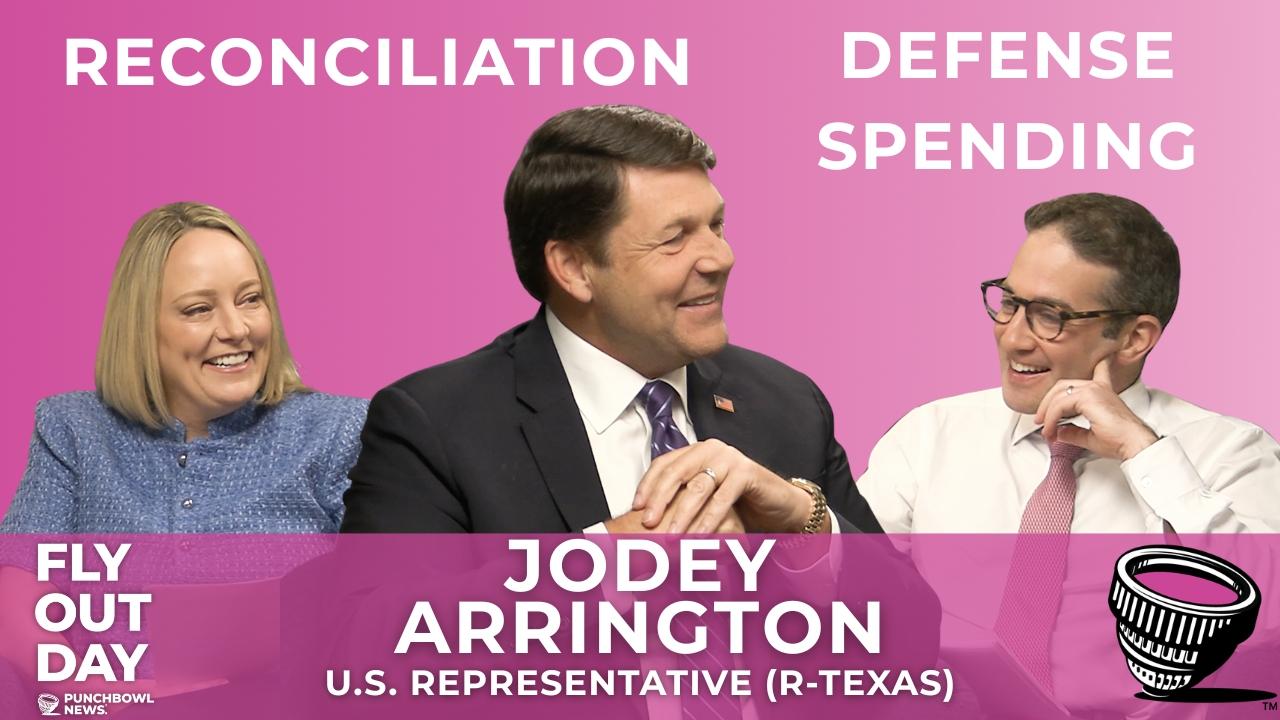
House Budget Committee Chair Jodey Arrington (R-Texas) told us on Fly Out Day this week that a third Republican reconciliation package would be centered around sending more money to the Pentagon.
Arrington hopes to mark up a budget resolution in the coming weeks and pass the reconciliation package before the August recess. Arrington said he has no idea how much money the Pentagon needs, but he’s met with Defense Department officials several times over the last few weeks.
“We have six legislative weeks, we have about 25 legislative days left,” Arrington told us on Fly Out Day. Subscribe to our YouTube page here.
In addition to defense spending, Arrington said he wants to cut “fraud” and include provisions to make housing and health care more affordable.
Of course, fraud is in the eyes of the beholder. Democrats will say Republicans are looking to slash spending from social safety net programs. Arrington sees these cuts as an “80-20” issue in Republicans’ favor.
“I don’t know of anything that will motivate and energize voters more right now than the affordability paid for by the war on fraud,” Arrington said.
The West Texas Republican is retiring at the end of this Congress. But we asked Arrington two key political questions anyway.
First, Arrington said that he understood why President Donald Trump endorsed Ken Paxton over Sen. John Cornyn (R-Texas) in the Texas Senate GOP runoff.
“Obviously, John Cornyn is a friend and we [worked] well together over the years. Paxton, I think, has a lot of Trump, Trumpian style, and in that he’s broken conventional political norms,” Arrington replied. Paxton has been accused of various forms of corruption.
Also, Arrington said that he plans to run for office again.
“You know, God willing, I’ll get another shot at it,” Arrington said.
Arrington added: “I’m going to keep that door open … but to be very direct about it, not false humility, I pray God gives me another opportunity to come back in some form, not obviously in Congress.”
– Jake Sherman
THE CAMPAIGN
Ad news: Liberal outside group Unrig Our Economy is airing two new ad buys in red-to-blue flip House seats. The group is spending $400,000 to knock off Rep. Brad Finstad (R-Minn.) in Minnesota’s 1st District and $182,000 to target Rep. Monica De La Cruz (R-Texas) in Texas’ 15th District.
Endorsement watch. Rep. Jason Crow (D-Colo.) is endorsing Leela Gray in Florida’s 13th District.
— Max Cohen

Presented by AstraZeneca

The 340B program is supposed to help vulnerable patients—but without strong safeguards, it’s siphoning away funds that could be used for free and charitable medicine. The 340B Rebate Model Pilot improves program integrity, preventing duplicate discounts and strengthening accountability. Urge HHS to implement the pilot today. Learn why it matters.

Crucial Capitol Hill news AM, Midday, and PM—5 times a week
Join a community of some of the most powerful people in Washington and beyond. Exclusive newsmaker events, parties, in-person and virtual briefings and more.
Subscribe to Premium
Special Projects
Explore our deep dives into the issues that matter the most today and will shape tomorrow's future, with expert reporting that goes beyond the headlines and into the heart of the Capitol.
Check it outEvery single issue of Punchbowl News published, all in one place
Visit the archive
Presented by AstraZeneca
The 340B program lacks transparency—making it hard to tell if it’s actually helping vulnerable patients. HHS can fix the problem by implementing the 340B Rebate Model Pilot, ensuring the program is transparent, compliant, and accountable. Learn more.