


November 1, 2025



PRESENTED BY

THE TOP
The shutdown’s tone shifts a bit
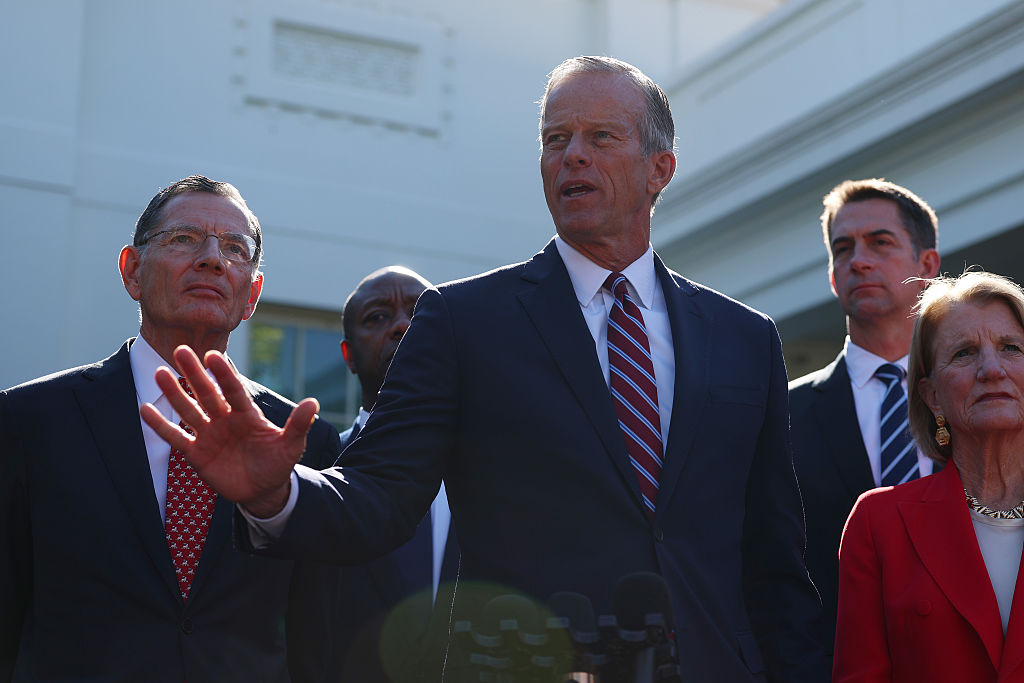
Welcome to The Readback, our weekend digest featuring the best of Punchbowl News this week – a quick roundup of all our scoops, analysis and Capitol Hill insight you won’t find anywhere else. We’ve also included a few of our favorite outside reads from the week.
Before we dive in, we’d like to flag that our special election newsletter, The Tally, is back to life as we gear up for the 2026 cycle. Look out for a special edition on Tuesday, Nov. 4.
Signs of movement: The tone shifted on the shutdown this week.
It was subtle, and it’s not clear that anyone is any closer to getting to a resolution, but after weeks of groundhog days, we’ll take any signs of movement we can get.
So, what changed? We saw some bipartisan conversations over appropriations spark to life. Senators suddenly seemed more optimistic that they could find an off-ramp to this shutdown. Democrats ran a hotline on several appropriations bills, which was the first movement we saw on funding bills in a long time.
Still, none of that means we’re getting out of this shutdown soon. Lawmakers are on track to set the infamous record of the longest shutdown ever. Republicans and Democrats aren’t closer to a deal on the expiring Obamacare subsidies, which have been at the crux of the shutdown fight.
It’s good to hear that lawmakers are talking to each other – that wasn’t happening at the beginning of this shutdown. But the talk needs to lead to action.
Even after Democrats ran the appropriations hotline, which is a way to check if there are objections on their side to any of the funding bills, Senate Majority Leader John Thune downplayed the move on Thursday. Thune told reporters that even if the Senate could reach an agreement on any of those appropriations bills, it would take a long time for those to become law.
As Thune talked, like clockwork, Senate Appropriations Committee Chair Susan Collins (R-Maine) walked through the crowd of reporters and into his office. That’s a pretty good confirmation that appropriations talks are heating up!
Meanwhile, down the hall from Thune’s office, Senate Minority Leader Chuck Schumer was meeting with Sens. Jeanne Shaheen (D-N.H.), Angus King (I-Maine) and Maggie Hassan (D-N.H.). Shaheen and King have met with Schumer several times throughout the shutdown, but these moderates are key to watch as potential Democrats who could end this whole thing.
Reporters asked Collins what she thought of Schumer meeting with rank-and-file Democrats. She asked which Democrats were meeting with him, and when we said those three, the Maine Republican said that was a “good sign.”
That’s all to say that last week we saw a lot of lawmakers huddling but little to show for it. The Senate left town on Thursday without any deals.
Now we’re into November, which is a whole different phase of the shutdown. SNAP funds are running out, as is money for an important low-income heating assistance program. Air traffic controllers, Hill staffers and other federal workers are missing more paychecks. Unions and major Fortune 500 companies are begging for a resolution.
Eventually, something has to break the stalemate. Maybe that’ll come this week.
What I’m reading: “Strangers in the Land” by Michael Luo. It’s a fascinating read tracing the history of Chinese immigration into the United States.
– Samantha Handler
You can find The Readback in your inbox every Saturday at 8 a.m. And don’t hesitate to reach out to [email protected] with feedback. Enjoy The Readback.

Your weekend watch: Katherine Clark on Fly Out Day

House Minority Whip Katherine Clark was our guest on the latest episode of Fly Out Day, taped at the Punchbowl News Townhouse on Capitol Hill.
We’ve now had a good chunk of the House and Senate leadership on the show: Speaker Mike Johnson, House Minority Leader Hakeem Jeffries, Senate Majority Leader John Thune and Senate Minority Leader Chuck Schumer. From the White House, we’ve had Deputy Chief of Staff James Blair and Kevin Hassett, the president’s top economic adviser.
Clark was an interesting guest because House Democrats are on the sidelines right now. The House passed its CR more than a month ago, and the Senate has not. Clark wants Democrats to keep fighting as the shutdown continues.
But when the shutdown is eventually over, House Democrats will again have a lot of cards. Congress is going to have to fund the government through next September. And Johnson says he wants to pass a health care package.
Check out this episode. It also includes a fun conversation with Geoff Bennett of PBS News Hour and Julie Tsirkin of NBC News.
What I’m listening to: I’m relistening to my favorite Phish Halloween show that I have attended: Oct. 31, 2010, in Atlantic City, N.J., Phish covered “Waiting for Columbus,” the Little Feat album.
The next day, I flew to Cincinnati to follow then-House Minority Leader John Boehner as Republicans were about to take control of the House.
– Jake Sherman

Thune shows his ‘mad John’ side
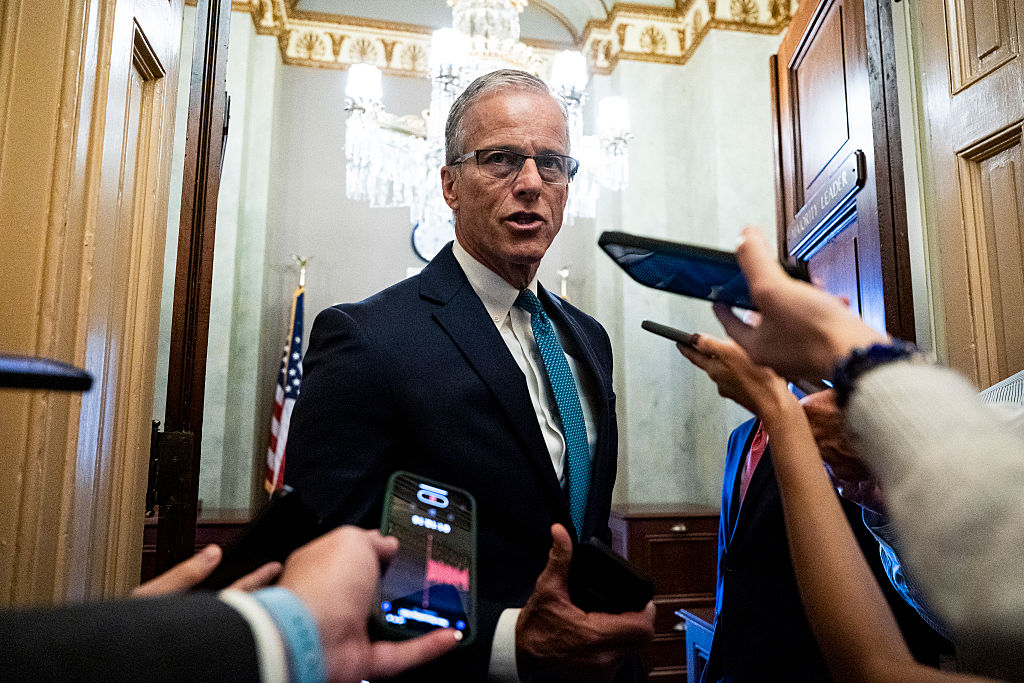
Senate Majority Leader John Thune isn’t a flamethrower, doesn’t usually engage in performative politics, and is probably one of the few senators who’s never yelled or screamed on the Senate floor.
Until this week.
The genial South Dakotan walked into the Senate chamber on Wednesday to do something routine: object to a unanimous-consent request from a senator of the opposite party.
Sen. Ben Ray Luján (D-N.M.) was trying to pass a bill to fund the SNAP program, which runs out of funding today due to the government shutdown. Earlier in the week, Thune had soured on the idea of passing one-off funding bills, arguing it would only make it easier for Democrats to further block the full reopening of the government.
So Thune objected to Luján’s request. You can watch the full video of Thune’s response here, but here’s a snippet:
Speaker Mike Johnson referred to his Senate counterpart as “mad John” when asked about the floor exchange.
I asked Thune about it as he came off the Senate floor and noted that I had never seen him get that animated. His first response was to apologize — something I was taken aback by.
“Sorry, I channeled a little bit of anger there,” Thune told me with a laugh. “It’s a high level of frustration.”
Sen. Kevin Cramer (R-N.D.), another midwesterner with a similar vibe, noted to my colleague Briana Reilly that Thune is “not prone to that much emotion.”
To be sure, Democrats also believe they have the moral high ground, arguing that President Donald Trump could have tapped into an emergency fund to avert a SNAP lapse.
The fact that both sides have felt so comfortable in their positions throughout the shutdown has been exactly what’s made it such an intractable issue for lawmakers to solve.
The tide may be turning, with bipartisan talks in the Senate ticking up this past week. But this shutdown will likely have lasting impacts on the institution itself — and few will forget how it almost broke John Thune.
What I’m watching: I’m in Las Vegas this weekend to cover the annual Republican Jewish Coalition summit, which is drawing dozens of GOP lawmakers at a critical moment for the government shutdown. Stay tuned for our coverage from the summit on Monday morning and throughout the week.
— Andrew Desiderio
PRESENTED BY ASTRAZENECA

AstraZeneca is investing $50 billion in U.S. manufacturing and R&D. Our largest-ever commitment will create thousands of highly skilled jobs, strengthen America’s supply chain, and deliver next-generation medicines for patients nationwide. Learn more about how we’re building the future of healthcare in the U.S.

A $5 trillion kind of week
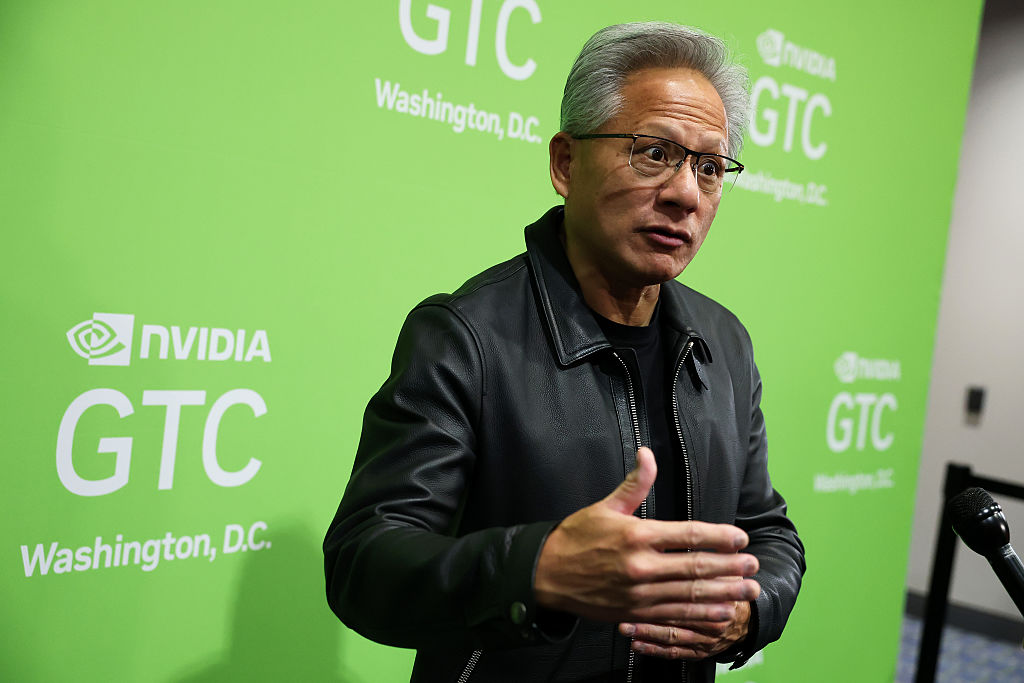
Nvidia came to Washington this week.
The company brought its famous GTC convention, normally held in San Jose, Calif., to D.C. Nvidia CEO Jensen Huang gave a keynote speech full of announcements that was followed by a historic $5 trillion valuation.
As usual, GTC had lots of Nvidia investors and artificial intelligence nerds. But there were also lots of folks with Washington jobs. People from the Defense Department, the Marine Corps and other government agencies. Some admitted not knowing anything about AI at all.
I went on Tuesday, when Huang gave his speech. I was surprised by the sheer size of the stage and the screen.
Huang was smooth (although quite wonky at times) and yes, he wore his leather jacket. He also made a speech calibrated to President Donald Trump’s Washington, including a MAGA cry at the very end of his remarks.
There was plenty in there for both AI skeptics and optimists to talk about. Huang spoke of quantum supercomputers, which allies will say will boost scientific discoveries. He also showed videos of autonomous vehicles and factories, which his critics will point to in their job displacement alarms.
After his speech, Huang hosted more than two dozen journalists and analysts for a news conference alongside Energy Secretary Chris Wright.
Huang isn’t shy of the press. He took several questions, some of them quite tricky, as they ranged from the energy needs of AI to Nvidia’s dealings with China.
Huang has become one of the most polarizing CEOs in 2025 Washington. On one hand, he’s arguably the most influential business leader with Trump; on the other, Huang’s been under attack from China hawks and progressives on and off Capitol Hill.
Those hawks were relieved when Trump said he didn’t talk to Chinese President Xi Jinping about allowing Nvidia to sell its advanced Blackwell AI chips to China.
But Huang will be a D.C. fixture for a while. His business is incredibly dependent on Washington’s whims, and Nvidia will continue to aggressively play offense and defense to achieve its goals.
Huang said he wants to make GTC in D.C. an annual occurrence. His leather jacket has found a second home.
What I’m watching: My wife and I are up to date with Tim Robinson’s “The Chair Company.” As usual with him, the humor is… unique. We find it brilliant.
– Diego Areas Munhoz

Presented by AstraZeneca

The 340B program is supposed to help vulnerable patients—but without strong safeguards, it’s siphoning away funds that could be used for free and charitable medicine. The 340B Rebate Model Pilot improves program integrity, preventing duplicate discounts and strengthening accountability. Urge HHS to implement the pilot today. Learn why it matters.

Crucial Capitol Hill news AM, Midday, and PM—5 times a week
Join a community of some of the most powerful people in Washington and beyond. Exclusive newsmaker events, parties, in-person and virtual briefings and more.
Subscribe to Premium
Special Projects
Explore our deep dives into the issues that matter the most today and will shape tomorrow's future, with expert reporting that goes beyond the headlines and into the heart of the Capitol.
Check it outEvery single issue of Punchbowl News published, all in one place
Visit the archive
Presented by AstraZeneca
The 340B program lacks transparency—making it hard to tell if it’s actually helping vulnerable patients. HHS can fix the problem by implementing the 340B Rebate Model Pilot, ensuring the program is transparent, compliant, and accountable. Learn more.