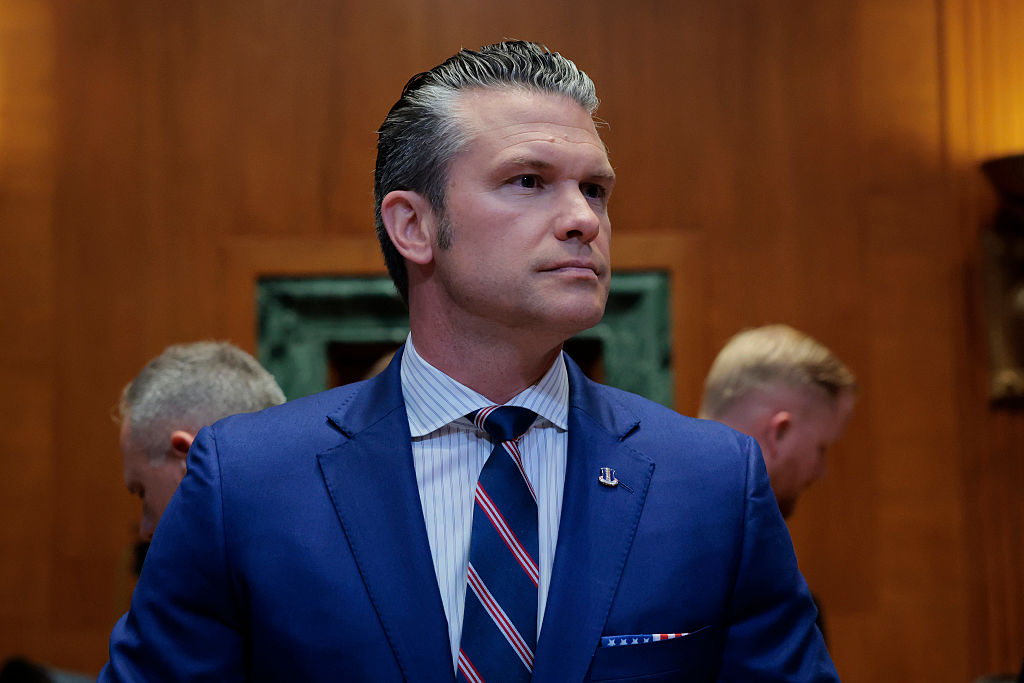
The House and Senate committees that oversee the Pentagon are set to undertake rare congressional scrutiny of Defense Secretary Pete Hegseth over his handling of U.S. strikes on drug-smuggling boats in the Caribbean.
The twin investigations come as President Donald Trump stoked new tensions with Venezuela, raising the specter of U.S. military action against Nicolás Maduro’s regime.
The congressional investigations are prompting renewed debates over the legality of the Trump administration’s targeting of suspected drug traffickers — fueled in part by the Republicans who chair the Senate and House Armed Services committees.
‘Kill them all.’ The Washington Post reported over the weekend that Hegseth ordered U.S. forces to kill everyone on board during a Sept. 2 operation against alleged drug trafficking vessels in the Caribbean. The paper disclosed that military leaders allegedly conducted a second attack that day to target two individuals who appeared to survive the initial boat strike. If true, this could be considered a violation of the laws of armed conflict — or even worse, a potential war crime.
Senate Armed Services Committee Chair Roger Wicker (R-Miss.) and Sen. Jack Reed (R.I.), the ranking Democrat, pledged in a joint statement to conduct “vigorous oversight” over the alleged follow-on strike.
Their House counterparts — Reps. Mike Rogers (R-Ala.) and Adam Smith (D-Wash.) — said in a separate release that they’re “taking bipartisan action to gather a full accounting of the operation in question.”
It’s safe to assume there are several Republicans on both panels who aren’t pleased with Wicker and Rogers, and believe they’re undercutting Trump and validating Democrats’ arguments against the boat strikes.
Appearing on Fox News on Sunday, Sen. Eric Schmitt (R-Mo.), who serves on the Armed Services Committee, didn’t directly mention the new investigations but slammed the “Washington elite” for “fighting wars for other countries in far-off places as opposed to taking care of business here at home.”
In a post Friday on X, Hegseth dismissed the WaPo report as “fabricated, inflammatory, and derogatory” and defended the strikes as lawful. Trump said Sunday that Hegseth told him he “did not order the death of those two men.” Trump added that he wouldn’t have wanted a second strike because the first was “very lethal.”
Lawmakers will likely be eager to hear from retiring Adm. Alvin Holsey, who heads U.S. Southern Command and oversees operations in Central and South America. Holsey is retiring Dec. 12, just a year into his tenure at the head of SOUTHCOM. His departure comes amid tensions between Holsey and Hegseth over the boat strikes.
In all, U.S. forces have carried out more than 20 strikes in the Caribbean and Pacific, killing at least 80.
War powers. On Saturday, Trump wrote in an extraordinary Truth Social post that he was declaring Venezuelan airspace to be “closed in its entirety.” The remarks suggested that some sort of military action could be imminent. Trump downplayed it on Sunday, telling reporters: “Don’t read anything into it.”
Senate Minority Leader Chuck Schumer responded to Trump’s missives by calling attention to the fact that Congress hasn’t authorized any military action against Venezuela.
“President Trump’s reckless actions towards Venezuela are pushing America closer and closer to another costly foreign war,” Schumer said.
It’s too soon to say whether there will be another effort on the Hill to rein in Trump’s warmaking powers in the region, but this will certainly be a point of conversation as lawmakers return to Washington.
In the House, Democrats pitched a resolution last month to bar any effort by the Trump administration to strike alleged drug boats in the Caribbean and Pacific. The Senate blocked two similar resolutions amid a vigorous effort by Trump administration officials to convince Republicans of the legality of the strikes.