


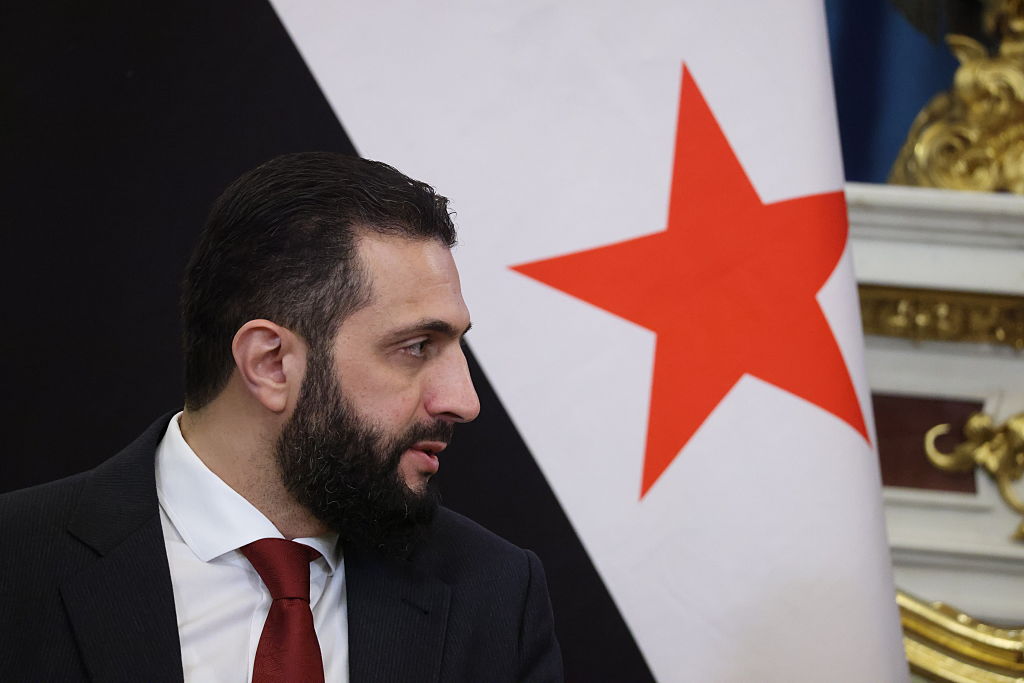
Congress is nearing an inflection point as President Donald Trump prepares to meet with Syrian President Ahmed al-Sharaa Monday — and pressure builds to repeal sanctions against the country.
At issue is whether to fully repeal the Caesar Act sanctions, a move favored by key blocs within both parties.
“Giving the existing government in Syria the opportunity to prove itself as being seeking peace is a positive step,” Sen. Mike Rounds (R-S.D.) said.
The Trump administration has backed the repeal effort through the annual defense policy bill, with U.S. Special Envoy to Syria Tom Barrack and Secretary of State Marco Rubio among those making calls to lawmakers, according to multiple Hill sources.
A key holdout in the permanent repeal, according to people familiar with the matter, is House Foreign Affairs Committee Chair Brian Mast (R-Fla.). Mast’s office didn’t respond to a request for comment.
Trump said last week he’d temporarily waive sanctions “to give them a fighting shot, and I think [al-Sharaa’s] doing a very good job so far” but that “it’s a tough neighborhood and he’s a tough guy.” Permanently waiving the sanctions would require congressional action.
Sen. Richard Blumenthal (D-Conn.), a key foreign policy voice, said he favors peace “that can be pursued through specific and identifiable and enforceable conditions.”
Last week, the United Nations Security Council voted to remove al-Sharaa from a terrorism sanctions list just days ahead of his visit with Trump in a resolution championed by the United States.
“We must repeal Caesar sanctions so the Syrian people have a real chance at recovery after decades of dictatorship,” Sen. Jeanne Shaheen (D-N.H.), the top Foreign Relations Democrat, told Punchbowl News in a statement.