The battle over government funding now shifts to the House.
After a near-record absence, Speaker Mike Johnson will reconvene the House on Wednesday to reopen the government. But the chamber’s return won’t be without challenges.
We say this during every legislative crisis: President Donald Trump is in favor of this package, so the safe bet is that House Republicans aren’t going to abandon him.
Yet Johnson has only a two-vote margin and will need all the help he can get. House Republican leadership is watching GOP Reps. Marjorie Taylor Greene (Ga.), Thomas Massie (Ky.), Victoria Spartz (Ind.) and Warren Davidson (Ohio) as possible no votes. Massie is almost guaranteed to vote no.
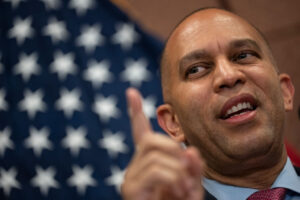
House Democratic leadership — led by Minority Leader Hakeem Jeffries — is whipping against the bill because it doesn’t address the expiring Obamacare premium tax credits.
Still, Democratic aides believe Reps. Henry Cuellar (D-Texas), Jared Golden (D-Maine), Marie Gluesenkamp Perez (D-Wash.) and Vicente Gonzalez (D-Texas) could be in play to vote for the bill. Rep. Susie Lee (D-Nev.) also sounded like she could vote yes on a caucus call Monday. Both Nevada senators — Democrats Jacky Rosen and Catherine Cortez Masto — voted for the spending package.
The timeline. The House Rules Committee could meet as soon as this evening to set the guidelines for floor debate of the Senate-passed measure. And that Rules markup could be a long slog.
The House Republican leadership is aiming for a Wednesday vote on the funding package.
The political dynamics. Johnson has the most at stake. But the speaker can make the argument that this Senate agreement has significant victories for the GOP.
Republicans didn’t give up an inch in this entire shutdown. Johnson hasn’t committed to a vote on the Obamacare tax credits — unlike Senate Majority Leader John Thune. The speaker has been vocally opposed to the credits for nearly two months.
Johnson has said he would rather try to build consensus for a GOP health care plan. Johnson is finally getting the appropriations process restarted, which has been a key goal since he took the speaker’s gavel in 2023. The House Freedom Caucus is supporting the spending package, which should help the speaker.
Johnson is going to face major tests during the next few months. In addition to the fallout over keeping the House out so long, Johnson will have to work with the Senate to come up with compromise FY2026 spending bills. Senate spending levels are much higher than what House Republicans want. And Johnson has said he wants to cobble together a health care plan.
With cost-of-living and affordability concerns driving politics for the foreseeable future, most smart House Republicans understand they can’t simply point to proposals they’ve supported that have never become law. They’ll need to pass something and look for Democratic support.
Once again, Johnson may be nudged along by a discharge petition. Jeffries said on a private party call Monday that Democrats may file and support a discharge petition to force a vote on renewing the Obamacare subsidies. This is a long shot given that these subsidies expire on Dec. 31, but it’s worth keeping an eye on because that may force Johnson’s hand.
Now let’s talk about Jeffries. Jeffries has been in sync with the Democratic base more than any other party leader. Remember: the House minority leader opposed Senate Minority Leader Chuck Schumer’s decision to keep the government open back in March. Jeffries has had the luxury to stand pat over the last few weeks while Senate Democrats took the lead in the shutdown fight.